





In prior articles, we found the scientific validation of Stephen Colbert's 'truthiness', and now it turns out that anecdotal evidence of a 'Colbert bump' following an appearance (anecdotal evidence provided, naturally, by Colbert himself) on the show has legs as well - but only if you're in one political party. Democratic politicians receive a 40% increase in contributions in the 30 days after appearing on "The Colbert Report" while Republicans essentially gained nothing.

Stephen Colbert is right - the "Colbert bump" boosts campaigns.

This analysis of one of America's most well-known pop icons of recent years is conducted by political scientist James H. Fowler (University of California, San Diego), who is also a self-identified fan of the show. The research appears in the July issue of PS: Political Science and Politics.

Young people from 10 countries around the world have shared their views on housework and abortion issues in a new study from the University of Adelaide, Australia. Small surveys were conducted at high schools and universities in the United States, Canada, Australia, Korea, China, Japan, Vietnam, Thailand, India and Indonesia.

The research, conducted by Professor Chilla Bulbeck in the University's Discipline of Gender, Work and Social Inquiry, looked at the attitudes of young men and women to a number of gender equality issues.

The prospect of climate change sparking food and water shortages in the Middle East is less likely than previously thought, with new research by an Australian climate scientist suggesting that rainfall will be significantly higher in key parts of the region.

Recent projections from the Intergovernmental Panel on Climate Change (IPCC) raised fears that storm activity in the eastern Mediterranean would decline this century (if global warming continues on the predicted curve) and that would reduce rainfall by between 15 and 25 per cent over a large part of the so-called Fertile Crescent, the land encompassing parts of Turkey, Syria, northern Iraq, and north-eastern Iran and the strategically important headwaters of the Tigris and Euphrates rivers.

But the IPCC projections were based on the results of global modelling of climate change, which tends to obscure smaller-scale regional effects.

Eastern and Oriental medicine practitioners have long said that Ashwagandha, an herb commonly used in the 5,000-year old practice of Ayurvedic medicine, helps fight disease when used in combination with a liquid known as anupana. Anupana may be derived from many different substances, from olive oil, to beer, to ghee.

Each liquid is thought to have different properties, so an Ayurveda practitioner selects an anupana that has the qualities that best fit a given situation. Traditionally, one method of administering Ashwagandha and milk was to boil them together.

A team of American researchers is examining whether drinking whole cows’ milk with the herb can increase the body’s white blood cells, which help boost immunity. They have found that it does.

In the first statewide study of extensively drug-resistant tuberculosis (XDR TB) in the United States, California officials have identified 18 cases of the dangerous and difficult-to-treat disease between 1993 and 2006, and 77 cases that were one step away from XDR TB. The study appears in the August 15 issue of Clinical Infectious Diseases, now available online.

California reports almost 3,000 cases of tuberculosis annually, the largest number of TB cases of any U.S. state. California has also led the nation since 2002 in the number of multidrug-resistant tuberculosis (MDR TB) cases—those that are resistant to isoniazid and rifampin, the two antibiotics that form the backbone of TB treatment. XDR TB is resistant to even more classes of antibiotics, including fluoroquinolones and one of three injectable second-line drugs. The authors of the new study evaluated drug susceptibility data of MDR TB cases identified by the California TB Registry between 1993 and 2006, looking for cases that fit the XDR TB definition.

An apple peel powdering process developed at Cornell University to fortify foods has made its first appearance in the Olympics Games. Six thousand 32-gram tubes of “Applebooster" an organic applesauce fortified with dried apple peel powder were given to approximately 750 U.S. Olympic athletes and 250 coaches as they boarded their flights to China earlier this month.

The company says their process enhances the nutritional value of foods by reintroducing ground apple peel into the manufacturing process.

Big question this morning! Of course, plenty of philosophers and scientists have wondered about the question of what is life, and the answer has proved more slippery than everyone thought. We all think we know how to tell if something is alive or not, and yet it is remarkably difficult to come up with a precise definition of the concept (just like American Justice Potter Stewart once famously said of pornography).

'Erasing' drug-associated memories may prevent recovering drug abusers from relapsing, researchers at the University of Cambridge have said. The team, led by Professor Barry Everitt, was able to reduce drug-seeking behaviors in rats by blocking a brain chemical receptor important to learning and memory during the recall of drug-associated memories. Their research, which was funded by the Medical Research Council, was reported in the 13 August issue of The Journal of Neuroscience.

The Cambridge scientists found that by disrupting or erasing memories associated with drug use during recall, they could prevent the memories from triggering relapses and drug taking.

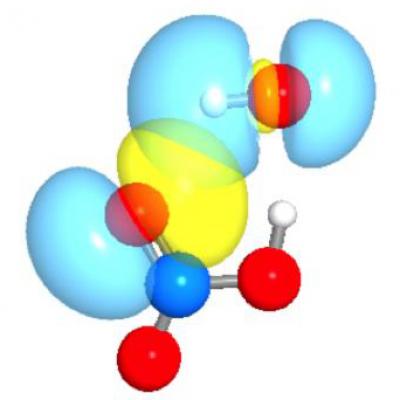
Researchers have discovered an unusual molecule that is essential to the atmosphere's ability to break down pollutants, especially the compounds that cause acid rain. It's the unusual chemistry facilitated by this molecule, however, that will attract the most attention from scientists.

Somewhat like a human body metabolizing food, the Earth's atmosphere has the ability to "burn," or oxidize pollutants, especially nitric oxides emitted from sources such as factories and automobiles. What doesn't get oxidized in the atmosphere falls back to Earth in the form of acid rain.

While invasive electrode recordings in humans show long-term promise, non-invasive techniques can also provide effective brain-computer interfacing (BCI) and localization of motor activity in the brain for paralyzed patients with significantly reduced risks and costs as well as novel applications for healthy users.

Two issues hamper the ease of use of BCI systems based on non-invasive recording techniques, such as electroencephalography (EEG):


