







A normal-sized, black coffee cup with a handle, of course, sitting in the middle of a wooden picnic table, is filled with hazelnut coffee. While one many view this simply as a cup on a table, it is possible that another will view the cup as a metaphor for the fresh beginning of a new day. In the cyber world, Kine Dorum, a PhD Student at the University of Leicester, in Great Britain, analyzes the way humans use images from past experiences as a guide when using the computer rather then directly associating computer images to real-life. Dorum hopes to develop a set of common attributes in predicting individuals’ behaviors and performances while on the computer through her notion that the universe on screen is similar to perceptions of “real life” based on past experiences.

LSU associate professor of sociology Troy C. Blanchard recently found that a community's religious environment – the type of religious congregations within a locale – affects mortality rates, often in a positive manner. These results were published in the June issue of Social Forces.

This result, he says, is particularly timely in the context of presidential candidate Barack Obama's recent call for expanding the roles of such religious groups.

Along with co-author John Bartkowski from the University of Texas at San Antonio and other researchers from the University of West Georgia and the University of Alabama at Birmingham, Blanchard found that people live longer in areas with a large number of Catholic and Mainline Protestant churches. He offers two key reasons for these findings.

It is well known that a powerful perceptual experience can change the way a person sees things later. If you are startled to discover a mouse in your kitchen, you may suddenly you see mice in every dark corner - or at least think you do. Is it possible that imagining something, just once, might also change how you perceive things?

To test how imagery affects perception, the researchers had subjects imagine simple patterns of vertical or horizontal stripes, which are strongly represented in the primary visual areas of the brain. They then presented a green horizontal grated pattern to one eye and a red vertical grated pattern to the other to induce what is called binocular rivalry.

During binocular rivalry, an individual will often alternately perceive each stimulus, with the images appearing to switch back and forth before their eyes. The subjects generally reported they had seen the image they had been imagining, proving the researcher's hypothesis that imagery would influence the binocular rivalry battle.

We learned from the prior blog that the Sun is much too bright for normal viewing with our sensitive eyes. A white “color” results when we observe objects that are both extremely bright and bright at all or most visible wavelengths. Please allow me to elaborate a little more on this issue.

The French like their artichokes fried, the Italians like them on pizza, in Spain they are used in frittata and the best artichokes are supposedly found in Greece. Meanwhile, at the University of Reading, a research University in Great Britain, the flower is being used for medicinal purposes connected to reducing cholesterol. High cholesterol levels related to cardiovascular disease have been shown to improve with the help of Artichoke Leaf Extract, or ALE, therefore minimizing the need for prescription drugs. By stabilizing cholesterol before it becomes a problem, researchers at University of Reading found yet another dietary supplement beneficial to healthy cholesterol levels.

If you're a long-time reader of this site, you might get the idea that Albert Einstein was a pretty smart guy - that comes across because he tends to proven right a lot even today.

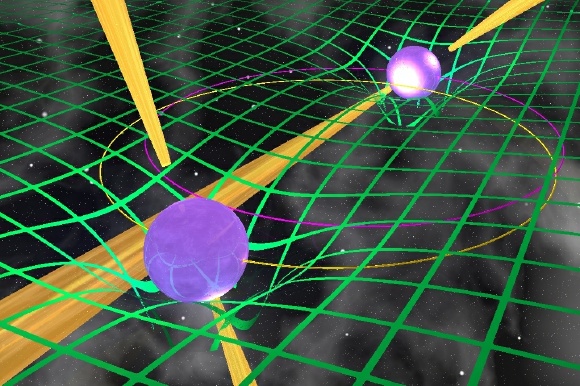
PSR J0737-3039A/B is a unique system of two dead stars, pulsars, and one of the pair is 'wobbling' in space just like a spinning top, according to a team of researchers. The effect, called precession, was predicted by Albert Einstein and is yet another confirmation of his theory.

The binary pulsars were formed when a pair of massive stars exploded and their cores collapsed to create objects whose mass is greater than that of our Sun, but compressed to the size of a city. They are spinning at incredible speeds and emit powerful beams of radio waves which sweep across our radio-telescopes like cosmic lighthouses producing regular pulses of energy - hence their name, pulsars. PSR J0737-3039A/B is the only known system in our galaxy where two pulsars are locked into such close orbit around one another - the entire system could fit inside our Sun.

Calorie restriction related to longevity is a hot topic. Calorie restriction slows the aging process in rats and mice but no one is sure how. One recently popular hypothesis is that it slows aging by decreasing a thyroid hormone, triiodothyronine (T3), which then slows metabolism and tissue aging.

Mice who benefited from calorie restriction were weaned on that diet, a strategy that will get you arrested for child endangerment with human children, but a new study in the June 2008 issue of Rejuvenation Research found that moderate calorie restriction – cutting approximately 300 to 500 calories per day – showed a similar thyroid decrease in humans.

So, they say, the longevity effect may also happen in humans.

A giant rubber anaconda could be a step on the road to meeting a large chunk of our energy needs using carbon-free, wave-generated electricity.

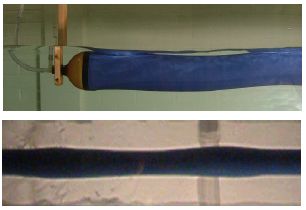
The 'Anaconda' is named after the snake of the same name because of its long thin shape. It is closed at both ends and filled completely with water and then anchored just below the sea's surface, with one end facing the oncoming waves. A wave hitting the end squeezes it and causes a 'bulge wave'(a wave of pressure produced when a fluid oscillates forwards and backwards inside a tube) to form inside the tube. As the bulge wave runs through the tube, the initial sea wave that caused it runs along the outside of the tube at the same speed, squeezing the tube more and more and causing the bulge wave to get bigger and bigger. The bulge wave then turns a turbine fitted at the far end of the device and the power produced is fed to shore via a cable.

Thanks to salt and hot chili peppers, researchers have found what tells a roundworm to go forward toward dinner or turn to broaden the search. It's a computational mechanism, they say, that is similar to what drives hungry college students to a pizza.

Yes, college students have the calculus center of a worm.

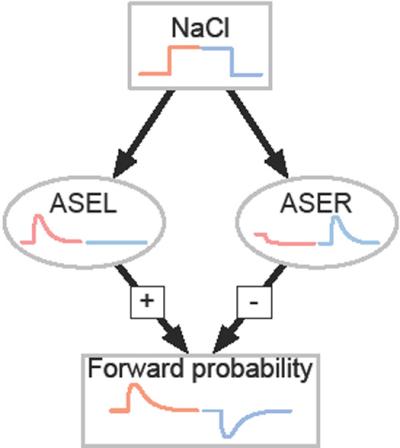
These behavior-driving calculations are done "in a tiny, specialized computer inside a primitive roundworm," says principal investigator Shawn Lockery, a University of Oregon biologist and member of the UO Institute of Neuroscience.

In the paper, the researchers documented how two related, closely located chemosensory neurons, acting in tandem, regulate behavior. The left neuron controls an on switch, while the opposing right one an off switch. These sister neurons are situated much like the two nostrils or two eyes of mammals. Together these neurons are known as ASE for antagonistic sensory cues.

A woman in southern Ontario is one of the first cases in Canada of a rare neurological syndrome in which a person starts speaking with a different accent, McMaster University researchers report in the July issue of the Canadian Journal of Neurological Sciences.

The puzzling medical phenomenon known as foreign-accent syndrome (FAS) arises from neurological damage, and results in vocal distortions that typically sound like the speaker has a new, "foreign" accent.

This particular case, however, is even more unusual because the English-speaking woman did not acquire an accent that sounds foreign but one that instead sounds like Maritime Canadian English.


