








This University of Copenhagen press release says that they would like to be first to create a quantum computer. They have made no more progress than anyone else, really, but want us all to know that they are thinking about it.

We liked it so much we are just printing it as is:

Bassinet use in 2006 was nearly double what it was in 1992, and even though more than 45% of infants between the ages of 0-2 months use them, little is known about bassinet safety.

The Consumer Product Safety Commission (CPSC) has guidelines regarding bassinet construction but there are no government safety standards for bassinets. In 2005, the American Academy of Pediatrics (AAP) revised its recommendations for a safe infant sleep environment, suggesting a separate but nearby sleeping arrangement (i.e. roomsharing without bedsharing).

Two studies in The Journal of Pediatrics evaluate the frequency of bedsharing and the potential risk factors of bassinet use.

The proliferation of voluntary carbon offset programs seems like a great way for individuals to help fight climate change. But do carbon offset programs really work? That's the question for Bill Stanley, Science Lead for Carbon Strategies, Climate Change Team at The Nature Conservancy.

Lawrence Hamilton, of Charlotte, VT, asks:

"Are carbon offset programs and forest protection efforts providing real solutions for reducing global carbon emissions? And how do these programs help reduce pollution from mercury, arsenic and other "baddies" that often accompany carbon emissions?"

Bill Stanley, Science Lead for Carbon Strategies, Climate Change Team, replies:

For lemurs, genetic diversity and scent complexity go hand in hand during the breeding season, say researchers from Duke University and the Centre d'écologie fonctionnelle et évolutive (CNRS / Universités Montpellier 1, 2 and 3 / ENSA Montpellier / CIRAD / École pratique des hautes études de Paris).

Male lemurs are able to signal their genetic quality through an olfactory cue. The perfume attracts females and provides the basis for their choice of reproductive partner.

Olfaction, little studied in primates until now (1), is a significant means of communication in certain monkeys, and especially in lemurs. These mammals, which live almost exclusively in Madagascar, include more than thirty species. One of the best known is the ring-tailed lemur, Lemur catta, a highly social species that lives in small, female-dominated groups. In this species, olfactory communication plays an essential role in social relations.

NEW YORK, June 24 /PRNewswire/ --

- First Rotating Skyscraper to be Self Powered and Completely Prefabricated

Visionary Italian architect Dr. David Fisher today announced the launch of the revolutionary Dynamic Tower, the world's first building in motion, to be constructed in Dubai and Moscow with other locations planned worldwide.

A new study of African lions says climate extremes, which would include the increased frequency of droughts and floods predicted by global warming models, can create conditions in which diseases that are tolerated individually might converge and cause mass extinction of livestock or wildlife.

The study suggests that extreme climatic conditions are capable of altering normal host-pathogen relationships and causing a "perfect storm" of multiple infectious outbreaks that could trigger epidemics with catastrophic mortality.

Led by scientists at the University of California, Davis, the University of Illinois and the University of Minnesota, the research team examined outbreaks of canine distemper virus (CDV) in 1994 and 2001 that resulted in unusually high mortality of lions in Tanzania's Serengeti National Park and Ngorongoro Crater. CDV periodically strikes these ecosystems, and most epidemics have caused little or no harm to the lions.

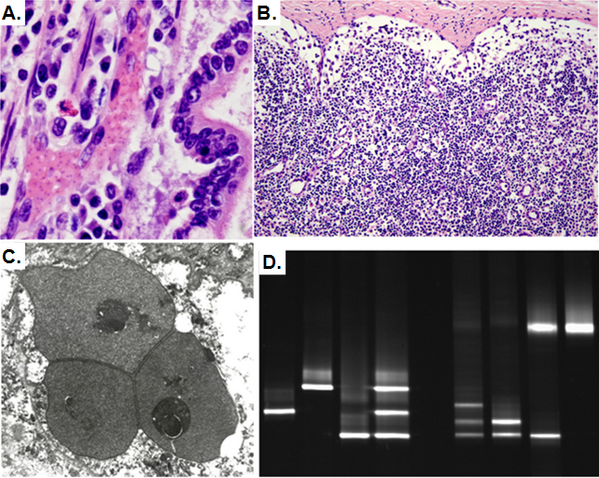
Researchers at Johns Hopkins say that epigenetic marks on DNA - chemical marks other than the DNA sequence - do indeed change over a person's lifetime, and that the degree of change is similar among family members.

The team suggests that overall genome health is heritable and that epigenetic changes occurring over one's lifetime may explain why disease susceptibility increases with age, they say in their article in the June 25 issue of the Journal of the American Medical Association.

If epigenetics does contribute to such diseases through interaction with environment or aging, says Andrew P. Feinberg, M.D., M.P.H, a professor of molecular biology and genetics and director of the Epigenetics Center at the Johns Hopkins School of Medicine, a person's epigenetic marks would change over time. So his team embarked on an international collaboration to see if that was true. They focused on methylation-one particular type of epigenetic mark, where chemical methyl groups are attached to DNA.

The Centers for Disease Control and Prevention estimates that, in the U.S. alone, foodborne pathogens are responsible for 76 million illnesses every year. Of the people affected by those illnesses, 300,000 are hospitalized and more than 5,000 die. These widespread outbreaks of food-borne illnesses are attributed, in part, to the fast-paced distribution of foods across the nation. Recently, raw tomatoes caused an outbreak of salmonellosis that sickened more than 300 people in at least 28 states and Canada.

University of Georgia researchers have developed an effective technology for reducing contamination of dangerous bacteria on food. The new antimicrobial wash rapidly kills Salmonella and E. coli O157:H7 on foods ranging from fragile lettuce to tomatoes, fruits, poultry products and meats. It is made from inexpensive and readily available ingredients that are recognized as safe by the U.S. Food and Drug Administration.

The new technology, which has commercial application for the produce, poultry, meat and egg processing industries, is available for licensing from the University of Georgia Research Foundation, Inc., which has filed a patent application on the new technology.

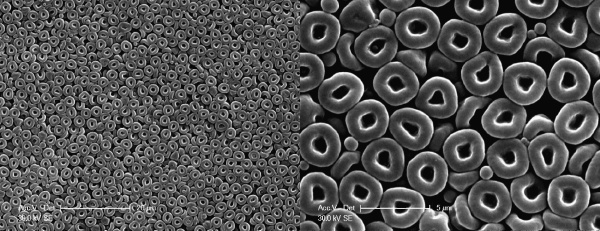
Just like humans, liver cells love doughnuts, but these are polystyrene ring “doughnuts”, just a few microns across, and they might give scientists a new way to deliver drugs selectively, potentially eliminating nasty side effects of life-saving treatments such as chemotherapy, according to chemists writing in Chemical Communications.

Mark Bradley and colleagues at the University of Edinburgh, UK, serendipitously made the polymer doughnuts while studying potential drug-carrying microparticles.

While synthesising micro-spheres, the team added a small amount of dioxane to their usual ethanol solvent. To their surprise, the resulting microparticles were regular in size and shape, with a hole through the middle like a doughnut.

More than 55 million cosmetic surgery procedures will be performed in 2015, predicts a recent study in Plastic and Reconstructive Surgery, the journal of the American Society of Plastic Surgeons (ASPS).

That's 4 times the number of procedures performed in 2005. Pushing this growth is what you might expect - marketing and vanity.

The study's findings are great news for the plastic surgery industry but the ASPS suggests caution to current and future patients. While cosmetic procedures seem lower risk than ever and are easy to access, they are not a cure-all for many patients, and choosing a surgeon with the training to perform all procedures, from non-invasive therapies to surgery, can mean the difference between achieving desired results and requiring more procedures down the road.


