







This year's presidential primaries have already exhibited a number of time-honored traditions in American democracy - attacks, anonymous leaks and partisan journalism. Unfortunately, like other recent presidential elections, those include a new ritual - questions about the accuracy of techniques used to cast and count ballots.

A Center for Correct, Usable, Reliable, Auditable and Transparent Elections (ACCURATE) is a team of computer scientists and academic researchers from across the country bringing the latest research, insights and innovations from the lab to the voting booth.

The project is headed by Avi Rubin, a professor of computer science at Johns Hopkins University. An expert in information security, Rubin was intrigued by the challenges associated with improving voting technologies. "There was a perceived need," Rubin says, "that these systems were not secure enough." Once they began examining the issue from a scientific perspective, Rubin and his colleagues discovered that a more holistic approach was needed to understand how the computers, touch screens and other technologies are interrelated in elections.

A new study in the Journal of Applied Social Psychology reviewed the behavior of participants exposed to various HIV brochures. Researchers found that both men and women were likely to avoid gender-mismatched brochures. Women, however, were more likely to approach gender-matched brochures over gender-neutral brochures.

Kathleen C. McCulloch and Dolores Albarracin of the University of Illinois at Urbana-Champaign, and Marta R. Duranti from the University of Florida looked at the behavior of 350 volunteers consisting of both men and women who were African American, European American, or Latino, with over half having an average income under $10,000.

Participants were exposed to six HIV-prevention brochures, two of which were gender-targeted and four of which were gender-neutral. The study was conducted at the Florida Department of Health in Alachua County. Participants were then given the chance to watch an HIV-prevention video and participate in an HIV-prevention counseling session.

Be warned: this article deals primarily with shark attacks, the lottery, beer, and how to get a date using math. Is it a good decision to keep reading? Unfortunately, the answer is "you need to keep reading to find out."

Sound irrational? Good—your massively irrational mind should have no problem with it, then.

Consider this: every year when the Discovery Channel broadcasts "Shark Week" visits to Florida beaches decline. Presumably, the network's programming makes the waters no less safe (assuming sharks are not, in fact, empowered by cable television). However, after watching a week of kicking legs seen from below, the idea of shark attack is refreshed in our minds and we choose not to offer ourselves as bait.

This phenomenon is known as an availability heuristic — a heuristic being a rule-of-thumb. Our rationality is subverted by easily available sensationalist images.

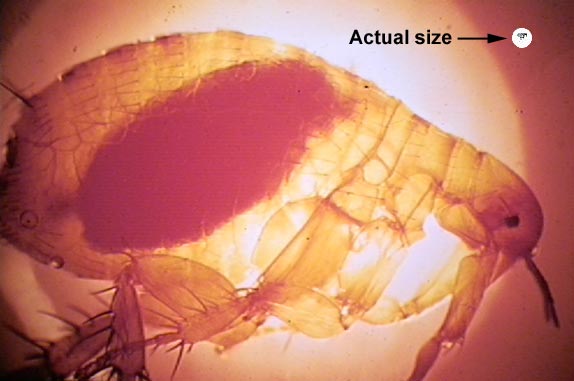
The bubonic plague, often called 'Black Death' after its most famous outbreak in the 14th century, still exists today and, like then, is caused by bacteria called Yersinia pestis that are found mainly in rodents and the fleas that feed on them. When other animals or humans contract this bacteria it is primarily from those infected rodent or flea bites.

Bubonic plague affects the lymph nodes resulting in swollen lymph glands (called buboes, thus the name bubonic), fever, chills and flu-like symptoms but in addition tiny broken blood vessels called petechiae can result in black spots on the skin and those black spots earned it the nickname that stuck when it reached England in 1348 AD.

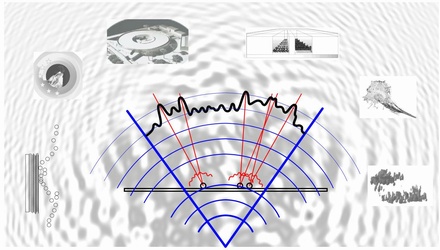
How do grains flow out of an emptying silo? And what about sugar poured out by a pastry chef?

Researchers at Centre de Physique Moléculaire Optique et Hertzienne (CPMOH) of CNRS/ Université Bordeaux 1 have just demonstrated that even without an attractive force between grains in flowing sand, they have a cohesion similar to that of liquids. These results were published in Physical Review Letters.

The surface of a liquid is similar to an elastic membrane under tension, which causes things like the pressure on the interior of soap bubbles. This “surface tension” is due to cohesion forces between molecules in the liquid.

The two-year old mud volcano called Lusi spews huge volumes of mud and has displaced more than 30,000 people and caused millions of dollars worth of damage. An international team of scientists has now concluded that it was caused by the drilling of a gas exploration well and not by an earthquake that happened two-days before the mud volcano erupted in East Java, Indonesia.

The report by British, American and Indonesian and Australian scientists outlines and analyzes a detailed record of operational incidents on the drilling of a gas exploration well, Banjar-Panji-1. (A)

Lead author Prof. Richard Davies of Durham University, UK, published research in January 2007 which argued the drilling was most likely to blame for the eruption of the Lusi mud volcano on May 29 2006.

Investigators at Washington University School of Medicine in St. Louis have identified a genetic variation associated with an earlier age of onset in Alzheimer's disease.

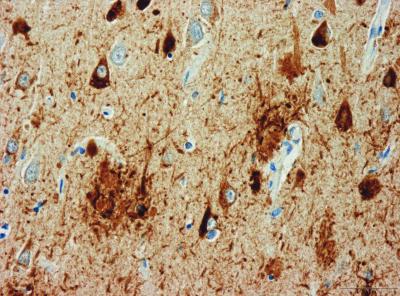
Unlike genetic mutations previously linked to rare, inherited forms of early-onset Alzheimer's disease — which can strike people as young as their 30s or 40s — these variants influence an earlier presentation of symptoms in people affected by the more common, late-onset form of the disease.

Two principal features characterize Alzheimer's disease in the brain: amyloid plaques and neurofibrillary tangles. The plaques contain a protein called amyloid-beta.

A team of forensic scientists at the University of Copenhagen has studied human remains found in two ancient Danish burial grounds dating back to the iron age, and discovered a man who appears to be of Arabian origin.

The findings suggest that human beings were as genetically diverse 2000 years ago as they are today and indicate greater mobility among iron age populations than was previously thought. The findings also suggest that people in the Danish iron age did not live and die in small, isolated villages but, on the contrary, were in constant contact with the wider world.

On the southern part of the island of Zealand in Denmark, lie two burial grounds known as Bøgebjerggård and Skovgaarde, which date back to the Danish iron age (c. 0-400 BC). Linea Melchior and forensic scientists from the University of Copenhagen analysed the mitocondrial DNA of 18 individuals buried on the sites and found that there was as much genetic variation in their remains as one would expect to find in individuals of the present day. The research team also found DNA from a man, whose genetic characteristics indicate a man of Arabian origin.

A propensity for attention deficit hyperactivity disorder (ADHD) might be beneficial to a group of Kenyan nomads, according to new research published in BMC Evolutionary Biology. Scientists have shown that an ADHD-associated version of the gene DRD4 is associated with better health in nomadic tribesmen, and yet may cause malnourishment in their settled cousins.

The DRD4 gene codes for a receptor for dopamine, one of the chemical messengers used in the brain. One version of the DRD4 gene, the '7R allele', is believed to be associated with food craving as well as ADHD.

A study led by Dan Eisenberg, an anthropology graduate student from Northwestern University in the US, analyzed the correlates of body mass index (BMI) and height with two genetic polymorphisms in dopamine receptor genes, in particular the 48 base pair (bp) repeat polymorphism in the dopamine receptor D4 (DRD4) gene.

By manipulating a specific gene in a mouse blastocyst — the structure that develops from a fertilized egg but is not yet an actual embryo — scientists with the University of Florida's McKnight Brain Institute and the Harvard Stem Cell Institute caused cells destined to build an embryo to instead change direction and build the cell mass that leads to the placenta.

In revealing a cellular signaling mechanism in place at the earliest developmental stage, the researchers have explored the first fork in the developmental road, getting a new look at what happens when fertilized eggs differentiate to build either an embryo or a placenta.


