





Aiming to gain a better understanding of the situation of abortion in Africa and Latin America, a research team jointly involving Institut de Recherche Pour le Développement and "El Colegio de Mexico" reviewed the scientific literature published from the early 1990s up to the present. Their conclusion is that women from the deprived social classes have to resort to unsafe illegal abortions, contrary to those from better-off sections of society, making abortion an equality issue that should be addressed.

What scientific literature could they have studied? Data in the area of abortion is still highly fragmented. Women face heavy legal and social penalties if they decide to have an abortion that is not by medical necessity. For Latin America, apart from a study run in urban areas of Colombia, wide-ranging surveys based on representative samples of the population are lacking.

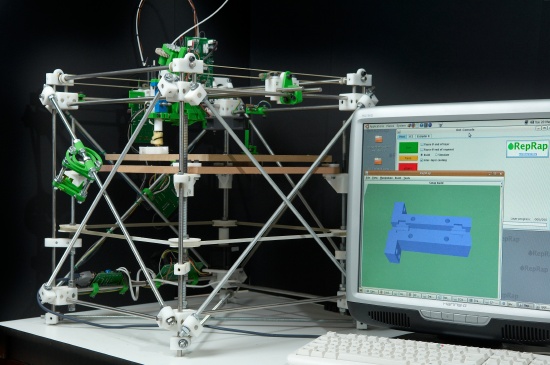
Dr Adrian Bowyer, a senior lecturer in engineering in the Faculty of Engineering & Design at the University of Bath, has created RepRap, an open source prototype machine that has succeeded in making a duplicate of itself - by printing its own parts and building a clone.

RepRap is short for replicating rapid-prototyper. RepRap employs a technique called ‘additive fabrication’. The machine works a bit like a printer, but rather than squirting ink onto paper, it puts down thin layers of molten plastic which solidify. These layers are built up to make useful three-dimensional (3D) objects.

RepRap has, so far, been capable of making every day plastic goods such as door handles, sandals and coat hooks. Now, the machine has also succeeded in copying all its own 3D-printed parts.

Saving energy is big business these days and automobiles are a prime target for savings because two-thirds of the energy from fuel is wasted in the form of heat - about 30 percent through the engine block and a further 30 to 35 percent as exhaust fumes.

Researchers are working on a thermoelectric generator that converts the heat from car exhaust fumes into electricity. The module feeds the energy into the car’s electronic systems. This cuts fuel consumption and helps reduce the CO2 emissions from motor vehicles.

There is clearly a great need for thermoelectric generators (TEGs). These devices convert heat into electrical energy by making use of a temperature gradient. The greater the temperature difference, the more current TEGs can produce.

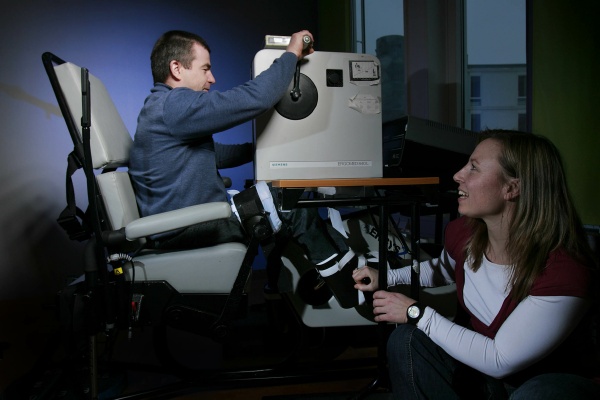
A new type of exercise equipment, first designed for actor Christopher Reeve, who played "Superman" in the 1977 film and its three sequels, can prevent serious lifestyle illnesses in paraplegic patients, according to a new exercise study.

In the study completed last year, patients who were paralyzed from the chest or waist down experienced an average increase in their oxygen uptake by 25 per cent and in their heart pumping volume by fully 37 per cent – after just eight weeks of training on the bike.

Patients who are unable to walk after a spinal injury have a poorer quality of life and shortened lifespan compared to non-paralyzed counterparts. Sitting passively in a chair makes people susceptible to weight and digestion problems, lower bone density, diabetes and heart/circulation problems.

States that perform local-level background checks for firearms purchases are more effective in reducing firearm suicide and homicide rates than states that rely only on a federal-level background check, according to a new study by researchers at the Medical College of Wisconsin in Milwaukee.

There are three entities that perform background checks for firearm purchases. The FBI, a single state agency or a local law enforcement department such as a municipal police or sheriff's office are the bodies contacted to perform background checks.

The odds are poor that humanity will ever curtail CO2 emissions sufficiently fast against even the mid-case global warming scenarios forecast by climatologists. A possible near-term remedy, however, has been found in the form of a simple pollution abatement strategy in the mitigation of airborne soot. Airborne soot falls from the air in a matter of weeks, so its abatement is far more efficacious - in terms of tangible environmental benefits - than first migitating CO2 emissions.

Ramanathan has served on IPCC WG2 Panels, he headed the UN's INDOEX project and he's as solid a climate scientist as we have.

An analysis of ongoing randomized clinical trials (RCTs) in diabetes finds that only about 20 percent have as primary outcomes results that patients consider important, such as illness, pain, effect on function and death, according to a new study.

Concerns about the safety and efficacy of diabetes interventions continue, in part because RCTs have not measured their effect on patient-important outcomes as quality of life and death, according to background information in the article. "Are future diabetes trials likely to be more informative to patients and clinicians?" the researchers ask.

Gunjan Y. Gandhi, M.D., M.Sc., and M. Hassan Murad, M.D., M.P.H., of Mayo Clinic, Rochester, Minn., and colleagues examined large public clinical trial registries to systematically determine the extent to which ongoing and future registered RCTs plan to measure patient-important outcomes in patients with diabetes. The researchers identified phase 2 through 4 RCTs enrolling patients with diabetes.

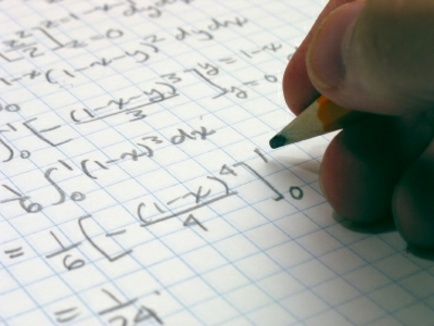
The folding of paper or drops of water falling from a tap are two events which involve the creation of singularities requiring sophisticated mathematical techniques to describe, analyze and predict.

Singularities occur at a point of cut off, or sudden change, within a physical system, as in formation of cracks, lightning strikes, creation of ink drops in printers, and the breaking of a cup when it drops. Improved understanding of the underlying mathematics would have many benefits, for example in making materials of all kinds that are more resistant to cracking or breaking.

There is a lot in common between many such singular events across a whole range of scales, from microscopic interactions to the very formation of the universe itself during the Big Bang. In the past these seemingly unconnected events involving singularities have tended to be studied in isolation by different scientists with relatively little interaction or exchange of ideas between them.


