There was no significant increase in the prevalence of obese children and teens in the U.S. between 1999 and 2006, in contrast to the increase that had been reported in prior years, according to a study in the May 28 issue of JAMA.

“In the United States, the prevalence of overweight among children increased between 1980 and 2004, and the heaviest children have been getting heavier,” the authors write.

Cynthia L. Ogden, Ph.D., of the Centers for Disease Control and Prevention (CDC), Hyattsville, Md., and colleagues updated the most recent national estimates of the prevalence of pediatric high body mass index (BMI). Height and weight measurements were obtained from 8,165 children and adolescents as part of the 2003-2004 and 2005-2006 National Health and Nutrition Examination Survey (NHANES), which are nationally representative surveys of the U.S. population.

Poor blood vessel function is recognized as an early stage indicator of cardiovascular diseases such as atherosclerosis. For more than 20 million Americans living with diabetes, these vascular impairments can eventually lead to heart disease and stroke, the cause of death for two-thirds of those who suffer from diabetes. Despite good diabetes control and medical treatment, adults with the disease often continue to experience vascular dysfunction. This has led scientists on a search for novel medical or nutritional options to improve the health and quality of life for people with diabetes.

Scientists funded by Mars, Inc. have determined that a cocoa flavanol-rich beverage made using the Mars Cocoapro® process experienced a 30 percent improvement in measured vessel function at the completion of a 30-day trial. Consuming a cocoa flavanol-rich beverage daily may have the potential to positively impact the blood vessel dysfunction associated with diabetes, they say.

The flavanol in cocoa is not to be confused with another compound spelled flavonol, which is found in some onions, grapes and green tea.

Scientists of the University of Almeria are developing a new system to eliminate carbon dioxide emissions using microalgae photosynthetic activity. This project, called CENIT CO2, is being developed by Spanish electricity company Endesa and is supported by the Spanish Ministry of Industry.

At the pilot plant, Las Palmerillas, Almeria-based researchers are trying to prove the validity of this new method for eliminating CO2 emissions. They expect to begin testing on an industrial level in the next year. Researchers say that ENDESA, which is promoting this research line, may test its application in some of the facilities which could show immediate results - small gas plants.

"The mechanism developed is simple on paper. By the gas emission points a water tank would be installed in order to retain the pollutant gases resulting from a specific industrial process. This polluted water would go through a system of bioreactors with a microalgae culture system, which would then transform the CO2 emissions into vegetal matter and oxygen through the photosynthesis process," the researchers say.

GOTHENBURG, Sweden, May 26 /PRNewswire/ -- Swedish SEKAB today announced that it is the first company in the world to supply verified sustainable ethanol. This ethanol from Brazilian sugarcane is quality assured from environmental, climate and social perspectives.

"Consumers and other stakeholders need guarantees that the ethanol is verified sustainable," says Anders Fredriksson, EVP of SEKAB BioFuels & Chemicals.

SEKAB has together with progressive Brazilian producers developed criteria that cover the entire lifecycle of ethanol from the sugarcane fields to its use in flexi-fuel (FFV) cars.

The criteria are in line with demands highlighted in the ongoing processes being led by organisations like the UN, EU, ILO and a number of NGOs.

Solar cells provide great opportunities for future large-scale electricity generation. However, there are currently significant limitations, such as the relatively low output of most solar cells (typically fifteen percent) and high manufacturing costs.

One possible improvement could derive from a new type of solar cell made of semiconducting nanocrystals (crystals with dimensions in the nanometre size range). In conventional solar cells, one photon (light particle) can release precisely one electron. The creation of these free electrons ensures that the solar cell works and can provide power. The more electrons released, the higher the output of the solar cell.

In some semiconducting nanocrystals, however, one photon can release two or three electrons, hence the term avalanche effect.

By adding an enzyme to adult stem cells 'in vitro', remarkable results can be booked 'in vivo', say scientists of the University of Twente in The Netherlands. Up to now, so-called mesenchymal stem cells could not succesfully be used to create new bone tissue, e.g. for repair. By adding PKA enzyme to the stem cells beforehand, a substantial amount of bone is grown after implanting the cells.

Hitherto it has been difficult to induce adult human stem cells to produce bone, e.g. in order to repair bone tissue. Researchers at the University of Twente have shown that if the enzyme PKA is previously activated in the stem cells in the lab, following implantation this results in substantial bone formation. This opens up new ways of repairing bone tissue using cell material from the patient.

In animals, ‘adult’ mesenchymal stem cells have already been used successfully to grow fresh bone. Bone formation using human adult stem cells, e.g. from bone marrow, has been less successful, which has hitherto limited the alternatives hospitals can offer for repairing damaged tissue other than spontaneous healing. Activating the PKA enzyme prior to implantation, however, produces a dramatic improvement in ‘in vivo’ bone growth. The cells can be observed maturing into bone cells already in the lab; once sown on a carrier and implanted in a mouse, the bone grows well.


We understand in amazing detail how a heart develops - in mice. Whether the same processes that produce mouse heart tissue also generate heart tissue in humans has been unclear, because we obviously can't do the required experiments on human embryos. But a paper published on Thursday in Nature describes research that used human embryonic stem cells to generate human heart cells, and in the process demonstrated that human and mouse stem cells use similar molecular signaling pathways to develop, or differentiate, from stem cells to various types of heart cells. What this means is that we now have the molecular recipe needed to grow heart tissue from embryonic stem cells. Having that recipe in hand brings us a step closer to an embryonic stem cell-based treatment for damaged hearts.


Human Cardiac Cells - Figure 4c from Yang, et al., Nature 453 (2008) doi:10.1038/nature06894

People love Top 10 lists and a Top 10 list of new species is no exception. We love the idea so much we took the 2007 choices from the International Institute for Species Exploration at Arizona State University and an international committee of taxonomists and made them ... funnier.

We know you have other things to read, like a Top 10 list of String Theory jokes, somewhere so we'll get right to it.

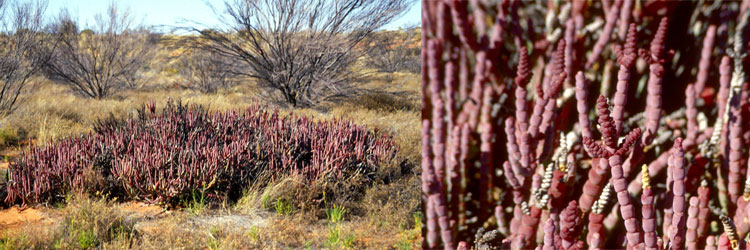
10. Tecticornia bibenda. One of two on this list that seems to have made it for no other reason than that press releases gave it a catchy nickname, in this case the "Michelin Man™" plant, and that really appeals to fame-seeking biologists who want to have mass appeal. If this actually looks like the Michelin Man™ to you, you're just being argumentative.

The nomination process for Raytheon's 2008 Math Hero Awards has now opened. These annual awards reward and celebrate teachers and tutors for promoting math achievement to students in a fun and challenging learning environment.

The MathMovesU program grants $1 million annually to students, teachers and schools in scholarships, grants and awards. Based on a nomination process, math teachers and volunteers who work with students are eligible to receive a $2,500 Math Hero award, and their schools or an approved math-related nonprofit organization of their choice receive a $2,500 matching grant.

Math Heroes demonstrate an enthusiastic and creative approach to math, often using new and innovative ideas in working with their students. Parents, students or other teachers are now invited to nominate their Math Hero for 2008. Submissions are due by July 15 and winners will be announced on November 15.

With improved resolution, tissue-specific molecular markers and precise timing, a group of scientists say they have possibly overturned a long-standing assumption about the origin of embryonic cells that give rise to connective and skeletal tissues that form the base of the skull and facial structures in back-boned creatures from fish to humans.

University of Oregon biologist James A. Weston and co-authors from the Max Planck Institute of Immunology in Germany and the French National Scientific Research Centre at the Curie Institute document their potentially textbook-changing case in an article appearing in the Proceedings of the National Academy of Sciences.

The cells in question, they argue, do not come from a portion of embryonic neural epithelium called the neural crest, as widely believed, but rather from a distinct thin layer of epidermal epithelial cells next to it. "Our results," Weston said, "could lead to a better understanding of the etiology of craniofacial defects, as well as the evolution of the head that distinguishes vertebrates from other creatures."