





At first, fruit flies eat like horses. Hatching inside over-ripe fruit where they were laid, they feed wildly in the sugar-rich environment until nature sends them an offer they can’t refuse. To survive, they must leave the fruit, wander off and burrow into the earth where they avoid food as if it were poison. Only then can the larvae grow and hatch into flies that will take wing to lay their own eggs.

Now, a team of researchers from the University of Georgia has discovered for the first time that the important developmental switch from food attraction to aversion in the fruit fly larva is controlled by a timing mechanism in the brain and its sensory system. The study shows how this important avoidance mechanism has been recruited into evolutionary processes to promote development and could one day lead to new methods of controlling pain in humans and other animals.

Fruit flies can’t really stay in the rotting fruit where they are laid. Not only do they risk drowning in the ripening fluid, they are increasingly exposed to harmful microorganisms that can kill them. To escape, the larvae “wander” out and burrow into the ground.

In a paper recently published in Cortex, Jan Lonnemann (RWTH Aachen University, Germany) and colleagues report that many children at the age of 8-9 years seem to represent numbers spatially. Interestingly, boys using this kind of representation tended to have better calculation abilities, while girls who represent numbers spatially tended to show poorer calculation abilities.

The authors assume that these differences may be due to gender-specific thinking styles: for boys, who may prefer visual-spatial thinking styles, it seems to be helpful to represent numbers spatially when being confronted with calculation problems, whereas for girls preferring verbal thinking styles it may be even detrimental.

Evidence for a connection between number and space processing comes from behavioral, patient, and brain imaging data, but only a few studies have addressed this issue in children.

One consistent feature of human progress throughout history has been that science will come up with creative answers to current problems. When ancient people living in small tribes were running out of game to hunt, some leaders thought rationing and mitigation were the answers. They would have created a culture of despair. Domesticated livestock was the answer instead and then efficient agriculture and even terraforming.

Based on that confidence, a lot of people, me included, assume that global warming can be solved by some 'future technology' as yet undeveloped. Killing our economy by 25% now (yes, imagine it 25% worse) to stave off a .5 degree warming problem in 50 years is positively un-scientific.

But hope is not how things get done. People point to Y2K and say 'it was all hype, nothing happened' but they forget that's because we spent billions prior to that fixing problems. Likewise, acid rain was a huge concern in the 1980s and is not now because problems were addressed squarely.

Capturing and storing carbon dioxide is a solution the anti-global warming contingent (read, political pundits and bloggers using science to attack Democrats) say can keep us in an SUV Promised Land today. Then future technology can deal with it permanently.

To those people (in this case, Republicans) I say, 'Pretend a Democrat is saying Social Security will take care of itself in the future. Would you be skeptical?' Well, that's how I feel when they insist nothing needs to change and it will all be okay.

With the Large Hadron Collider gearing up for its first test run this summer, physicists hope to discover the last missing particle predicted by the Electroweak theory, the Higgs boson.  Wrapped up in its own big theory, the Higgs Mechanism or Higgs Field, it supposedly confers mass or absolute weight on some paricles or collections of them like atoms and planets.  The Higgs Field is a must, otherwise the Electroweak theory falls flat, insisting that all particles are massless, that matter doesn't exist.

The LHC has been sold to politicians and the public as the experiment that will find the Higgs, though in fact the LHC, no ordinary atom smasher, aims to produce it with colossal energies applied to protons, lead ions later, collided together in a mini Big Bang.  The disaster scenarios also start here.

Einstein and Spacetime, courtesy NASA 2005 

I haven't contributed a single thing to the platypus genome project, but since my desk sits one floor above where people and robots broke the platypus DNA into chunks, cloned those chunks into bacteria, sequenced the pieces of DNA, and used massive amounts of computing power to assemble the stretches of sequence into a complete genomic whole, I'm going to consider myself somewhat of an authority on the subject and tell you what's wrong with other people's ideas about the platypus.

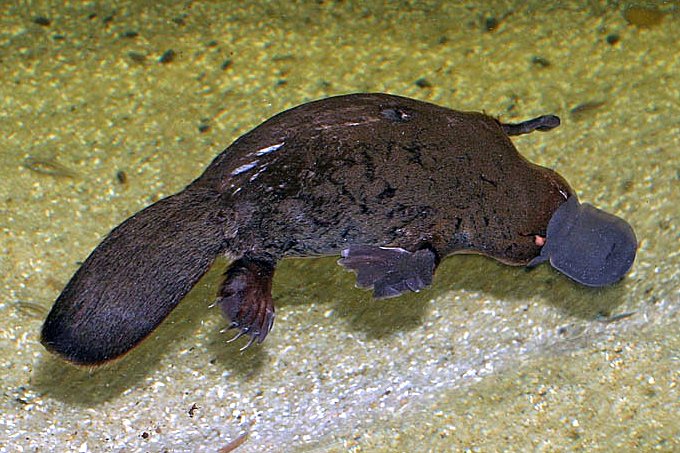
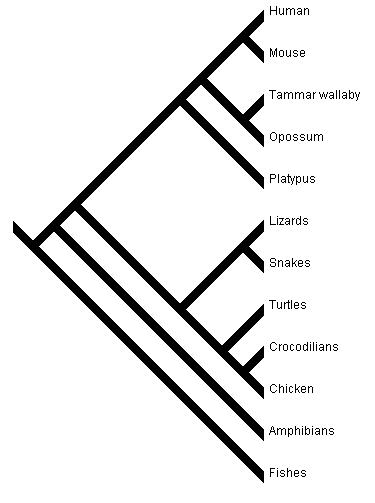
The genome sequence of the platypus was published Thursday in Nature, and from the press headlines, you could be excused for thinking that genomics has in fact confirmed that the platypus is a freak of nature: part bird, part reptile, and part mammal. The animal certainly looks like it - the platypus has the webbed feet and bill of a duck, and venomous spines and rubbery eggs that remind us of reptiles, but it has fur and feeds its young with milk, so it must be a mammal. The confusing press headlines might even lead you to believe that we sequenced the platypus genome just to figure out what this thing is, when the truth is, as we'll see below, that the genome sequence has essentially confirmed what evolutionary biologists have already deduced about the position of the platypus on the tree of life.

Is the platypus part bird, part reptile part mammal, an amalgam of very different groups of animals? Is it a primitive mammal that resembles the early ancestors of all mammals? Can we figure out just what this creature is by gazing at its genome?


Photo Credit: Stefan Kraft, courtesy of the Wikipedia Commons

President Bush has a bill on his desk, the Genetic Information Nondiscrimination Act (GINA), which will prohibit discrimination on the basis of genetic information with respect to health insurance and employment. He is expected to sign the bill, but is science – and the people – ready?

There has been considerable interest in the publication of the platypus genome, which is good. Unfortunately, much of the reporting has been distorted, which is bad. However, rather than picking on the press, I want to focus on an example from the scientific literature where a misconception about evolutionary relationships seems to creep in and generate confusion. Consider the following line, from a soon to be published paper about platypus sex chromosomes (Veyrunes et al. 2008).

As the most basal mammal group, the egg-laying monotremes are ideal for determining how the therian XY system evolved.

Stem cells, the body's wonder tool, are extremely versatile. They can develop in 220 different ways, transforming themselves into a correspondingly diverse range of specialized body cells.

Biologists and medical scientists plan to make use of this differentiation ability to selectively harvest cardiac, skin or nerve cells for the treatment of different diseases. However, the stem cell culture techniques practiced today are not very efficient. What proportion of a mass of stem cells is transformed into which body cells? And in what conditions?

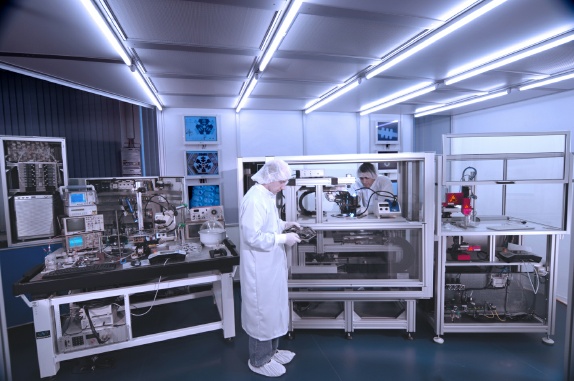
“We need devices that keep doing the same thing and thus deliver statistically reliable data,” says Professor Günter Fuhr, director of the Fraunhofer Institute for Biomedical Engineering IBMT in St. Ingbert.

Being obese can increase the risk of Alzheimer’s Disease by as much as 80 percent, according to a study in the May issue of Obesity Reviews. But it's not just weight gain that poses a risk. People who are underweight also have an elevated risk of dementia, unlike people who are normal weight or overweight.

US researchers carried out a detailed review of 10 international studies published since 1995, covering just over 37,000 people, including 2,534 with various forms of dementia. Subjects were aged between 40 and 80 years when the studies started, with follow-up periods ranging from three to 36 years.

The review, which included studies from the USA, France, Finland, Sweden and Japan, also included a sophisticated meta-analysis of seven of the studies, published between 2003 and 2007 with a follow-up period of at least five years.

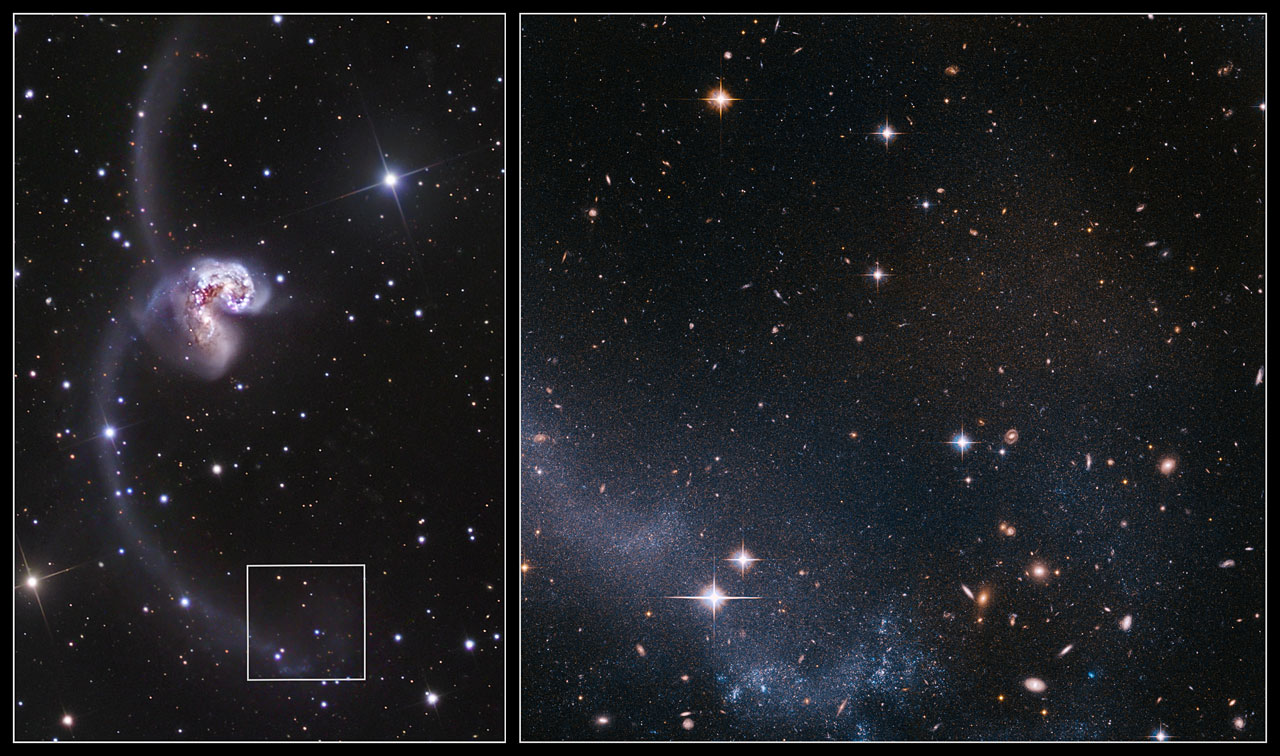
The Antennae Galaxies, located in the constellation of Corvus (the Crow), are among the closest known merging galaxies. The two galaxies, also known as NGC 4038 and NGC 4039, began interacting a few hundred million years ago, creating one of the most impressive sights in the night sky. They are considered by scientists as the archetypal merging galaxy system and are used as a standard against which to validate theories about galaxy evolution.

Scientists using Hubble’s Advanced Camera for Surveys and Wide Field Planetary Camera 2 to observe individual stars spawned by the colossal cosmic collision in the Antennae Galaxies have reached a surprising conclusion - the Antennae are much closer than previously believed, 45 million light-years instead of the previous best estimate of 65 million light-years.

