






At the cores of many galaxies, supermassive black holes expel powerful jets of particles at nearly the speed of light. Just how they perform this feat has long been one of the mysteries of astrophysics. The leading theory says the particles are accelerated by tightly-twisted magnetic fields close to the black hole, but confirming that idea required an elusive close-up view of the jet's inner throat. Now, using the unrivaled resolution of the National Radio Astronomy Observatory's Very Long Baseline Array (VLBA), astronomers have watched material winding a corkscrew outward path and behaving exactly as predicted by the theory.

In 1600 eruption of Huaynaputina in Peru put a large amount of sulfur into the atmosphere. Sulfur reacts with water in the air to form droplets of sulfuric acid, which cool the planet by reducing the amount of sunlight reaching the Earth's surface.

The droplets soon fall back to Earth, so the cooling effects lasted only a year or so, but the global impact on human society was much greater, according to a new study of contemporary records by geologists at UC Davis.
N
o one had looked at the agricultural and social impacts, said Ken Verosub, professor of geology at UC Davis. "We knew it was a big eruption, we knew it was a cold year, and that's all we knew."

It's been thought that very preterm babies were not developed enough to benefit from 'comfort strategies but research published today in BMC Pediatrics suggests that even babies born between 28 and 31 weeks could benefit from skin-to-skin cuddling with their mother before and during painful procedures, such as a heel lance.

Celeste Johnston of McGill University, Montreal, Canada and colleagues have already shown that skin-to-skin contact, known as kangaroo mother care (KMC) helps babies born at 32 to 36 weeks to recover from pain.

A much-discussed idea to offset global warming by injecting sulfate particles into the stratosphere would have a drastic impact on Earth's protective ozone layer, new research concludes. The study, led by Simone Tilmes of the National Center for Atmospheric Research (NCAR), warns that such an approach might delay the recovery of the Antarctic ozone hole by decades and cause significant ozone loss over the Arctic.

The study will be published Thursday in Science Express. It was funded by the National Science Foundation, which is NCAR's principal sponsor, as well as by NASA and European funding agencies.

"Our research indicates that trying to artificially cool off the planet could have perilous side effects," Tilmes says. "While climate change is a major threat, more research is required before society attempts global geoengineering solutions."

Depending on which variant of a certain gene a woman has, a coffee consumption rate of at least two-three cups a day can either reduce the total risk of developing breast cancer or delay the onset of cancer. This is shown in new research from Lund University and Malmö University in Sweden.

The effect of coffee is related to estrogens, female sex hormones. Certain metabolic products of these hormones are known to be carcinogenic, and various components of coffee can alter the metabolism so that a woman acquires a better configuration of various estrogens. What’s more, coffee contains caffeine, which also hampers the growth of cancer cells.
A quirky psychological phenomenon known as “grapheme-color synaesthesia” describes individuals who experience vivid colors whenever they see, hear, or think of ordinary letters and digits. A hallmark of synaesthesia is that individuals seem to be idiosyncratic in their experiences. That is, most synesthaetes will consistently see the same colors accompanied with specific graphemes, but few of these experiences appear to be shared with other synesthetes. 

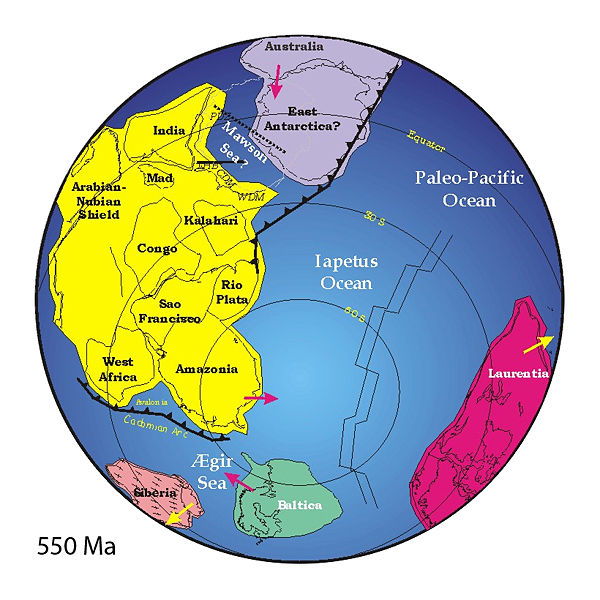
Gondwana was a ‘supercontinent' comprised of Antarctica, South America, Africa, Madagascar, Australia-New Guinea, and New Zealand, as well as Arabia and the Indian subcontinent of the Northern Hemisphere.

It existed between 500 and 180 million years ago but geologists have debated for decades over how it eventually broke up. The two primary camps support a theory claiming the continent separated into many small plates and a second theory believes it broke into a few large pieces.

In a new paper published in ‘Geophysical Journal International’, Dr. Graeme Eagles at the University of London says he has the answer.

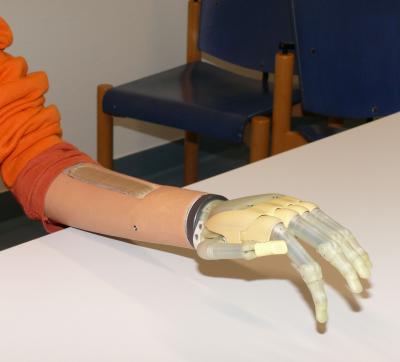
Eighteen-year-old Sören Wolf was born with only one hand but when it comes to a prosthetic second one, he's enthusiastic about both the “i-LIMB” and the ”Fluidhand.”

The new “i-LIMB” prosthetic hand developed and distributed by Scottish company “Touch Bionics” has distinct advantages over similar competitive models. Complex electronics and five motors contained in the fingers enable every digit of the i-LIMB to be powered individually. A passive positioning of the thumb enables various grip configurations to be activated. The myoelectric signals from the stump control the prosthetic hand; muscle signals are picked up by electrodes on the skin and transferred to the control electronics in the prosthetic hand.

Dutch researchers at University Medical Center Utrecht and the Hubrecht Institute have succeeded in growing large numbers of stem cells from adult human hearts into new heart muscle cells.

Prior to this, it was necessary to use embryonic stem cells. Their findings are published in the latest issue of the journal Stem Cell Research.

The stem cells are derived from material left over from open-heart operations. Researchers at UMC Utrecht used a simple method to isolate the stem cells from this material and reproduce them in the laboratory, which they then allowed to develop. The cells grew into fully developed heart muscle cells that contract rhythmically, respond to electrical activity, and react to adrenaline.

Andalucia has one of the highest rates of childhood obesity in Spain according to the Action Plan to address childhood obesityPlan Integral de Obesidad Infantil de Andalucia 2007-2012.

Only children from The Canary Islands, Cantabria and Murcia are fatter.

Other data show that in Andalucia the prevalence of overweight and obesity combined is 32% in boys and 31% in girls: however it is much higher among younger children than older children and reaches 40% and 45% respectively in boys and girls aged 6-9 years. This suggests there will be an even greater problem in the future.


