






Researchers have provided the first global analysis of human proteins interacting with proteins of viruses and other pathogens. The network of interactions, described in an article published February 15 in the open-access journal PLoS Pathogens, reveals possible key intervention points for the future development of therapeutics against infectious diseases.

“Infectious diseases result in millions of deaths each year,” said co-author Matt Dyer. “Although much effort has been directed towards the study of how infection by a pathogen causes disease in humans, only recently have large data sets for protein interactions become publicly available.”

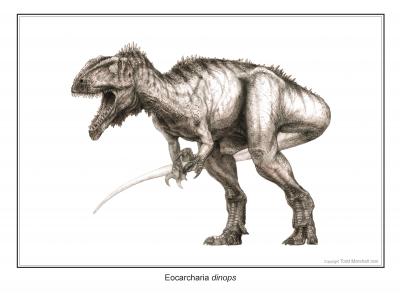
Two new 110 million-year-old dinosaurs unearthed in the Sahara Desert highlight the unusual meat-eaters that prowled southern continents during the Cretaceous Period. Named Kryptops and Eocarcharia in a paper appearing this month in the scientific journal Acta Palaeontologica Polonica, the fossils were discovered in 2000 on an expedition led by University of Chicago paleontologist Paul Sereno.

Sereno and co-author paleontologist Stephen Brusatte of the University of Bristol say the new fossils provide a glimpse of an earlier stage in the evolution of the bizarre meat-eaters of Gondwana, the southern landmass. “T-rex has become such a fixture of Cretaceous lore, most people don’t realize that no tyrannosaur ever set foot on a southern continent,” said Sereno.

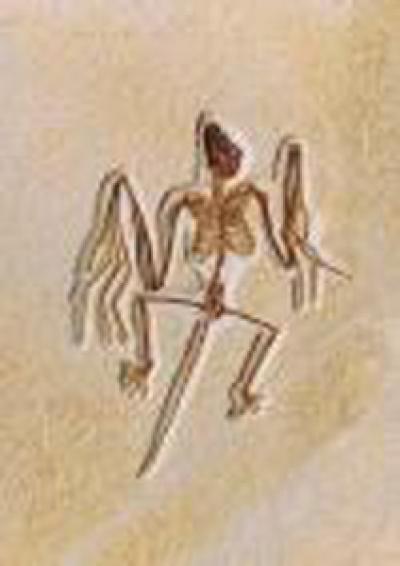
Nothing would seem to be stranger than bats flying without their special radar. They would be the Keystone Cops of zoology. But the discovery of a remarkably well-preserved fossil representing the most primitive bat species known to date demonstrates that the animals evolved the ability to fly before they could echolocate.

The new species, named Onychonycteris finneyi, was unearthed in 2003 in southwestern Wyoming and is described in a study in the Feb. 14 issue of the journal Nature, on which University of Michigan paleontologist Gregg Gunnell is a coauthor along with researchers from the American Museum of Natural History (AMNH) in New York, the Royal Ontario Museum in Canada and the Senckenberg Research Institute in Germany.

When it comes to romantic attraction men primarily are motivated by good looks and women by earning power. At least that’s what men and women have been saying for a long time. Based on research that dates back several decades, the widely accepted notion permeates popular culture today.

But those sex differences didn’t hold up in a new in-depth study of romantic attraction undertaken by two Northwestern University psychologists.

In short, the data suggest that whether you’re a man or a woman, being attractive is just as good for your romantic prospects and, to a lesser extent, so is being a good earner.

The United States will be home to a $1 trillion carbon emission market by 2020 if federal and state policymakers continue on their current path towards a comprehensive "cap-and-trade" program that is confined to domestic trading only. In an analysis of bills today before the U.S. Congress, New Carbon Finance research economists based in New York, Washington D.C. and London, U.K. predict that in 12 years a carbon-constrained U.S. economy that includes a cap-and-trade system allowing only domestic trades will produce:

  • A $1 trillion carbon trading market -- more than twice the size of the European Union's Emissions Trading Scheme;

  • A carbon price of $40 per tonne as soon as 2015, which will result in a rise in consumer energy prices in real terms of roughly 20% for electricity, 12% for gasoline and 10% for natural gas -- as well as impacts on other prices as higher energy and transportation costs filter through the economy; and
  • Major U.S. investments in renewable energy, energy efficiency, and greenhouse gas mitigation projects and technologies.

“Flies are nature’s ultimate sensory machines, outperforming any human-engineered devices,” said Mark Frye of the University of California, Los Angeles. Adult fruit flies can distinguish small differences in odor concentration across antennae separated by less than one millimeter. Flies can also see in all directions at once, though the picture may be grainy.

Flies’ keen senses allow for some incredible maneuvers. During flight, a male housefly chasing a female can make turns within 40 milliseconds—less than the blink of an eye. When they’re hungry, flies track weak scents of food to far-flung places. Both feats depend on the tight integration of sight and smell.

Scaled versions of Jupiter and Saturn orbiting a star 5000 light-years away, half as massive as the Sun, have been revealed from an effort involving a world-wide net of telescopes, including the UK's Liverpool Telescope on the Canary Islands.

This marks the first discovery of another system of planets that has striking similarities with our Solar System. Moreover, it suggests that such giant planets do not favour the single-life but are more likely to be found in family groups. The research is published in the 15th February issue of Science.

Whilst there are more than 250 planets now known, there are only about 25 such systems with multiple planets and the newly discovered system resembles our own Solar System more closely than any previously observed.

Continued from Part 7:
I interviewed Gary Taubes by phone a few weeks ago, shortly after he gave a talk about the main ideas of his new book — Good Calories, Bad Calories — at UC Berkeley. The interview lasted about 2 hours. This is part 8.

SETH: Marc Hellerstein thought that the obesity epidemic was caused by people being sedentary?

Insects will feast and leafy plants will suffer if temperatures warm and atmospheric carbon dioxide increases, according to a team of researchers who studied evidence of insect feeding on fossil leaves from before, during and after the Paleocene-Eocene Thermal Maximum.

The PETM occurred 55.8 million years ago and was an abrupt global warming event linked to a temporary increase in carbon dioxide in the atmosphere. This event is comparable in size and rate to the current climate changes brought on by human activity.

Results from field research supported by Earthwatch, the international environmental charity, will help scientists predict threats to wildlife should climate change result in a sea level rise in the Baltic.

During the six year research programme, coordinated by Earthwatch scientists Drs. Chris Joyce and Niall Burnside (University of Brighton), and Elle Puurmann (NGO Läänerannik), monitoring stations were installed in Vormsi Island, Silma Nature Reserve and Matsalu National Park, some of the best coastal wetlands in Estonia for nature conservation. The stations’ data loggers recorded water levels and soil moisture. Bird life was also recorded at fixed locations.

