





How you are feeling has an impact on your routine economic transactions, whether you’re aware of this effect or not.

In a new study that links contemporary science with the classic philosophy of William James, a research team finds that people feeling sad and self-focused spend more money to acquire the same commodities than those in a neutral emotional state. The team’s paper, “Misery is not Miserly: Sad and Self-Focused Individuals Spend More,” will be published in the June 2008 edition of Psychological Science and will be presented at the Society for Social and Personality Psychology’s Annual Meeting on Feb. 9.

In most of western civilization, smoking rates have dropped. But in Spanish society cigarette use among women has gone up in the last 50 years.

A study carried out at the Department of Anthropology at the University of Granada has examined, both at a quantitative and a qualitative level, the reasons for the increase - and it's about men, they say.

According to the study, cigarettes have become very important for women in order to;

  • face up to stress and anxiety
  • control appetite and body weight
  • facilitate interaction in social relations
  • assert independence

In that sense, they are used as a tool to get closer to men and to get in touch with them in sexual and amorous interactions.

Mount Sinai researchers have discovered that the release of blood stem cells from bone marrow is regulated by the brain through the cyclical human biological clock, via adrenergic signals transmitted by the sympathetic nervous system. These new findings, published online today on the website of the journal Nature, point out that the harvest of stem cells for transplantation may be improved by timing it at the peak of their release.

The study describes the mechanisms at the molecular levels in which signals from the biological clock in the brain are sent via the sympathetic—or "fight or flight" branch—of the nervous system, directly to bone marrow stem cell niches. Researchers, using mice as a model, were able to show the rhythmic release and peak of stem cells in circulation during the mouse’s resting period, and that changes in the light cycle or an experimental “jet lag” altered the release patterns. This is the first time a study has demonstrated that the brain regulates a stem cell niche.

Researchers at the University of Arkansas for Medical Sciences (UAMS) have reported a 10-fold life extension in the complex animal C. elegans, tiny worms that live in the soil.

Reported in the February 2008 issue of the journal Aging Cell, the discovery was made by a team of researchers headed by Robert Shmookler Reis, professor in the UAMS Departments of Geriatrics, Biochemistry/Molecular Biology and Pharmacology/Toxicology and research scientist at the Central Arkansas Veterans Healthcare System.

Continued from Part 6:
I interviewed Gary Taubes by phone a few weeks ago, shortly after he gave a talk about the main ideas of his new book — Good Calories, Bad Calories — at UC Berkeley. The interview lasted about 2 hours. This is part 7. SETH ROBERTS: I was a member of the Center for Weight and Health. But the other members didn’t know what I was up to, and had no idea it could have anything to do with actual weight loss.

GARY TAUBES: That’s one of the things I’ve found most amusing about obesity research, that you have this disconnect from pre-World War Two, when the people doing it were clinicians who were treating obese patients, to post-World War Two, where first, it’s nutritionists, who do rat experiments. Then, by the 1960s, obesity is considered an eating disorder and it’s being treated by psychologists and psychiatrists. So today, if you looking at some of the major obesity centers in the country — at Yale, at University of Cincinnati, they’re all run by psychologists or psychiatrists. Here’s a physiological disorder of the body, and it’s being studied by psychologists and psychiatrists. They’re not interested in anecdotal evidence, unless it agrees with their preconceptions.

Lice from 1,000-year-old mummies in Peru may unravel important clues about a different sort of passage: the migration patterns of America’s earliest humans, a new University of Florida study suggests.

“It’s kind of quirky that a parasite we love to hate can actually inform us how we traveled around the globe,” said David Reed, an assistant curator of mammals at the Florida Museum of Natural History on the UF campus and one of the study’s authors.

DNA sequencing found the strain of lice to be genetically the same as the form of body lice that spawns several deadly diseases, including typhus, which was blamed for the loss of Napoleon’s grand army and millions of other soldiers, he said.

Over 70 percent of high school teachers are female and girls in high school take as many math courses as boys, yet it's believed female interest in math and science still wanes considerably in high school and college.

A new study conducted by researchers at the University of Texas at Austin, the University of Pennsylvania, and Michigan State University published in Child Development says girls, more than boys, look to their close friends when they make important decisions such as whether to take math and what math classes to take, confirming how significant peers are during adolescence.

There are two mistakes you can make when you read a scientific paper: You can believe it (a) too much or (b) too little. The possibility of believing something too little does not occur to most professional scientists, at least if you judge them by their public statements, which are full of cautions against too much belief and literally never against too little belief. Never. If I’m wrong — if you have ever seen a scientist warn against too little belief — please let me know. Yet too little belief is just as costly as too much.

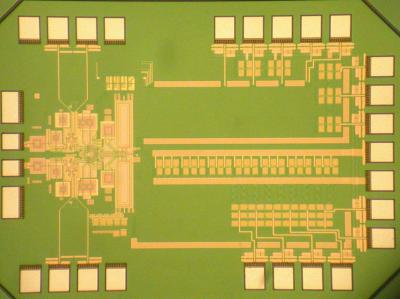
At today’s IEEE International Solid State Circuit Conference, IMEC introduced its prototype of a 60GHz multiple antenna receiver, and invites industry to join its 60GHz research program. The 60GHz band offers massive available bandwidth that enables very high bit rates of several Gbits-per-second at distances up to 10 meters (about 33 feet).

To make the 60GHz technology cost-efficient to manufacture, low power and affordable in consumer products, IMEC has built its RF solution in a standard digital CMOS process thereby avoiding the extra cost of alternative technologies or dedicated RF process options.

The second industry goal is to overcome high path losses at mm-wave frequencies by using a phased antenna array approach.

Thousands of times a year, a single cell extraction from an embryo is performed to screen for genetic diseases. As of January 2008, the cell could be allowed to divide and the copy used for research without harm to the embryo. Current federal funding is prohibited for experiments that injure or destroy human embryonic stem cells and is limited to cells extracted before President Bush's declaration of August 9, 2001. Meanwhile, four hundred thousand embryos are sitting in clinics waiting to be implanted in the mother's womb or to be discarded – a practice of which no one has raised a disapproving eyebrow. However, rapid advances in stem cell extraction methodology are quickly laying ethical issues to rest. As of January, 2008, stem cell research has laid a golden egg. Thousands of times a year a single cell is taken from an embryo to screen for genetic diseases. Advanced Cell Technology now has the capability to allow the cell to divide in a laboratory dish and use the copy for stem cells.


