





Continued from Part 4:
I interviewed Gary Taubes by phone a few weeks ago, shortly after he gave a talk about the main ideas of his new book — Good Calories, Bad Calories — at UC Berkeley. The interview lasted about 2 hours. This is part 5.

SETH: Well, I think your book is a great book, and I don’t think its effect is limited to how many reviews it gets. What books do you think your book resembles? I think of it as a book showing that authorities can be seriously wrong, but what do you think?

GARY TAUBES: You know, I don’t know, actually. I can’t answer that question without sounding like a crazed egomaniac, so I won’t. What the book does is try to explain why the paradigm of obesity and chronic disease has to change and then to offer the alternative paradigm. Although I don’t use the word “paradigm” in the second half of the book, that’s what it’s trying to do. I want people to stop thinking about obesity as a disorder of overeating, calories in over calories out, and think about it as a disorder of excess fat accumulation.

When the Herschel Space Observatory launches on an Ariane-5 rocket from the Guiana Space Centre, Kourou, French Guiana, in July 2008, astronomers will be able to examine some of the coldest objects in the universe.

Herschel will have the largest mirror of any space telescope — twice the size of the famous Hubble — that will detect the ‘glow’ of spacedust at around -250C, rather than the light from stars.

As well as being able to see star-forming regions very nearby in our own galaxy, it will be able to see galaxies forming when the universe was in its infancy, more than ten billion years ago.

It's the first space telescope to operate in the sub-millimetre part of the spectrum, between the far-infrared and microwaves.

Scientists from Commonwealth Scientific and Industrial Research Organisation (CSIRO) and Woods Hole Oceanographic Institution (WHOI)aboard the research vessel Southern Surveyor returned home today with a collection of coral samples and photographs taken in the Southern Ocean at greater depths than ever before.

Using a remotely operated submersible vehicle the international research team captured images of life found on deep-sea pinnacles and valleys up to three kilometres beneath the Ocean’s surface.

During a three-week voyage, scientists from CSIRO’s Wealth from Oceans National Research Flagship and the US collaborated to retrieve examples of live and fossilised deep-ocean corals from a depth of 1650 metres near the Tasman Fracture Zone, south-east of Tasmania.

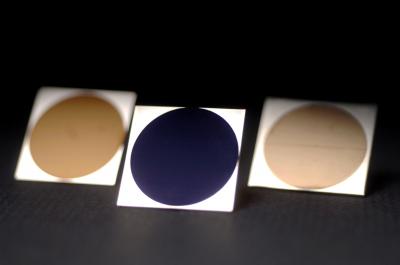
It isn't time to rewrite the Corpus Hermeticum just yet but a University of Rochester optical scientist has come close - he has used a tabletop laser to turn pure aluminum gold. And blue. And gray. And many other colors. And it works for every other metal tested, including platinum, titanium, tungsten, silver, and gold.

Chunlei Guo, the researcher who a year ago used intense laser light to alter the properties of a variety of metals to render them pitch black, has pushed the same process further in a paper in today’s Applied Physics Letters. He now believes it’s possible to alter the properties of any metal to turn it any color — even multi-colored iridescence like a butterfly’s wings.

Lt. Col. James "Flipper" Kromberg of the U.S. Air Force became the first military service pilot to evaluate the F-35 Lightning II, taking the aircraft through a series of maneuvers Wednesday on its 26th flight.

Kromberg took off from Lockheed Martin's Fort Worth plant at 11:54 a.m. CST, flew the plane to 6,000 feet and checked handling qualities at 15-degrees angle of attack. He then climbed to 10,000 and 12,000 feet assessing the up-and-away flight-control response. Kromberg also tested the F-35's engine performance and formation-flying characteristics.

"The aircraft flew very well, exceeding my expectations," Kromberg said. "I was surprised by the amount of power on the takeoff roll. And the handling, particularly with the gear up, was phenomenal.

For the first time ever, NASA will beam a song -- The Beatles' "Across the Universe" -- directly into deep space at 7 p.m. EST on Feb. 4.

The transmission over NASA's Deep Space Network will commemorate the 40th anniversary of the day The Beatles recorded the song, as well as the 50th anniversary of NASA's founding and the group's beginnings. Two other anniversaries also are being honored: The launch 50 years ago this week of Explorer 1, the first U.S. satellite, and the founding 45 years ago of the Deep Space Network, an international network of antennas that supports missions to explore the universe.

The transmission is being aimed at the North Star, Polaris, which is located 431 light years away from Earth. The song will travel across the universe at a speed of 186,000 miles per second. Former Beatle Sir Paul McCartney expressed excitement that the tune, which was principally written by fellow Beatle John Lennon, was being beamed into the cosmos.

You can't pick up a newspaper or a magazine without someone discussing the obesity epidemic. According to the CDC, in 2006, only four states had a prevalence of obesity less than 20%.

It's no different in Europe. Last week, the UK health secretary declared an obesity epidemic, but does the evidence really stack up? Researchers in this week’s British Medical Journal debated the issue.

Claims about an obesity epidemic often exceed the scientific evidence and mistakenly suggest an unjustified degree of certainty, argue Patrick Basham and John Luik.

But Robert Jeffery and Nancy Sherwood argue that a large body of scientific evidence shows that obesity is a major global health problem.

Gout, or metabolic arthritis, was considered by Hippocrates “the disease of kings” because only wealthy people with rich diets got it. This was true until the early 20th century when cases went down because of improved knowledge about it.

But in the last 40 years, cases have gone up, mostly because now everyone can afford rich and sugar-filled treats. Gout affects 3 times as many men as women and an estimated 5.1 million people in the United States live with it.

It is caused by excess uric acid in the blood (hyperuricaemia) which leads to uric acid crystals collecting around the joints. There are a number of factors that contribute to the disease but consumption of sugar sweetened soft drinks and fructose is strongly associated with an increased risk of gout in men, finds a study published in BMJ.

The White House Office of Management and Budget (OMB) evaluates research at the U.S. Environmental Protection Agency and other federal agencies using the Program Assessment Rating Tool (PART), a set of questions that asks agencies about many aspects of their programs, including whether they can measure and demonstrate annual improvements in efficiency.

Based on the answers, OMB rates research programs as effective, ineffective, or somewhere in between. An "ineffective" rating can have serious adverse consequences for a program or agency. After experiencing difficulty meeting OMB's requirements to demonstrate the efficiency of its research programs, EPA asked a National Research Council committee for guidance on how to measure efficiency.

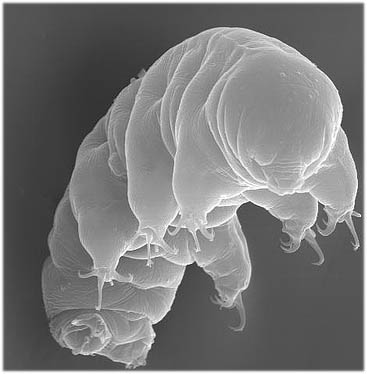
As large, visually-oriented mammals, we have long had a tendency to consider biological diversity primarily in terms of what we can see. There is, however, an entire world of creatures rarely encountered but no less unique and intriguing for it. Sometimes, one only needs the right tools, or the proper motivation, to recognize a group of organisms well worth our attention.

It is in this spirit that I am pleased to introduce you to Hypsibius dujardini, one of about 700 known species in the Phylum Tardigrada, commonly known as a "water bears" due to their ursine appearance.

