







You don't need other people to feel less lonely. You just need things you think are people.

Social scientists call this tendency “anthropomorphism.” As a research topic, the phenomenon carries important therapeutic and societal implications, says Nicholas Epley, Assistant Professor of Behavioral Science at the University of Chicago’s Graduate School of Business.

The behaviors described in the paper are not limited to the lonely. Nevertheless, they are well-known to casual observers, from the stereotype of the woman who lives alone surrounded by her menagerie of cats, to the movie portrayal by Tom Hanks of a tropical island castaway talking to a volleyball.

Why is it difficult to pick out even a familiar face in a crowd? We all experience this, but the phenomenon has been poorly understood until now.

The results of a recent study may have implications for individuals with face-recognition disorders and visual-attention related ailments — and eventually could help scientists develop an artificial visual system that approaches the sophistication of human visual perception.

The study is part of a recently completed Journal of Vision special issue titled “Crowding: Including illusory conjunctions, surround suppression, and attention”. “Crowding” is a failure to recognize an individual object in a cluttered environment.

Water has fascinated scientists for thousands of years. Along with being the elixir of life, it acts in counter-intuitive ways like expanding when frozen while most liquids contract.

Sometimes the best way to understand a mystery is to create one just like it. Chemical engineer Pablo Debenedetti and collaborators at three other institutions found a highly simplified model molecule that behaves in much the same way as water, a discovery that upends long-held beliefs about what makes water so special.

“This model is so simple it is almost a caricature,” Debenedetti said. “And yet it has these very special properties. To show that you can have oil-water repulsion without hydrogen bonds is quite interesting.”

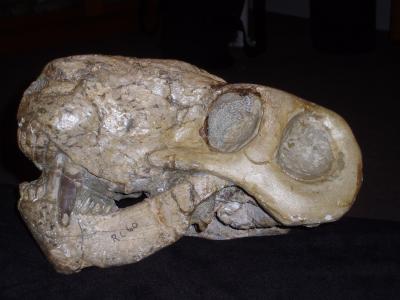
New research by Professor Michael Benton and our own Sarda Sahney at the University of Bristol indicate in a Proceedings of the Royal Society B paper that specialized animals forming complex ecosystems, with high biodiversity, complex food webs and a variety of niches, took over 30 million years to recover from the last major extinction.

About 250 million years ago, at the end of the Permian period, a major extinction event killed over 90 per cent of life on earth, including insects, plants, marine animals, amphibians, and reptiles. Ecosystems were destroyed worldwide, communities were restructured and organisms were left struggling to recover.

Labels such as “European American”, “white”, or “Caucasian” are often viewed as representing a homogeneous category in gene mapping studies and census reports, but each of these labels actually groups together multiple populations, which have diverse origins due to the complex history of European immigration to the United States.

In a recent study, published PLoS Genetics an international team of researchers provide the first genetic dissection of the population structure of European Americans, focusing on identifying the contributions from different genetic ancestries that are important for disease gene mapping.

Entamoeba histolytica, which causes inflammation of the colon (colitis), plays dirty. It attacks and kills human immune cells in seconds. Then the parasite hides the evidence by eating the cells’ corpses. While doing so, it kills nearly 100,000 people each year.

Researchers from the University of Virginia and the University of Vermont have discovered a means of inhibiting this most voracious of parasites. The study targets a protein which aids the parasite in its ingestion of immune cell corpses.

The research team, led by Dr. William Petri, hypothesized that identifying molecules involved in the corpse ingestion might provide insight into how the amebae cause colitis in children.

The direct effect predators have on their prey is to kill them. The evolutionary changes that can result from this direct effect include prey that are younger at maturity and that produce more offspring.

But killing prey also has indirect effects – rarely characterized or measured – such as a decline in the number of surviving prey, resulting, in turn, in more food available to survivors.

In a new study characterizing the complex ecological interactions that shape how organisms evolve, UC Riverside biologists Matthew Walsh and David Reznick present a novel way of quantifying these indirect effects by showing that prey adapt to food availability as well as the presence of predators.

The preservation of coastal ecosystem services such as clean water, storm buffers or fisheries protection does not have to be an all-or-nothing approach, a new study indicates, and a better understanding of how ecosystems actually respond to protection efforts in a “nonlinear” fashion could help lead the way out of environmental-versus-economic gridlock.

There may be much better ways to provide the majority of environmental protection needed while still maintaining natural resource-based jobs and sustainable communities, scientists from 13 universities and research institutes will suggest Friday in a new article in the journal Science.

“The very concept of ecosystem-based management implies that humans are part of the equation, and their needs also have to be considered,” said Lori C

University of California, Irvine researchers have identified a gene that is specifically responsible for generating the cerebral cortex, a finding that could lead to stem cell therapies to treat brain injuries and diseases such as stroke and Alzheimer’s.

Dr. Edwin Monuki, doctoral student Karla Hirokawa and their colleagues in the departments of Pathology & Laboratory Medicine and Developmental & Cell Biology found that a gene called Lhx2 serves as the long-sought cortical “creator” gene that instructs stem cells in the developing brain to form the cerebral cortex. This portion of the brain is responsible for higher sensory and cognitive functions, such as language, decision-making and vision. Without this gene, cortical cells will not form.

Researchers have discovered the secret of why larger and seemingly healthier dark sheep on a remote Scottish Island are mysteriously declining, seemingly contradicting Darwin’s evolutionary theory - and it shows just how complex natural selection is.

Dr. Jacob Gratten and Dr. Jon Slate, from the University of Sheffield's Department of Animal and Plant Sciences, looked at coat color in a feral population of Soay sheep on Hirta in the St Kilda Archipelago. On Hirta about three quarters of sheep have dark brown coats, while the remaining quarter have light sandy coats. The dark-coated Soay sheep are larger, which is usually linked to survival and reproductive success, but the frequency of light-coated sheep has increased over the last 20 years.

