





Continued from Part 3:
I interviewed Gary Taubes by phone a few weeks ago, shortly after he gave a talk about the main ideas of his new book — Good Calories, Bad Calories — at UC Berkeley. The interview lasted about 2 hours. This is part 4.

SETH: I was impressed with the discussion in your book and lecture about obesity coexisting with poverty in all these different cultures and the implications of that. I’d never seen that before.

GARY TAUBES: I have this feeling, and I guess that all writers (or all neurotic writers) have to some extent, that my work is being ignored. It’s my Rodney Dangerfield complex. Now that I’ve written the book, I occasionally get emails from friends saying that they had some discussion with some obesity researcher, and they said, “Are you going to read Taubes’s book?” and their response was “Well, we know what Taubes thinks, so why should I bother reading the book?”

Deferoxamine (DF), originally used to treat iron poisoning, can significantly boost the body’s own ability to heal and re-grow injured bones, according to researchers at the University of Alabama at Birmingham (UAB).

The researchers injected deferoxamine into injured mouse bones. They found DF triggered the growth of new blood vessels, which in turn kicked off bone re-growth and healing.

In the study, bone density surrounding the injury more than doubled to 2.6 cubic millimeters in treated bones compared to 1.2 cubic millimeters in untreated bones, the researchers said.

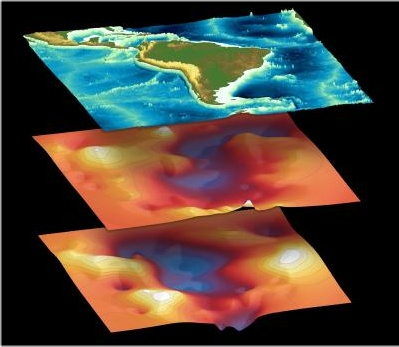
The motion, formation, and recycling of Earth’s crust—commonly known as plate tectonics—have long been thought to be continuous processes but new research by geophysicists suggests that plate tectonic motions have occasionally stopped in Earth’s geologic history, and may do so again.

The findings could reshape our understanding of the history and evolution of the Earth’s crust and continents.

Synthesizing a wide range of observations and constructing a new theoretical model, researchers Paul Silver of the Carnegie Institution of Washington and Mark Behn of the Woods Hole Oceanographic Institution (WHOI) have found evidence that the process of subduction has effectively stopped at least once in Earth’s past.

If you’re worried about high cholesterol levels and keeping heart-healthy as you get older, don’t push aside bacon and eggs just yet. A new study says they might actually provide a benefit.

Researchers at Texas A&M University have discovered that lower cholesterol levels can actually reduce muscle gain with exercising. Lead investigator Steven Riechman, assistant professor of health and kinesiology, and Simon Sheather, head of the Department of Statistics, along with colleagues from The Johns Hopkins Weight Management Center and the Northern Ontario School of Medicine, have recently had their findings published in the Journal of Gerontology.

Bottom line: Before you have that second helping of oatmeal, it’s very possible that cholesterol may not be the mean Mr.

LONDON, January 10 /PRNewswire/ --

Millions of Brits could be playing Russian Roulette with their health buying prescription-only medicines from rogue internet sites, according to research conducted by the Royal Pharmaceutical Society of Great Britain (RPSGB).

In response to this growing online danger, the RPSGB today rolls out the Internet Pharmacy Logo, a visual tool to help the public identify if a website is being operated by a bona fide pharmacy in Britain.

Hundreds of millions — or even billions — of years after planets would have initially formed around two unusual stars, a second wave of planetesimal and planet formation appears to be taking place, UCLA astronomers and colleagues believe.

"This is a new class of stars, ones that display conditions now ripe for formation of a second generation of planets, long, long after the stars themselves formed," said UCLA astronomy graduate student Carl Melis, who reported the findings today at the American Astronomical Society meeting in Austin, Texas.

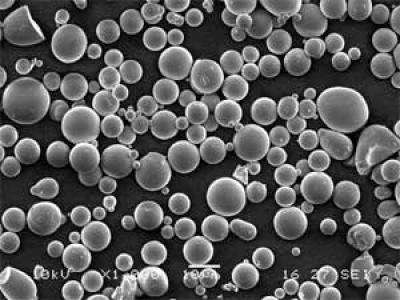
One of the roadblocks for electric motor technology is that as operating temperatures go up, the magnets in the motors get weaker, resulting in a drop in power. Ames Laboratory Researcher Iver Anderson and his team have developed a new magnetic alloy that maintains its strong magnetic properties even at high operating temperatures approaching 400 degrees F.

The Ames Lab senior metallurgist and Iowa State University adjunct professor of materials science and engineering is playing a major role in advancing electric drive motor technology to meet the enormous swell in consumer demand expected over the next five years.

Fungi don't exactly come in boy and girl varieties, but they do have sex differences. In fact, a new finding from Duke University Medical Center shows that some of the earliest evolved forms of fungus contain clues to how the sexes evolved in higher animals, including that distant cousin of fungus, the human.

A team lead by Joseph Heitman, M.D. has isolated sex-determining genes from one of the oldest known types of fungi, Phycomyces blakesleeanus, findings which appear in the Jan. 10 issue of Nature.

Fungi do not have entire sex chromosomes, like the familiar X and Y chromosomes that determine sexual identity in humans. Instead, they have sex determining sequences of DNA called "mating-type loci."

Mitch Waldrop has written an informative piece on the Science 2.0 movement in Scientific American:


Science 2.0: Great New Tool, or Great Risk?


Consistent with the content of the article, Mitch invites feedback:

Welcome to a Scientific American experiment in "networked journalism," in which readers—you—get to collaborate with the author to give a story its final form.


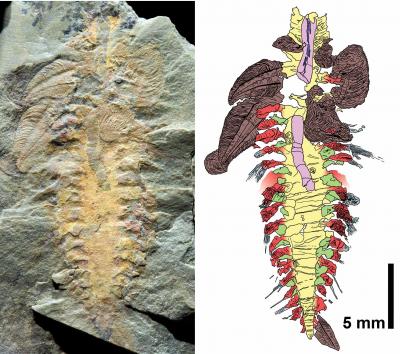
Discovery of an exceptional fossil specimen in southeastern Morocco that preserves evidence of the animal’s soft tissues has solved a paleontological puzzle about the origins of an extinct group of bizarre slug-like animals with rows of mineralized armor plates on their backs, according to a paper in Nature.

While evolution has produced great diversity in the body designs of animals, over the course of history several highly distinct groups, such as trilobites and ammonites, have become extinct. The new fossil is of an unusual creature known as a machaeridian, an invertebrate, or animal without a backbone, that existed for about 180 million years from 485 to 305 million years ago.


