




A group of scientists in Princeton's Department of Ecology and Evolutionary Biology has uncovered a new biological mechanism that could provide a clearer window into a cell's inner workings.

What's more, this mechanism could represent an "epigenetic" pathway -- a route that bypasses an organism's normal DNA genetic program -- for so-called Lamarckian evolution, enabling an organism to pass on to its offspring characteristics acquired during its lifetime to improve their chances for survival. Lamarckian evolution is the notion, for example, that the giraffe's long neck evolved by its continually stretching higher and higher in order to munch on the more plentiful top tree leaves and gain a better shot at surviving.

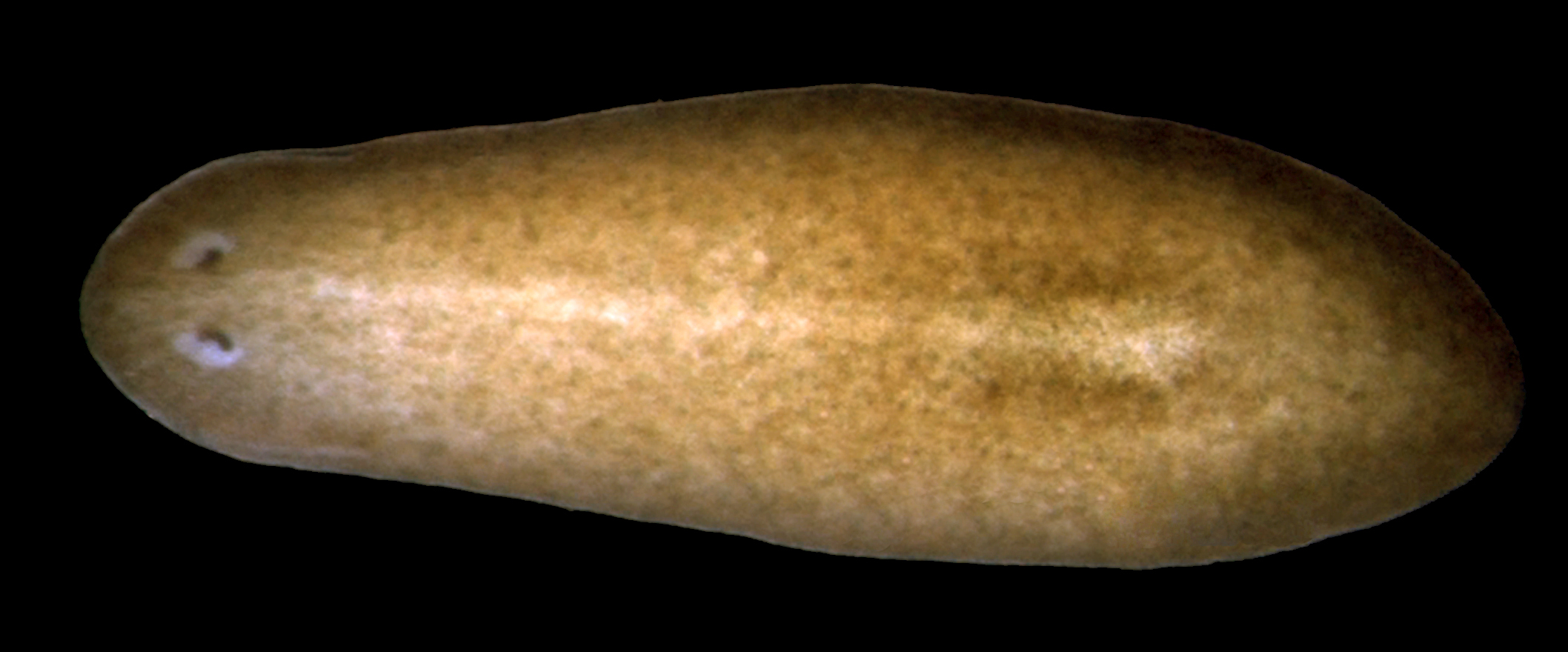
Planarians have fascinated centuries of biologists by their amazing powers of regeneration. If you decapitate a planarian, the body can grow a new head, and the head can grow a new body. In fact, if you cut out a very tiny chunk from the side of a planarian, that chunk will be able to regenerate a new, complete organism. How do these strange critters manage this? What genes do they have that we don't have? As it turns out, most planarian genes are shared with humans, and several groups of scientists are using the latest tools of genomics and molecular biology to figure out just what it is that gives planarians their remarkable powers of regeneration. These researchers hope that planarians will ultimately teach us how to regenerate human injuries.


Happy New Year to all of you that are regular readers of this blog and to those of you who might be coming to it the first time.  May 2008 be a happy year for everyone.  I can promise that it will be another year of upheaval and change, probably exceeding 2007 in that regard.  I will submit to you my annual predictions, both general and specific, for the year within the next two weeks.  Right now I would like to take a quick look at several late in the year developments of 2007 that provide indication as to where we are going and what will lay ahead for us in 2008.

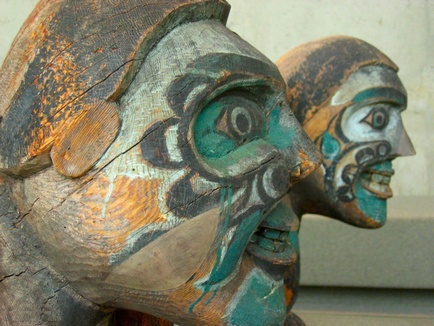
Many people pay silly amounts of money to wear a particular logo or a designer brand. A designer outfit doesn't keep you any warmer or dryer than an unbranded one, but functionality is only part of the story. Designer products say something about you – you are a trendy, sexy or sophisticated person. Brands help us to express who we think we are and who we want to be.

Big name brands are an integral part of our lives, says Davide Ravasi, associate professor in the Institute of Strategic Management of Bocconi University, Italy. Whether its Levi jeans, BMW cars or Nokia phones, we know the brands we like.

Should a rural, sparsely populated and predominantly white conservative state be the initial battleground for presidential nominations?

Well, someone has to go first but Steven S. Smith, the Kate M. Gregg Professor of Social Sciences Washington University in St. Louis, says it's time for Iowa to just go.

Smith says he has nothing against Iowa or New Hampshire, but he has serious misgivings about their special role as the first in the nation to select nominees. Iowa, he says, is far from representative of the nation — its population is too rural and too white to play such a critical role in choosing the nominee.

For the past 40 years, light-emitting diodes have been successfully employed wherever small amounts of light are needed. Present-day applications include car indicators, reversing and brake lights. However, the efficiency and luminosity of LEDs have never yet been sufficient to achieve a major breakthrough.

Thanks to new technologies for chip manufacturing, structural design and beam shaping developed by scientists at OSRAM Opto Semiconductors the light output of LEDs has been vastly improved. In Berlin on December 6, President Horst Köhler presented the team of OSRAM and Fraunhofer researchers with the prestigious German President’s award for technology and innovation, worth 250,000 euros, in recognition of their achievement.

Poor water supply remains a key problem in large parts of Africa and Asia.

A study carried out by researchers from the Department of Radiology and Physical Medicine of the University of Granada found that 100% of Spaniards analyzed had at least one kind of persistent organic compound (POC´s), substances internationally classified as potentially harmful to one’s health, in their bodies. These substances enter the body through food, water or even air. All of them tend to accumulate in human adipose tissue and easily enter into the organism through the aforementioned mediums.

The study, conceived by Juan Pedro Arrebola Moreno and directed by professors Piedad Martín Olmedo, Nicolás Olea Serrano and Mariana F.

A Duke University-led analysis of available records shows that while the North Atlantic Ocean’s surface waters warmed in the 50 years between 1950 and 2000, the change was not uniform. In fact, the subpolar regions cooled at the same time that subtropical and tropical waters warmed.

This striking pattern can be explained largely by the influence of a natural and cyclical wind circulation pattern called the North Atlantic Oscillation (NAO), wrote authors of a study published Thursday, Jan. 3, in Science Express.

Winds that power the NAO are driven by atmospheric pressure differences between areas around Iceland and the Azores.

A recent study by University of Virginia researchers demonstrates that the use of an acute, localized static magnetic field of moderate strength can result in significant reduction of swelling when applied immediately after an inflammatory injury.

Thomas Skalak, professor and chair of biomedical engineering, and Cassandra Morris, a former Ph.D. student in biomedical engineering at U.Va., reported their findings in the November 2007 edition of the American Journal of Physiology.

In the study, the hind paws of anesthetized rats were treated with inflammatory agents in order to simulate tissue injury. Magnetic therapy was then applied to the paws. The research results indicate that magnets can significantly reduce swelling if applied immediately after tissue trauma.


