







Scientists from Tel Aviv University recently linked depression to a biological mechanism that affects the olfactory glands. It might explain why some women, without realizing it, wear too much perfume.

Scientific research that supports this theory was published this year in the journal Arthritis and Rheumatism. “Our scientific findings suggest that women who are depressed are also losing their sense of smell, and may overcompensate by using more perfume,” explains researcher Prof. Yehuda Shoenfeld, a member of the Sackler Faculty of Medicine at Tel Aviv University. “We also believe that depression has biological roots and may be an immune system response to certain physiological cues.”

Women who are depressed are also more likely to lose weight.

Just as the risk of developing alcoholism is strongly influenced by genetic factors, mutations in gene coding – such as the aldehyde dehydrogenase (ALDH2*2) allele – also appear to protect against the risk. Scientists have only just begun to apply gene-therapy techniques to the alcohol-research field. A proof-of-principle study has found that administering an anti-Aldh2 antisense gene in rodents can curtail their urge to drink.

“An ‘experiment of nature’ is observed in some individuals of East Asian origin, who are 66 to 99 percent protected against alcoholism,” explained Yedy Israel, professor of pharmacological and toxicological chemistry at the Universidad de Chile, and adjunct professor of pathology, anatomy and cell biology at Thomas Jefferson University in Philadelphia.

Psychologists at Harvard University using neuroimaging say they have resolved the century-old debate over the existence of Extra-Sensory Perception(ESP) - and it doesn't exist.

The research was led by Samuel Moulton, a graduate student in the department of psychology in the Faculty of Arts and Sciences at Harvard University with Stephen Kosslyn, John Lindsley Professor of Psychology at Harvard and was published in the Jan. 2008 issue of the Journal of Cognitive Neuroscience. The scientists used brain scanning to test whether individuals have knowledge that cannot be explained through normal perceptual processing.

"If any ESP processes exist, then participants' brains should respond differently to ESP and non-ESP stimuli," explains Moulton.

I interviewed Gary Taubes by phone a few weeks ago, shortly after he gave a talk about the main ideas of his new book — "Good Calories, Bad Calories" — at UC Berkeley. The interview lasted about 2 hours.

SETH: I just spoke to someone who reduced the carbohydrate in his diet, for various reasons, including your book. He found that his performance on mental problems started improving again. It had stopped improving; it had been constant for a long time, and then it started getting better. So it may be that when you reduce the carbohydrate in your diet, your brain starts working better.

Chemical research has traditionally been organized in either experiment-centric or molecule-centric models. This makes sense from the chemist's standpoint. When we think about doing chemistry, we conceptualize experiments as the fundamental unit of progress. This is reflected in the laboratory notebook, where each page is an experiment, with an objective, a procedure, the results, their analysis and a final conclusion optimally directly answering the stated objective. When we think about searching for chemistry, we generally imagine molecules and transformations.

Is marketing a bad thing? How much money does Coca-Cola spend on Research & Development of its premier soft drink? Nothing. When something works, you go with it. New Coke taught them that. But they market it like crazy.

Yet whether pharmaceutical companies are primarily interested in research and development or marketing is central to the cultural debate about medicine.

Marc-André Gagnon and Joel Lexchin, writing in PLoS Medicine, state that information on promotional expenditures from IMS, the most widely quoted authority that surveys pharmaceutical firms, isn't reliable.

The extinction of dinosaurs has always fascinated historians and biologists. Theories abound regarding asteroid impacts or massive volcanic flows that might have occurred around the time dinosaurs became extinct but a new book argues that the mightiest creatures the world has ever known may have been brought down by a tiny, much less dramatic force – biting, disease-carrying insects.

An important contributor to the demise of the dinosaurs, experts say, could have been the rise and evolution of insects, especially the slow-but-overwhelming threat posed by new disease carriers.

For centuries, human beings have been entranced by the captivating glimmer of the diamond. What accounts for the stunning beauty of this most precious gem?

As mathematician Toshikazu Sunada explains in an article in the Notices of the American Mathematical Society, some secrets of the diamond's beauty can be uncovered by a mathematical analysis of its microscopic crystal structure. It turns out that this structure has some very special, and especially symmetric, properties. In fact, as Sunada discovered, out of an infinite universe of mathematical crystals, only one other shares these properties with the diamond, a crystal that he calls the "K_4 crystal".

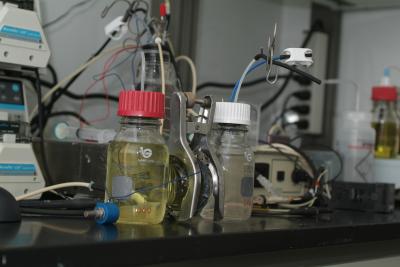
Researchers at the Biodesign Institute are using bacteria as a viable option to make electricity. The next step could be commercialization of a promising microbial fuel cell (MFC) technology.

"We can use any kind of waste, such as sewage or pig manure, and the microbial fuel cell will generate electrical energy," said Marcus, a Civil and Environmental Engineering graduate student and a member of the institute's Center for Environmental Biotechnology. Unlike conventional fuel cells that rely on hydrogen gas as a fuel source, the microbial fuel cell can handle a variety of water-based organic fuels.

"There is a lot of biomass out there that we look at simply as energy stored in the wrong place," said Bruce Rittmann, director of the center.

In the first study examining American physicians' use of placebos in clinical practice in the 21st Century, 45 percent of Chicago internists report they have used a placebo at some time during their clinical practice researchers report in the January issue of Journal of General Internal Medicine.

This study indicates a need for greater recognition of the use of placebos and unproven therapies and discussion about its implications," say the study authors, Rachel Sherman, a fourth year medical student at the University of Chicago's Pritzker School of Medicine, and John Hickner, MD, MSc, professor of family medicine, at the University of Chicago and University of Chicago Medical Center.

The authors sent questionnaires inquiring about placebo use to 466 internists at the University of Ch


