



Scientists have genetically engineered a mosquito to release a sea-cucumber protein into its gut which impairs the development of malaria parasites, according to research in PLoS Pathogens. Researchers say this development is a step towards developing future methods of preventing the transmission of malaria.

Malaria is caused by parasites whose lives begin in the bodies of mosquitoes. When mosquitoes feed on the blood of an infected human, the malaria parasites undergo complex development in the insect’s gut. The new study has focused on disrupting this growth and development with a lethal protein, CEL-III, found in sea cucumbers, to prevent the mosquito from passing on the parasite.

A brain chemical that makes us sleepy also appears to play a central role in the success of deep brain stimulation to ease symptoms in patients with Parkinson’s disease and other brain disorders. The surprising finding is outlined in a paper published in Nature Medicine.

The work shows that adenosine, a brain chemical most widely known as the cause of drowsiness, is central to the effect of deep brain stimulation, or DBS. The technique is used to treat people affected by Parkinson’s disease and who have severe tremor, and it’s also being tested in people who have severe depression or obsessive-compulsive disorder.

Archaeological evidence shows that bone skates (skates made of animal bones) are the oldest human powered means of transport, dating back to 3000 BC. Why people started skating on ice and where is not as clear, since ancient remains were found in several locations spread across Central and North Europe.

In a recent paper, published in the Biological Journal of the Linnean Society of London, Dr.

In this latest installment of our on-going series of interviews with some of the leading thinkers and scientists on the subject of energy, we interview Dr. Thomas Valone.

Facing and solving the multiple issues concerning energy is the single most pressing problem that we face as a species. There is a lot of media coverage about energy, alternative energy and global warming, but what has been missing is the knowledge and point of view of scientists, at least in the main stream media.

Dr. Thomas Valone is a physicist and licensed professional engineer with 30 years professional experience, is a patent examiner, research engineer, instrumentation designer and also an author, lecturer, and consultant on future energy developments. He is President and founder of Integrity Research Institute and formerly a community college teacher and a Research Director for Scott Aviation-ATO, Inc. He helped design the HullCom® for naval intraship communication, a 60 Hz gaussmeter without harmonic distortion, two bioelectric therapy devices, and a dental mercury vapor ionizer-precipitator.

A new study of combat-exposed Vietnam War veterans shows that those with injuries to certain parts of the brain were less likely to develop post-traumatic stress disorder (PTSD). The findings, from the National Institutes of Health (NIH) and the National Naval Medical Center, suggest that drugs or pacemaker-like devices aimed at dampening activity in these brain regions might be effective treatments for PTSD.

PTSD involves the persistent reliving of a traumatic experience through nightmares and flashbacks that may seem real. Twenty percent to 30 percent of Vietnam vets (more than 1 million) have been diagnosed with PTSD, and a similar rate has been reported among Hurricane Katrina survivors in New Orleans.

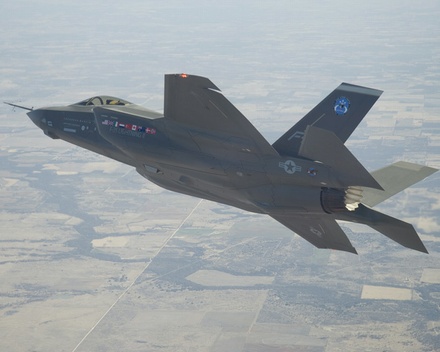
The Japan Maritime Self-Defense Force successfully flight
tested its first Raytheon-built Standard Missile-3. The
SM-3 Block IA missile engaged and destroyed a medium-range ballistic missile target more than 60 miles above the Pacific Ocean.

Personnel at the U.S. Navy's Pacific Missile Range Facility on Kauai launched the ballistic missile target while the crew of the Japanese destroyer JS KONGO (DDG-173) fired the intercepting missile.

The melodious sound of a songbird may appear effortless, but his elocutions are actually the result of rigorous training undergone in youth and maintained throughout adulthood. His tune has virtually “crystallized” by maturity. The same control is seen in the motor performance of top athletes and musicians. Yet, subtle variations in highly practiced skills persist in both songbirds and humans. Now, scientists think they know why.

Their finding, reported in the current issue of “Nature,” suggests that natural variation is a built-in mechanism designed to allow the nervous system to explore various subtle options aimed at maintaining and optimizing motor skills in the face of such variables as aging and injury.

At its core, healthy neurological function hinges on the efficient passage of information between brain cells via the synapse.

Figuring out how the synapse traffics this information -- a process called neurotransmission -- is crucial to understanding the function of the healthy and diseased brain.

Now, a team led by researchers at Weill Cornell Medical College in New York City has spotted a crucial new piece to that puzzle.

Their findings, published today in Neuron, focus on the role of a cellular enzyme called Synaptojanin 1 (Synj1).

Over the past 50 years, humans have changed the world’s ecosystems more rapidly and extensively than in any other comparable period in human history.

What researchers in a new Ambio paper are calling 'The Great Acceleration', stage 2 of the Anthropocene epoch, leads to questions how humankind will react in stage 3 - defined as the recognition that human activities are indeed affecting the structure and functioning of the Earth System as a whole.

Increased research and understanding, the Internet, and more free and open societies have influenced humanity to become a self-conscious, active agent in the operation of its own life support system.

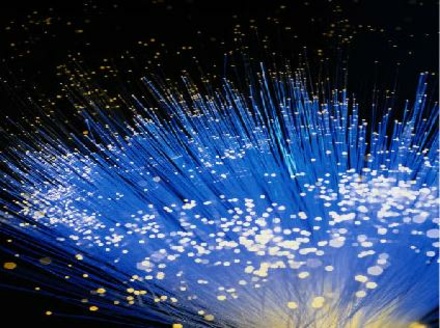
Broadband access has transformed the economic potential of the internet but the ADSL technology that delivers broadband to homes over traditional copper telephone wires is reaching its limit of around 10 megabits per second. If we want speeds ten times faster we need to replace the copper with optical fibers.

Optical fibers carry signals with light rather than electricity. They have been used in telecommunications for many years, especially over ‘long-haul’ links such as transatlantic cables and other trunk routes. Professor Henri Benisty, of the Institute of Optics Graduate School near Paris, likens them to motorways, carrying a lot of traffic but with only a small number of entrances and exits.

