






When the Nobel Committee awarded the 2007 Nobel Peace Prize to former US Vice President Al Gore, Jr. and the IPCC (Intergovernmental Panel on Climate Change) part of their rationale was

Extensive climate changes may alter and threaten the living conditions of much of mankind. They may induce large-scale migration and lead to greater competition for the earth’s resources. Such changes will place particularly heavy burdens on the world’s most vulnerable countries. There may be increased danger of violent conflicts and wars, within and between states.

Gene flow from genetically modified crop plants to their wild relatives will have little overall impact on human health or the environment, predicts a team of researchers in a report released today by the Council for Agricultural Science and Technology.

Gene flow -- the movement of genes from one plant population to another -- has always occurred naturally but has drawn particular attention during the past 10 years, as genetically modified crop plants have moved into commercial production.

"Regulatory requirements and market standards that are specific to crops developed using biotechnology have resulted in much closer monitoring of gene flow than has been done in the past," said plant scientist Kent Bradford, a co-author of the report and director of UC Davis' Seed Biotechnology Cen

Researchers at the University of Rochester have developed a shape-memory rubber that may enable applications as diverse as biomedical implants, conformal face-masks, self-sealing sutures, and “smart” labels.

The material, described in the journal Advanced Materials, forms a new class of shape-memory polymers, which are materials that can be stretched to a new shape and will stay in that form until heated, at which time they revert to their initial shape.

Unlike conventional shape-memory polymers, however, the new material is transparent, rubbery, and most importantly, engineers will be able to control the speed at which it returns to its original shape.

Here’s a nice post about dietary puzzles in which a group of people who should have a high or low rate of heart disease don’t. For example,

Spanish paradox. Those naughty Spaniards are eating more fat and less carbs and getting LESS heart disease, now there’s a surprise. Good thing their medical system is so marvelous.

Although there have been great improvements in the field of robotics in the last fifty years, much work remains in order to introduce androids into our daily life. Rafael Muñoz Salinas, a researcher from de Department of Computer Science and Artificial Intelligence of the University of Granada, is the author of a doctoral thesis which represents a major improvement in the interaction between robots and human beings.

Harvard-trained evolutionary biologist Aaron Filler, MD, PhD, has posted a 25 minute video titled, "Hominiform Progression", which he says is a revolutionary direct video view into the evolution of movement among the hominiforms: the apes and humans.

Most remarkable, he says, is video evidence that siamang ape babies naturally learn to walk bipedally as their fundamental and innate means of movement. Filler says this provides new evidence that the infants of a shared common ancestor of humans and apes also learned to walk bipedally as their normal means of movement.

In October(1), Dr.

Scientists at Imperial College London have overcome two significant obstacles on the road to harnessing stem cells to build patches for damaged hearts.

Presenting the findings at a UK Stem Cell Initiative conference 13 December in Coventry, research leader Professor Sian Harding explained how her group have made significant progress in maturing beating heart cells (cardiomyocytes) derived from embryonic stem cells and in developing the physical scaffolding that would be needed to hold the patch in place in the heart in any future clinical application.


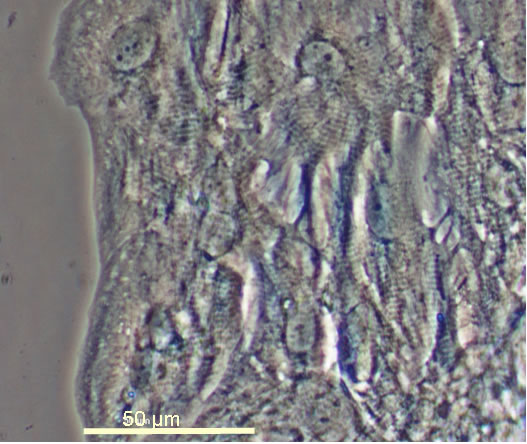
Human embryonic stem-cell derived cardiomyocytes maturing at 150 days. Credit: Imperial College

Domestic violence is an inherent problem in Turkey, and healthcare workers are doing little to combat the prevalence of wife beating, according to research published in the online open access journal, BMC Public Health. A survey of medical personnel reveals that a lack of training and a cultural acceptance of domestic violence may prevent victims from obtaining the support they desperately require.

173 medical staff from the emergency department of a Turkish university hospital responded to a questionnaire about domestic violence. 69.0% of the female and 84.7% of the male respondents declared that they agreed or partially agreed to at least one reason to justify physical violence.

Researcher at Stanford have isolated the multipotent progenitor, the great-grandparent of all the cells of the blood, and say this is the first offspring of the much-studied blood-forming stem cell that resides in the bone marrow and gives rise to all cells of the blood. It's also the cell that's thought to give rise to acute myelogenous leukemia when mutated.

Isolating this cell, which is well known in mice but had yet to be isolated in human blood, fills in an important gap in the human blood cell family tree.

Irving Weissman, MD, director of Stanford's Institute for Stem Cell Biology and Regenerative Medicine, spent his early career identifying each cell in the mouse blood family tree.

Circadian rhythms are the body’s intrinsic time-tracking system, which anticipates environmental changes and adapts to the appropriate time of day. They regulate a host of body functions, from sleep patterns and hormonal control to metabolism and behavior.

About 10 percent to 15 percent of all human genes are regulated by circadian rhythms. Disruption of these rhythms can profoundly influence human health and has been linked to insomnia, depression, heart disease, cancer and neurodegenerative disorders.

University of California, Irvine researchers say they have identified the chemical switch that triggers the genetic mechanism regulating our internal body clock.

