In the April 1 issue of Genes & Development, a Korean research team led by Dr. Kyong-Tai Kim (Pohang University) describes how melatonin production is coordinated with the body's natural sleep/wake cycles.

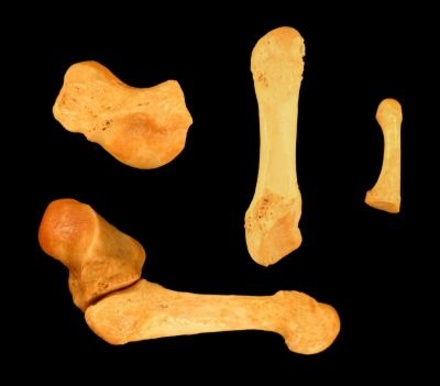
Something old is now something new, thanks to Lamar University researcher Jim Westgate and colleagues. The scientists' research has led to the discovery of a new genus and species of primate, one long vanished from the earth but preserved in the fossil record.

A diet high in carbohydrates but low on the glycemic index, which measures the impact of carbohydrates on blood sugar levels, may help promote weight loss, decrease body fat and reduce cardiovascular disease risk, according to a report in the July 24 issue of Archives of Internal Medicine, one of the JAMA/Archives journals.

Carbohydrates have been at the center of recent debates about the best diet for weight loss, according to background information in the article. Public attention has focused on low–glycemic index and high-protein regimens. Clinicians continue to recommend low-fat, high-carbohydrate plans; concerned that many sources of protein are high in saturated fats, physicians and nutrition experts have called for more research into the benefits and risks of each diet.

Not from marijuana but from ... ethanol.

Many will be familiar with cravings for sweet food after having overindulged in alcohol the night before. Some may have cravings for salty foods after using marijuana - in Amsterdam, where it is legal, of course.

It appears that Egyptian fruit bats also crave particular types of sugar to reduce the effects of ethanol toxicity. Francisco Sanchez from the Ben-Gurion University of the Negev (Israel) will present data demonstrating this on Sunday 1st of April at the Society for Experimental Biology’s Annual Meeting in Glasgow.


Original photo ( not the text): Francisco Sanchez

After the events that conspired during the day, the continuum of CINF presentations to which my attention was dedicated, the fitful moments of disgust over $8 sandwhiches in between presentations, amplified by the inability to wait in lines for physically destructive food, I was fortunate enough to be encouraged to partake in the social event that coupled with the evening the sacrement of free food and good company.

Is there a specific memory for events involving people? Researchers in the Vulnerability, Adaptation and Psychopathology Laboratory (CNRS/University Paris VI France ) and a Canadian team at Douglas Hospital, McGill University (Montreal), have identified the internal part of the prefrontal cortex as being the key structure for memorising social information. Published in Journal of Cognitive Neuroscience, February 2007.

French CNRS scientists in collaboration have shown that a memory of a traumatic event can be wiped out, although other, associated recollections remain intact. This is what a scientist in the Laboratory for the Neurobiology of Learning, Memory and Communication (CNRS/Orsay University), working with an American team, has recently demonstrated in the rat. This result could be used to cure patients suffering from post-traumatic stress.

The last quadripolar magnet was brought down into the tunnel of the world’s largest particle accelerator; the CERN’s1 LHC, or Large Hadron Collidor. This magnet is part of a series of 392 units which will ensure that the beams are kept on track all along their trajectory through the tunnel. Its installation marks the completion of a long and fruitful collaboration between the CERN, the CNRS/IN2P32 and the CEA/DSM3 in the field of superconductivity and advanced cryogenics. This collaboration has lasted over ten years and was part of the special contribution made by France, as the host country, to the construction of the LHC.

Previously, only amorphous polymer materials approached such levels of performance. On the other hand, these “gigantic respiration” and their respiration, which takes place at constant overall shape, is reversible. This discovery, of interest for numerous industrial applications, is published in the journal Science on March 30, 2007.


Structure of chromium (III) diphenyl dicarboxylate, one of the gigantic respiration crystalline solids, in its crude form following synthesis (middle), with all traces of solvent removed (on the left), and after absorption of solvent and increase in volume (on the right).

Credit: G. Ferey - CNRS 2007

The next time you are struggling to carry your bags home from the supermarket just remember that this could, in fact, be the reason you are able to walk upright on two legs at all! How we have evolved to walk on two legs remains a fundamental but, as yet, unresolved question for scientists. A popular explanation is that it is our ability to carry objects, particularly children, which forced early hominins onto two legs. Dr Johanna Watson (University of Manchester) will present work supporting this theory on Saturday 31st March 2007 at the Society for Experimental Biology's Annual Meeting in Glasgow.