

BIRMINGHAM, Ala. - Women live longer than men.

This simple statement holds a tantalizing riddle that Steven Austad, Ph.D., and Kathleen Fischer, Ph.D., of the University of Alabama at Birmingham explore in a perspective piece published in Cell Metabolism on June 14.

"Humans are the only species in which one sex is known to have a ubiquitous survival advantage," the UAB researchers write in their research review covering a multitude of species. "Indeed, the sex difference in longevity may be one of the most robust features of human biology."

pic

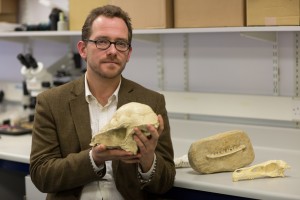
Steven Austad is pictured. Credit: UAB

Women with advanced ovarian cancer may benefit more from immunotherapy drug treatments if they are given straight after chemotherapy, according to a new study published in Clinical Cancer Research* today.

Researchers - funded by Cancer Research UK** and based at Queen Mary University London - examined samples from 60 women *** with ovarian cancer and found that chemotherapy given prior to surgery activates specialised immune cells called T cells within the tumour.

But they found that this also had a drawback. While the chemotherapy activated T cells it also boosted the cancer's defences against immune attack - cancers had higher levels of a protein called PD-L1 that stops T cells from recognising and destroying cancer cells.

HOUSTON - (June 14, 2016) - In 1988, scientists in Switzerland looked through a microscope and saw something they didn't expect: two sections of an X-shaped chromosome spiraling in opposite directions. Now scientists at Rice University have confirmed that such anomalies are indeed possible.

Peter Wolynes, a theoretical biological physicist, and Bin Zhang, a postdoctoral associate, saw the same phenomenon in their sophisticated computer models of DNA, a finding they said should encourage deeper investigation of a basic biological process. Understanding such processes is important as researchers seek new ways to fight cancer and other diseases.

Their work is described today in Physical Review Letters.

Shells of California mussels collected from the Pacific Ocean off the coast of Washington in the 1970s are on average 32 percent thicker than modern specimens, according to a new study published by University of Chicago biologists.

Shells collected by Native Americans 1,000 to 1,300 years ago were also 27 percent thicker than modern shells, on average. The decreasing thickness over time, in particular the last few decades, is likely due to ocean acidification as a result of increased carbon in the atmosphere.

Chiral molecules, compounds that come in otherwise identical mirror image variations, like a pair of human hands--are crucial to life as we know it. Living things are selective about which "handedness" of a molecule they use or produce. For example, all living things exclusively use the right-handed form of the sugar ribose (the backbone of DNA), and grapes exclusively synthesize the left-handed form of the molecule tartaric acid. While homochirality--the use of only one handedness of any given molecule--is evolutionarily advantageous, it is unknown how life chose the molecular handedness seen across the biosphere.

The risk of people developing Type 2 diabetes is lower for people who consume more whole grains, fruits, vegetables, nuts, and legumes, notes a study in PLOS Medicine.

A new study reports the first detection of chiral molecules in space, paving the way to understanding why chirality is "biased" on Earth. Our planet is home to a puzzle involving chiral molecules, those that, despite being mirror images of each other, don't exactly match; imagine a left-handed and right-handled glove, for example. They aren't interchangeable. Life on Earth is made of groups of such molecules that overwhelmingly share just one type of handedness, a phenomenon known as homochirality. The amino acids that make up the proteins in our bodies, for example, are all left-handed.

Six mating positions (amplexus modes) are known among the almost 7,000 species of frogs and toads found worldwide. However, the Bombay night frog (Nyctibatrachus humayuni), which is endemic to the Western Ghats Biodiversity hotspot of India, mates differently. In a new study, scientists have described a new (seventh) mode of amplexus -- now named as dorsal straddle.

(Boston) -- To date, there are no methods that can quickly and accurately detect pathogens in blood to allow the diagnosis of systemic bloodstream infections that can lead to life-threatening sepsis. The standard of care for detecting such blood-borne infections is blood culture, but this takes days to complete, only identifies pathogens in less than 30% of patients with fulminant infections, and it is not able to detect toxic fragments of dead pathogens that also drive the exaggerated inflammatory reactions leading to sepsis.

A virus that infects major freshwater bacteria appears to use stolen bits of immune system DNA to highjack their hosts' immune response.

Microbiologists have discovered that the virus, Cyanophage N1, carries a DNA sequence--a CRISPR--that is generally used by bacteria to fight off viral infection.

"This is the first evidence we've seen that a virus can donate an immunity system via CRISPR," says University of British Columbia virologist Curtis Suttle. "This is like a hacker compromising a computer system, and then immediately patching it to ensure other hackers can't break in."