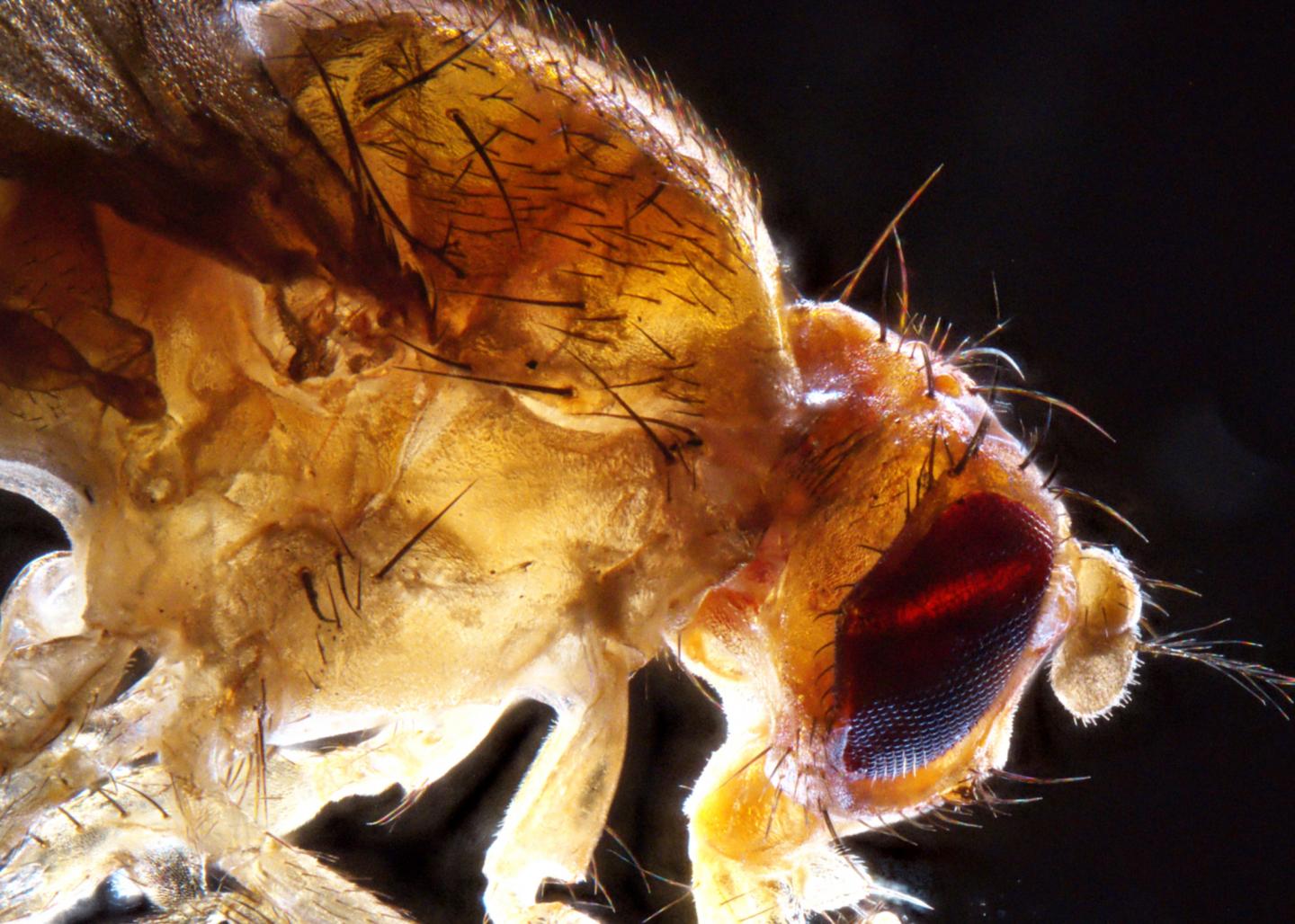





Shakespeare said "to be or not to be" is the question, and now scientists are asking how life forms grow to be the correct size with proportional body parts.

Probing deeply into genetics and biology at the earliest moments of embryonic development, researchers at Cincinnati Children's Hospital Medical Center report March 26 in Nature Communications they have found new clues to explain one of nature's biggest mysteries. Their data from fruit flies show the size and patterning accuracy of an embryo depend on the amount of reproductive resources mothers invest in the process before an egg leaves the ovary.

3 percent of younger children and 17 percent of 9-13 year olds skip lunch on a given school day and 23 percent of 9-13 year olds skip lunch on the weekends - yet obesity is a growing problem.

They may be eating more junk food instead. Lunch skippers had lower intakes of nutrients, including calcium and fiber, than lunch consumers. In addition, the data show that for some children, the lunch meal was primarily responsible for the higher essential nutrient intakes of vitamin D, potassium and magnesium, as well as a nutrient of concern, sodium. 

More than 60 percent of the world's population is infected with a type of herpes virus called human cytomegalovirus, which replicates by commandeering the host cell's metabolism, but the details of this maneuver have been unclear.

Researchers have discovered that cytomegalovirus manipulates a process called fatty acid elongation, which makes the very-long-chain fatty acids necessary for virus replication. They identified a specific human enzyme - elongase enzyme 7 - that the virus induces to turn on fatty acid elongation.

"Elongase 7 was just screaming, 'I'm important, study me,'" said John Purdy, a post-doctoral researcher at Princeton and lead author of the study. 

Cigarette smoking is down, thanks to fines and taxes on cigarette companies that fund anti-smoking campaigns - but hookah (water pipe) use is up. A new paper in Cancer Causes and Control worries that almost one in four high school seniors may try smoking hookah and 78,200 youth are current water pipe users.

Water pipes work by bubbling tobacco smoke through water, leading some users to believe that they carry less risk than cigarettes. The study, which analyzed data from the national 2012-2013 Youth Smoking Survey, found that over a third of youth believe it is less harmful to smoke tobacco in a water pipe than smoking a cigarette. 

Bisphenol A (BPA) is a chemical that is used in a variety of consumer products, such as water bottles, dental composites and resins used to line metal food and beverage containers. Often, aquatic environments such as rivers and streams become reservoirs for contaminants, which can include products containing BPA.

A new experiment was able to expose fish to endocrine-disrupting chemicals and cause them to pass adverse reproductive effects onto their offspring as many as three generations later, leading the authors to suggest that BPA could have adverse reproductive effects for fish and also humans and their offspring who are exposed to BPA as well.

Patients with carpal tunnel syndrome are more than twice as likely to have migraine headaches, reports a study in Plastic and Reconstructive Surgery--Global Open. The association also runs in the other direction, with migraine patients having higher odds of carpal tunnel syndrome.

The researchers analyzed data from nearly 26,000 Americans responding to a national health survey. Among other questions, participants were asked whether they had had carpal tunnel syndrome during the past year or "severe headache or migraine" during the past three months. Patients with carpal tunnel syndrome have symptoms such as hand numbness and weakness, resulting from pressure on the median nerve in the wrist.

Verbal abuse, aggressive behavior, criminal damage to objects are expected in certain professions but hardly anyone includes doctors, although they are exposed to such incidents - and not just in dictatorships or the developing world. 

Florian Vorderwülbecke and colleagues writing in Deutsches Ärzteblatt International (Dtsch Arztebl Int 2015; 112: 159-65) investigate how often acts of violence and aggression against primary care physicians are committed in Germany. They surveyed 1500 doctors, asking which assaults they had been exposed to, and where these took place, among other questions. 

A 3-dimensional model of human respiratory tissue has been shown to be effective for measuring the impact of chemicals, like those found in cigarette smoke or other aerosols, on the lung. 

More effective lab-based tests are required to reduce the need for animal testing in assessing the toxicological effects of inhaled chemicals and safety of medicines. Traditional lab-based tests use cell lines that do not reflect normal lung structure and physiology, and in some cases have reduced, or loss of, key metabolic processes. 

 NASA

NASA has sent an astronaut to the International Space Station to stay there for a year.

Nasal drops of harmless bacteria can inhibit a related bug that sometimes causes meningococcal disease, according to new findings published online in Clinical Infectious Diseases. The study--conducted among college students, a group at higher risk for this often serious illness--suggests a new approach that could help suppress outbreaks of the disease, if supported by future research.

Meningococcal disease is caused by Neisseria meningitidis, which can infect the lining of the brain and the spinal cord, causing meningitis. Strains of the bacteria can also cause serious bloodstream infections. But N. meningitidis can also live silently in a person's nose and throat, without illness. These "colonized" carriers can spread the pathogen to others through close contact.

