






Bronks/Wikimedia Commons

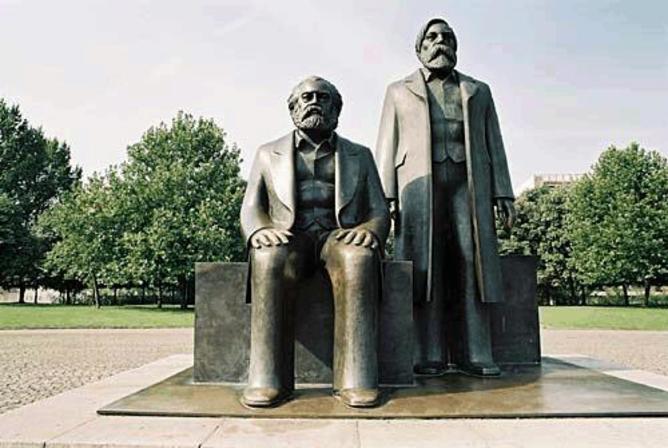
By Mark Beeson, Professor of International Politics at University of Western Australia

Of the many things academics obsess about, few rank more highly than citation counts. We all like to think our work is at least read by our peers, even if it doesn’t actually change the world. Google Scholar has become one of the more important indicators of our relative standing, although it can be a rather humbling one at times. The simple fact is that most of us simply don’t make it into what we might call the intellectual Premier League.

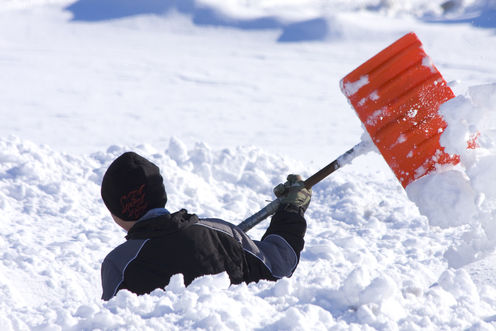
With snow comes shoveling, and with shoveling can come heart attacks. Shutterstock

By Jack Goodman, Professor, Kinesiology and Physical Education, Adjunct Scientist, Division of Cardiology, Mt. Sinai Hospital at University of Toronto

Men on lower incomes are more likely to help their partners with housework than higher-earners, although women are still by far doing the most around the home, no matter how many hours they work or how much they are paid.

While the burden of keeping the home clean is starting to be shared more equally between couples, signs of a class divide are beginning to emerge, a researcher from the University of Warwick has found.

"There's a stark difference in couples' attitudes towards gender equality depending on how much they are earning," explained Dr Clare Lyonette, from the Institute for Employment Research, who led the study.

One of the ways to study longevity has been engineering fruit flies whose genes can be turned on and off by a synthetic hormone, allowing detailed studies of the effects of single genes on life span. They do that because many of the genes have close relatives in humans.

Unfortunately, the hormone used to perform the studies turns out to be anything but neutral, according to a new study.  If so, it means studies on the genetic roots of aging will need a second look, because a common lab chemical can extend the life span of female fruit flies by 68 percent.

According to a new paper, policymakers must look beyond painkiller abuse in their efforts to reduce opioid overdose deaths.

In a comprehensive investigation, the scientists show that since 2002, new cases of non-medical abuse have declined, yet painkiller overdose deaths have soared - evidence that recreational use of painkillers is not a key driver of the opioid crisis.

The authors suggest that policymakers should instead focus on preventing new cases of opioid addiction caused by both medical and non-medical use and expanding access to opioid addiction treatment.


Raspberry Pi 2. Raspberry Pi

By Simon J Cox and Steven Johnston

The Raspberry Pi has been a great success, selling millions since launch in 2012 and igniting hobbyists' imagination everywhere. The Pi is a tiny computer at a tiny price, but now the arrival of a seriously upgraded Raspberry Pi 2 has brought the performance that the first lacked, in a package the same size at the same cost of US$35.

Three researchers say they can predict the spread of flu a week into the future with as much accuracy as Google Flu Trends can display levels of infection right now. 

The study in Scientific Reports uses social network analysis and combines the power of Google Flu Trends' "big data" with traditional flu monitoring data from the U.S. Centers for Disease Control and Prevention (CDC).

The 2014 European Astronomy Journalism Prize has been announced.   Now in its third year, the prize looks to reward excellence displayed in the field by professional journalists as well as students of both astronomy and journalism. It is awarded by Science  & Technology Facilities Council and ESO, in association with the Royal Astronomical Society and the Association of British Science Writers. 
New research has identified the mechanism used by plants in stress conditions to sense low oxygen levels - and scientists then used that knowledge and advanced breeding techniques to reduce yield loss in barley under water-logged conditions.

In 2011, University of Nottingham Professor of Crop Science Michael Holdsworth and colleagues identified the mechanism used by plants in stress conditions to sense low oxygen levels and now they have discovered how this works in barley.

“We now know how to breed barley cultivars more tolerant to waterlogging and flooding,” says Holdsworth.

Carl Djerassi. Boris Roessler/EPA

By Sonia Oreffice, Professor of Economics at University of Surrey

Carl Djerassi, who died recently aged 91, has been honored globally for his work.

