










People love that earthy smell after it rains. It turns out there is a good science reason for it, and it's been captured using high-speed imaging.

Petrichor is the  phenomenon first characterized by Australian scientists as the smell released after a light rain. Now scientists at MIT believe they may have identified the mechanism that releases this aroma, as well as other aerosols, into the environment.

By Josh Bloom and Henry Miller

The development of new drugs is among the riskiest of business ventures. It now takes 10-15 years for a pharmaceutical company to get a new drug approved, and on average the cost exceeds $2.5 billion. To establish its safety and effectiveness, a candidate drug or vaccine undergoes a lengthy process of laboratory, animal and clinical studies, and then regulatory review is conducted by the highly risk-averse FDA.

A 21st century gold rush has led to a significant increase of deforestation in the tropical forests of South America.

Researchers from the University of Puerto Rico have shown that between 2001 and 2013, around 1680 km2 of tropical forest was lost in South America as a result of gold mining, which increased from around 377 km2 to 1303km2 since 2007, which increased in the global economic crisis of 2008 and on. Around 90 percent of this forest loss occurred in just four areas and a large proportion occurred within the vicinity of conservation areas.
Bisexual women are more likely to experience poor mental health and mental distress than lesbians, according to new data gleaned from the 2007 Stonewall UK Women's Health Survey. Researchers from the London School of Hygiene&Tropical Medicine analyzed responses from 5,706 bisexual and lesbian women living in the UK aged 14 or over.

The study found bisexual women were less likely to be 'out' to friends, family and work colleagues and also less likely to be in a relationship. According to the results, bisexual women were less likely to experience sexuality-related discrimination from work, health care services, education and family than lesbians, but more likely to experience discrimination from friends.  

Tony Angelotti stunt doubling Johnny Depp in the first ‘Pirates of the Caribbean’ movie. Image credit: Courtesy of Tony Angelotti

By:
Emilie Lorditch, Inside Science 

It's not new that dwellers and cities are a little less hearty than rural cousins. There is even a hygiene hypothesis that says kids in the country get dirtier to their benefit and that wealthy, educated helicopter parenting and all those hand sanitizers and antibacterial soaps are doing more harm than good.

Allergies and numerous autoimmune diseases, such as asthma and type 1 diabetes, have become more common in the past 50 years, especially in urban environments. The belief is this is caused by urban issues like pollutants from human activities, a higher level of hygiene and the reduced biological diversity of the city living environment.
With organic food a $105 billion industry juggernaut, various groups are looking to don that health halo. Even frozen food.

If you don't think food can be "fresh" and "healthy" while still being frozen, you probably also do not believe organic food has more antioxidants and uses fewer pesticides and therefore are not the target market and you can stop reading.

One was about 17 Westerners being killed and one was about 2,000 Africans. Guess which got most of the media attention? Kano, Nigeria Stringer/Reuters.

By Ethan Zuckerman, Massachusetts Institute of Technology

Consider two tragic events that took place last week.

A small cell of Islamic terrorists attacked cartoonists at the satirical magazine Charlie Hebdo and shoppers in a Paris supermarket, killing 17 people and sparking international outcry, solidarity and support.


Prices of gas are approaching $2 a gallon. Does that make it a good time to raise the gas tax? Kevin Lamarque/Reuters

By Wallace Tyner, Purdue University

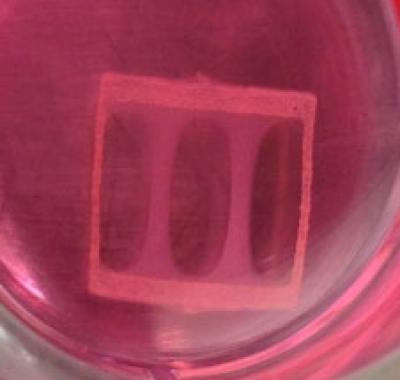
In a laboratory first, researchers have grown human skeletal muscle that contracts and responds just like native tissue to external stimuli such as electrical pulses, biochemical signals and pharmaceuticals. The lab-grown tissue should soon allow researchers to test new drugs and study diseases in functioning human muscle outside of the human body.

The researchers started with a small sample of human cells that had already progressed beyond stem cells but hadn't yet become muscle tissue. They expanded these "myogenic precursors" by more than a 1000-fold, and then put them into a supportive, 3-D scaffolding filled with a nourishing gel that allowed them to form aligned and functioning muscle fibers.


