







Previously unknown archaeological monuments have been discovered around Stonehenge as part of a digital mapping project that will transform our knowledge of this iconic landscape – including remarkable new findings on the world's largest 'super henge', Durrington Walls.

A new generation of chemotherapy drugs that are more effective and less toxic could be on the horizon thanks to a new mechanism to inhibit proteasomes, protein complexes that are a target for cancer therapy.

A member of the category of enzymes known as proteases, the proteasome is a protein complex responsible for several essential functions inside cells, such as eliminating harmful or non-functioning proteins and regulating the processes of apoptosis (programmed cell death), cell division and proliferation, say the authors in Chemistry&Biology,who were led by Daniela Trivella, researcher at the Brazilian Biosciences National Laboratory at the Brazilian Center for Research in Energy and Materials.

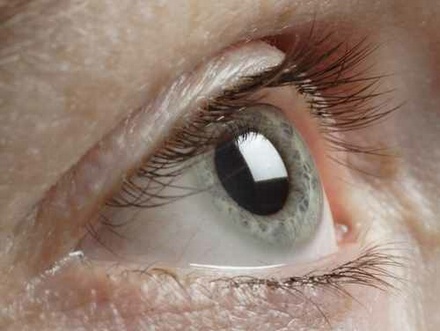
Glaucoma, a condition where pressure builds from poor drainage of fluid from the anterior chamber of the eye, destroying retinal ganglion cells and eventually the optic nerve, is a leading cause of blindness in the U.S. but a cure has been elusive because the basis of the disease is poorly understood. 

In glaucoma, the eye becomes like a bathtub that can't drain because the pipe is clogged. The clogged or defective vessel, known as Schlemm's canal, is part of the lymphatic system that is essential for drainage in the eye. 

Since the failures of some metal on metal hip implants were brought to light, the introduction of new joint implants has been the focus of major scientific and policy discussions, but regulation 'requires major overhaul,' say a group of experts, because the safety of several new technologies "could be compromised".

An International team led by Art Sedrakyan, Associate Professor at Weill Cornell Medical College in New York, argues that the momentum for change generated by these recent high profile failures is important and there is an urgent need to evaluate the evidence for introducing new implants.

One year ago I had the pleasure to spend some time with George Zweig during a conference in Crete (ICNFP 2013). He is a wonderful storyteller and a great chap to hung around with, and I had great fun in the after-dinners on the terrace of the Orthodox Academy of Crete overlooking the Aegean sea, drinking raki and chatting about physics and other subjects.

By Rob Brooks, UNSW Australia.

Settle in for a long read. Over the coming weeks you will be bombarded by shorter, snappier pieces about a controversy inflaming the front where evolutionary and social psychology meet. I’ve touched on this controversy already, and promised you more. Here’s that more, in 2,300 words of detail … rather too long for a column, I know.

Still with me? Thanks.

Statistics - learning from data and of measuring, controlling and communicating uncertainty - has become important to science and it is vital to the future of science, Science 2.0.

Over the last 200 years, and certainly with the advent of large-scale computing in the last 30 years, statistics has been an essential part of the social, natural, biomedical and physical sciences, along with engineering; and business analytics.

Statistics helps quantify the reliability, reproducibility and general uncertainty associated with discoveries, because one can easily be fooled by complicated biases and patterns arising by chance.

After the last wave of 'American children don't perform well on international standardized tests' articles in news media, the Obama administration gutted No Child Left Behind, the program approved with overwhelming bipartisan over a decade earlier, and replaced it with Common Core standards. American teachers, who didn't like the feeling that they were having to 'teach to the test' in order for students to do as well on standardized tests as kids from countries who primarily teach to the test, have now been handed an entirely new and even more restrictive set of demands to teach to the test.


A protest against the killing of journalists by the Islamic State. Credit: Mast Irham/EPA

By Kevin McDonald, Middlesex University

America is a liberal democracy. 

Given the modern colloquial connotation of 'liberal' and its undertones of social authoritarianism, calling the United States a liberal democracy will make conservatives bristle, but it's true, and it is part of the reason they then say America is the greatest country in the world, or at least was until January of 2009. Ironically, conservatives, even those living in a liberal democracy, are happier than liberals pretty much...anywhere. 

An analysis of 16 Western European countries found that liberals are less happy overall, while conservatives tend to be more cheery, say psychologists.

