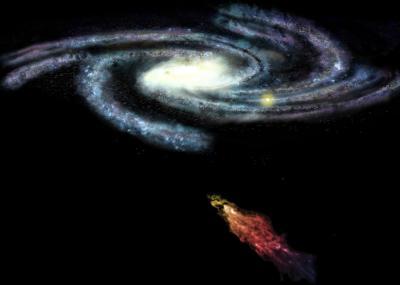






The Smith Cloud, a gigantic streamer of hydrogen gas, is on a collision course with the Milky Way Galaxy., hurtling toward its doom at more than 540,000 miles per hour.

But that means the impact will happen in approximately 30 million years. Yet when it does, it will set off a spectacular burst of star formation.

All is not lost, though. It would first have to navigate through the halo of hot ionized gas surrounding the Milky Way, and to do that it has a secret weapon: A magnetic field deep in the cloud's interior which may protect it during its meteoric plunge into the disk. 

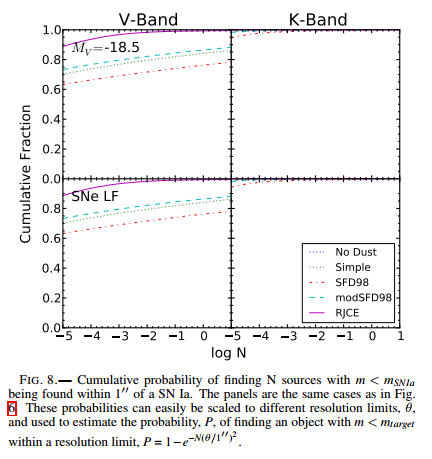
Astronomers have calculated the odds that, sometime during the next 50 years, a supernova occurring in our home galaxy will be visible from Earth and found the chances to be nearly 100% - and it will be visible from telescopes in the form of infrared radiation.

It's said that being an astronaut is no longer a bold endeavor. The job works program nature of NASA and a no-risk approach to missions by government has meant a drop in prestige among the public. It used to be risky and that captured the public's imagination.

Some day, if presidents stop canceling the space programs of their predecessors, man may leave orbit again, and astronauts will gain some new respect, because even if the mission is successful astronauts are paying a price - their cells are aging faster in microgravity.

Head Start, the nation's largest federally funded early childhood education program, which serves nearly one million low-income children, has a problem.

Women employed under the program report higher than expected levels of physical and mental health problems, according to scholars who created the first-ever survey conducted on the health of Head Start staff. 
The anonymous, online survey of staff working in 66 Pennsylvania Head Start programs. Of those who participated in the survey, the researchers focused on 2,122 female respondents, which included managers and classroom teachers of three and four year olds, as well as those making home visits to families of infants and toddlers participating in Early Head Start.

A new paper says that unpredictability is a consistent trait in the animal world, just like it is humans.

Anyone who owns a cat knows that, right?

Not really. Though animals are known to show consistent individual differences in behavior, and pet owners may refer to it as them displaying 'personality', a new paper refutes prior beliefs and says that some individual animals, just like humans, are consistently more unpredictable than others over time.

Unpredictability is a known and accepted aspect of human behavior much like we've always viewed predictable aspects of personality. However, until now it has never been studied in animals, the authors say.

A team of international scientists has isolated a very close relative of the Severe Acute Respiratory Syndrome coronavirus (SARS-CoV) from horseshoe bats in China, confirming them as the origin of the virus responsible for the 2002-3 pandemi, which killed 774 people of the 8094 people infected and led to diagnosed cases across the world, impacting international travel and trade.

Wind farms can be part of our future energy mix assuming the cost of offshore turbine energy versus their efficiency can be made manageable. A new computer projection found a better way to arrange the turbines is a step in the right direction. A team from the University of Delaware found that staggering and spacing out turbines in an offshore wind farm can improve performance by as much as 33 percent. 

A team of psychologists have determined that stress eating is more of a yo-yo than a simple pattern; they say stress eaters show a dynamic pattern of eating behavior that could have benefits in non-stressful situations. 

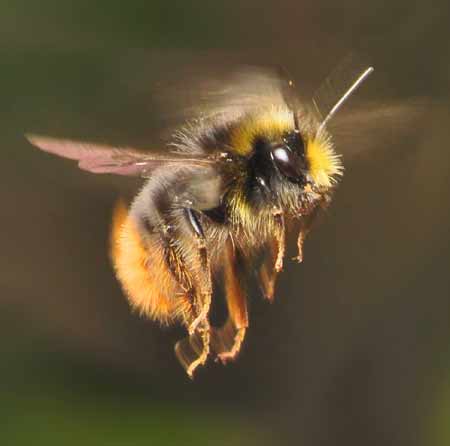
For the first time, a peer-reviewed comprehensive discography of US-based apical musical recordings has been assembled. (Think : bees, hives, honey, buzzing, stingers, &etc). Professor William Lewis Schurk (Sound Recordings Archivist of the Music Library and Sound Recordings Archives at Bowling Green State University, Ohio, US) and colleague professor B. Lee Cooper, (presently at the North Carolina Center for Creative Retirement, US) have co-authored ‘Bumble Boogie: 100 Years of Bee Imagery in American Sound Recordings—A Discography’. (Popular Music and Society, Volume 34, Issue 4, 2011)

A brain imaging study says that babies can learn lullabies while still in utero.

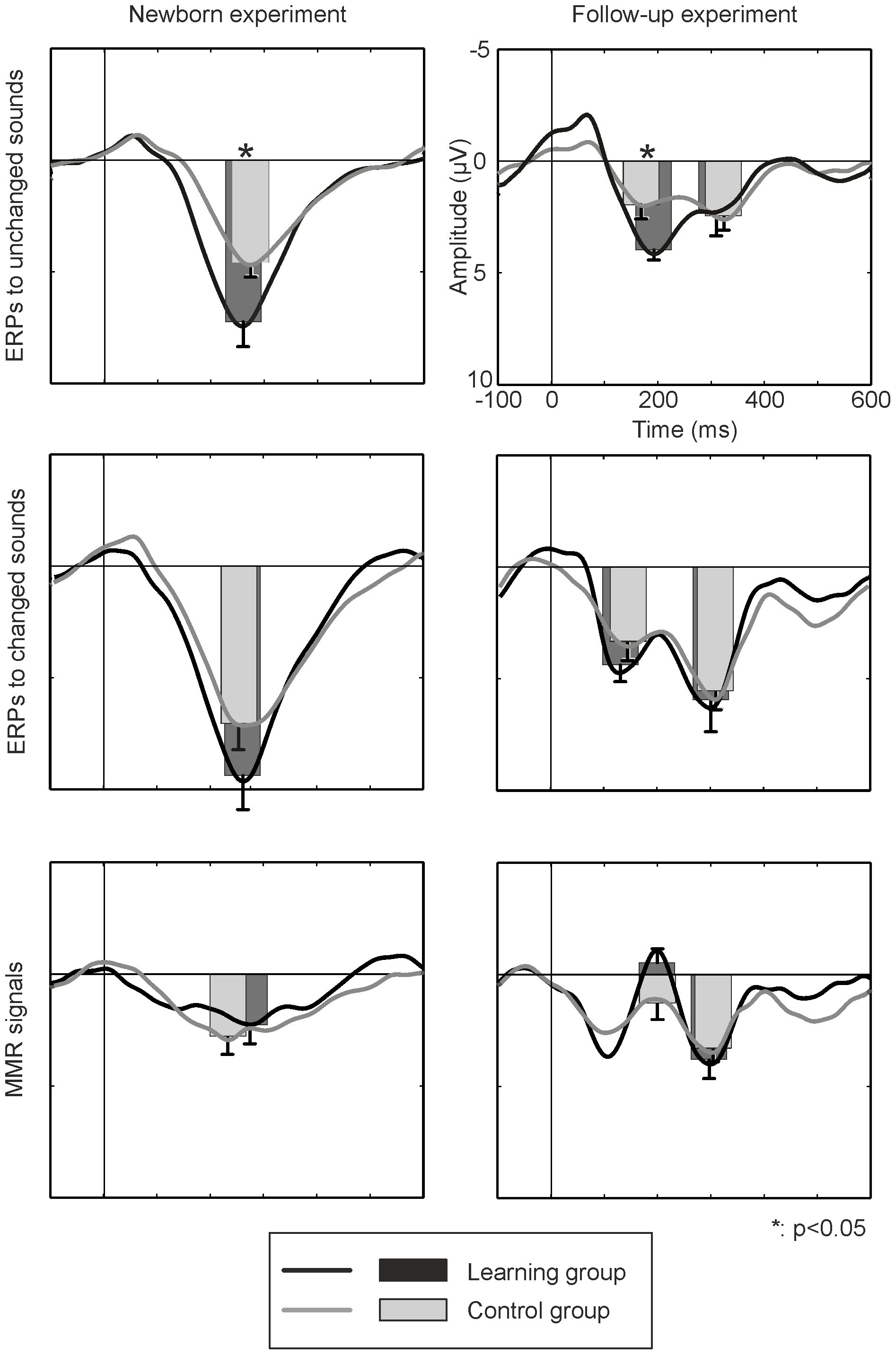
The paper focused on 24 women during the final trimester of their pregnancies. Half of the women played the melody of Twinkle Twinkle Little Star to their babies five days a week for the final stages of their pregnancies. 

The brains of the babies who heard the melody while in the womb reacted more strongly to the familiar melody both immediately and four months after birth when compared with the control group. The authors conclude that fetuses can recognize and remember sounds from the outside world well before they are born.

