



Genomic research will transform medicine but progress has been slower than expected, leading critics to charge that the promise of genomics was hyperbole to get funding mandates and that while research should continue, the bulk of the money earmarked because of its applied science potential might instead be better spent elsewhere.

Proponents argue that the slowness shows the complexity of the relationship between medicine and disease and argue for more funding.

Kareus Therapeutics SA has announced the start of a Phase I clinical study following the Investigational New Drug (IND) approval from the US Food and Drug Administration for the development of KU-046, a first-in-class disease modifying new chemical entity discovered for the treatment of Alzheimer's disease using Kareus' proprietary bioenergetics and KARLECT platforms. 

 The Phase I clinical trial is a randomized, double-blind, placebo-controlled two-part study to assess the safety, tolerability and pharmacokinetics of single ascending oral doses and of multiple ascending oral doses of KU-046 in 54 healthy young volunteers. The study is being conducted by Quintiles at its Phase I Unit at Overland Park in Kansas. 

Guilty feeling Germans doubting all, asking the profound and not accepting the silly answers, starting out thinking that science, physics is important.  Muhō decided to live as a homeless monk in a park in central Osaka in 2001.  Since then he sits, in order to sit, and he achieved perhaps more that way than all my science can ever do.


Q.1 Is it possible to use one’s tongue as a subatomic particle detector?
Q.2 If so, would that be a good idea?

While many people may not be explicitly familiar with Koch's Postulates, they are generally viewed as a type of "common sense" when it comes to pathogens.  Briefly the postulates consist of four criteria.
1.  The microorganism must be found in abundance in all organisms suffering from the disease, but should not be found in healthy organisms.
2.  The microorganism must be isolated from a diseased organism and grown in pure culture.
3.  The cultured microorganism should cause disease when introduced into a healthy organism.
4.  The microorganism must be reisolated from the inoculated, diseased experimental host and identified as being identical to the original specific causative agent.

Promised Land is not a movie about “fracking”, you will be sorely disappointed if you go to the theater expecting to see lurid visuals of sinister-looking waste water ponds, plumes of diesel soot and road dust, or bucolic landscapes scarred by roads and pipes. You will find none of that.

Promised Land is instead a movie about what happens before the drilling rigs and man camps rumble into town. It is the story of a rural community, proud but poor, struggling to reconcile itself with an enormous economic opportunity that comes at an enormous cost.

The anti-biology community that has created the Big Organic $29 billion corporate juggernaut is not as creepy as the anti-vaccine community who distrust medical science - anti-vaccine people want your kids to be experimented on so theirs can stay safe from the evil 'toxins' in vaccines, after all - but they can still be pretty heavy-handed.

In the past couple years, I’ve written over a dozen articles examining facilitated communication as Biklen and Crossley define it, along with Soma’s clone, Rapid Prompting. On several occasions, I have collaborated with Dr.

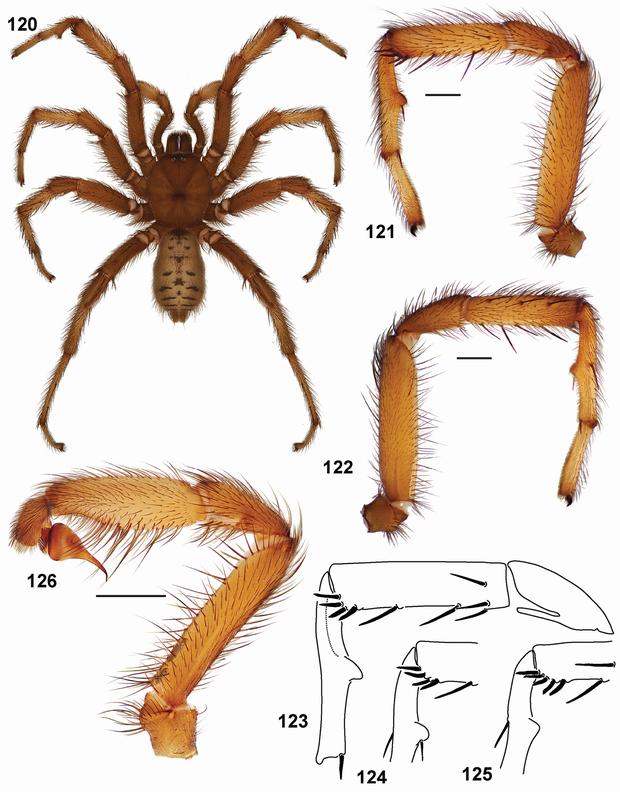
A researcher at the Auburn University Museum of Natural History has reported the discovery 33 new trapdoor spider species from the American Southwest.

These newly described species all belong to the genus Aptostichus and the paper revises it to discuss all 40 species, which get attention for being named after celebrities – Aptostichus stephencolberti and Aptostichus angelinajolieae for Stephen Colbert and Angelina Jolie,


