






Autologous stem cells from bone marrow 3 or 7 days following a heart attack did not improve heart function six months later, according to a new clinical trial. 

The results of this TIME (Transplantation In Myocardial Infarction Evaluation) trial were presented by Jay Traverse, MD of the Minneapolis Heart Institute Foundation Tuesday, today at the 2012 Scientific Sessions of the American Heart Association in Los Angeles.

The results of this trial mirror a previous, related study (LateTIME) which found that autologous bone marrow stem cell therapy given 2-3 weeks after a heart attack did not improve cardiac recovery. Both TIME and LateTIME were carried out by the Cardiovascular Cell Therapy Research Network (CCTRN).

University of Pittsburgh professor Eric Beckman and colleague Bob Enick have been intent on solving a decades-old mystery - how to increase the viscosity of liquid CO2 so it can better extract oil from its hiding spots inside the pores of underground sandstone. Thanks to a $1.3 million grant from the National Energy Technology Laboratory, the researchers are pursuing a promising lead.

In the U.S., each gallon of crude oil we produce requires, on average, anywhere from two to 5.5 gallons of water according to a study from Argonne National Library (pdf). It is a much more water-intensive process than hydraulic fracturing, or fracking, which attracts far more attention.

Scaling down the observable universe to make it fit within our moon's orbit, the Milky Way gets reduced to a village. We live close to the edge of this village, at a comfortable distance from the central marketplace, where a giant black hole is known to be lurking. 

Now, this peaceful picture is brutally disturbed by an international group of astronomers who bring us the message that a black hole of at least a hundred solar masses is likely to ambush us in our own backyard


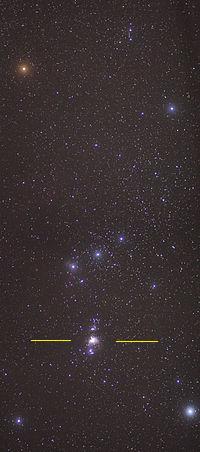
Theta Orionis, a fuzzy star in Orion's sword harbouring a massive black hole?

People with heart health in middle age may live up to 14 years longer, free of cardiovascular disease, compared to peers who have two or more cardiovascular disease risk factors, according to a new paper.

For the analysis, researchers pulled data from five different cohorts included in the Cardiovascular Lifetime Risk Pooling Project and looked at the participants' risk of all forms of fatal and nonfatal cardiovascular disease from ages 45, 55 and 65 through 95 years of age.

Erosion can bury carbon in the soil, acting as a carbon sin but a new study has found that part of that sink is only temporary.

The researchers estimated that roughly half of the carbon buried in soil by erosion will be re-released into the atmosphere within about 500 years. Their model estimates that climate change could speed the rate of decomposition, aiding the release of the buried carbon.
It's election day in America, which means by midnight up to 47 percent of the USA will have tremendous cerebral pressure and a conviction the country is ruined.

It's unknown why cerebral pressure in certain people suddenly increases but the consequences are better understood: The blood circulation is disrupted and after a while parts of the brain may die off, similar to what occurs in a stroke.  And dementia.
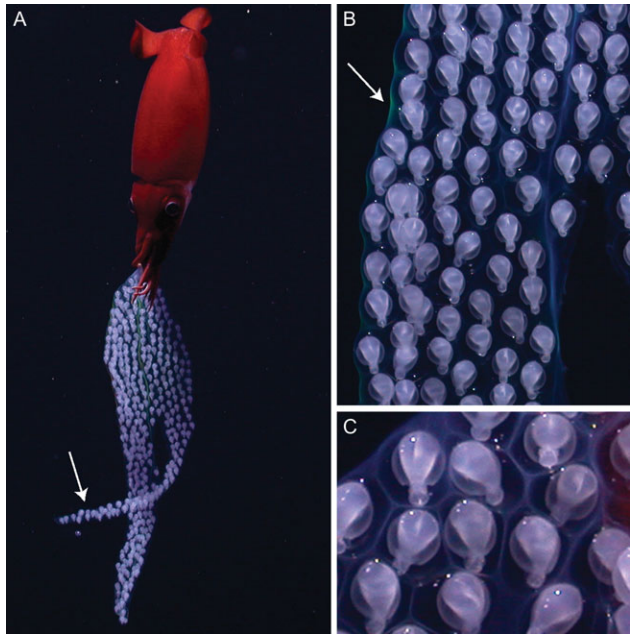
Squid typically die after spawning. Their orphaned eggs are left alone in the cold brine to develop and hatch, never knowing a mother's tender caress. 

But as in all of biology, there are exceptions.

It's strangely appropriate that the second of these exceptions has entered, stage left, just as I am preparing to exit, stage right, in order to engage in the intensive parental care typical of humans. I'll be spawning within the next few weeks, and taking a hiatus from the blogosphere to focus on my in-home developmental biology experiment.
New single laser devices that are the size of a virus particle can also operate at room temperature. These plasmonic nanolasers could be readily integrated into silicon-based photonic devices, all-optical circuits and nanoscale biosensors. 

We're going to need ultra-fast data processing and ultra-dense information storage by the time Halo 8 comes to a holodeck near you, so reducing the size of photonic and electronic elements is critical.
Hydrogen is the smallest molecule in the Universe, which makes keeping it in one place difficult. To tap its tremendous potential as a fuel, spacecraft must be able to store liquid hydrogen at extremely low temperatures and then feed it smoothly to rocket engines.  

When ESA was developing its hydrogen-fueled Ariane rockets, they got Austria’s MagnaSteyr to build tightly sealed fuel lines and double-walled storage tanks capable of trapping and holding liquid hydrogen and oxygen. Now MagnaSteyr has adapted the technology developed for Ariane to build clean-burning cars that can use hydrogen instead of gasoline for fuel. 

Scientists take a great deal of pride in the Scientific Method, and not just because it’s a method named after them. The Method is the basis for their authority. It is the universally accepted tool for finding all facts about the universe, the unbiased straight-and-narrow path that we wish all of the world’s irrational people would find more often.

Oh, you think that’s condescending? How do you know? What are your controls?


