




Which is the better use for a plot of land: growing crops to feed nations or growing crops to power them with biofuel? The answer to this question is, perhaps not surprisingly, complex and turns on the definition of “surplus” land, or idle, marginal spaces. Now, an interdisciplinary group of researchers from Europe and the US has decided to nail these concepts.

Despite the heated “food versus fuel” debates, researchers noted that there is no common language or guidelines that brings together this emerging field. Moreover, no one seemed to agree on what, exactly, defines surplus land.

There is no clear-cut definition of “surplus” land

It's a modern technology world. If you were running for president in 2008, you could just forgo public financing of your campaign and stick your opponent with a hard cap of half as much advertising money as you have - then you could spend as much money yourself as both candidates combined spent in 2004.

But in 2012 everyone has unlimited money so outspending the other guy with campaign ads won't work again. Instead, politicians are spending money on data mining, so they know what your hot buttons are.
An assembly of thousands of nano-machines has produced a coordinated contraction movement - like that of muscle fibers, and it even extended to around ten micrometers, like the movements of muscular fibers.

The work provides an experimental validation of a biomimetic approach that has been conceptualized for years in nanoscience and the researchers believe this broadens applications in robotics, information storage and obviously artificial muscles themselves.
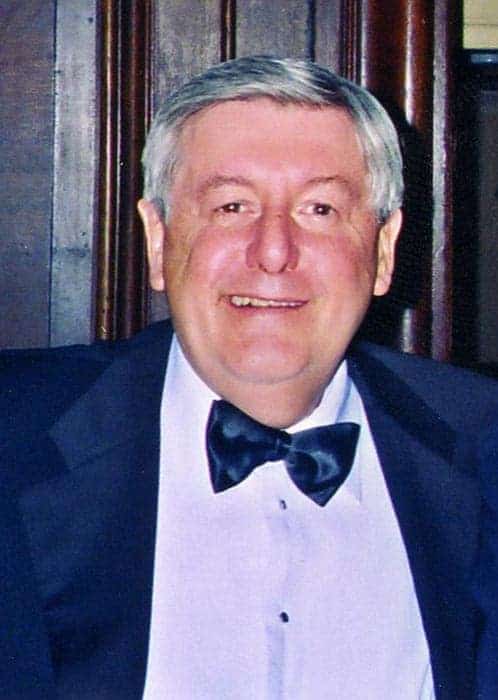
Physics professor Paul Frampton of UNC Chapel Hill is sitting in an Argentine jail, busted for trying to smuggle out 2 kilos of cocaine, but that hasn’t stopped him from asking for a raise on his $107,000 annual salary - raise as in he wants it doubled.

Hey, he has tenure. And a lot of citations.

Frampton is in a spat with the school because he says they are improperly withholding his salary. They contend his being in an Argentine prison cell for virtually all of this year means he can't possibly be doing any work, even for a tenured professor.
Dogs are susceptible to contagious yawning just like people, says an article in Animal Cognition, but only after they get older. Dogs, like humans, show a gradual development of susceptibility to contagious yawning and the new paper says dogs catch yawns from humans. But Only dogs above seven months of age catch these human yawns - younger dogs are immune to the contagion.

Contagious yawning has been researched in humans, adult chimpanzees, baboons and dogs, some speculate it can be used as a measure of empathy. Empathy, mimicking the emotional responses of others, is difficult to measure directly, but contagious yawning allows assessment of a behavioral empathetic response, the Swedish researchers say. 
A dynamic gel made of DNA mechanically responds to stimuli in much the same way that cells do. This DNA gel, at only 10 microns in width, is roughly the size of a eukaryotic cell, the type of cell of which humans are made. The miniscule gel contains within it stiff DNA nanotubes linked together by longer, flexible DNA strands that serve as the substrate for molecular motors.

We won't have artificial muscles and self-propelled goo just yet, but Omar Saleh and Deborah Fygenson of UC Santa Barbara feel like they have gotten a lot closer.

A court in L'Aquila, Italy, handed six-year-prison sentences to members of a national "Great Risks Commission". Residents noticed increased seismic activity. They were used to tremors, because L’Aquila sits on a major fault line, and they clearly noticed differences. Despite the increase in both size and frequency of the tremors, the scientists rejected the possibility of a major earthquake:

“It is unlikely that an earthquake like the one in 1703 could occur in the short term, …”


Six days later, the disaster struck. The L'Aquila 2009 earthquake killed over 300 people and left 1,500 injured.

We humans take great pride in our ability to come together and cooperate as a society.  Interestingly, many microbes cooperate as well.  A central conundrum among scientists studying microbial cooperation has been how bacteria manage to prevent cheaters from taking over their population, even without jails or stocks or scarlet letters.  Now, a new study finds a surprising genetic mechanism that manages to punish cheaters by depriving them of a private good.


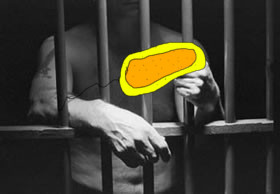
Bacteria manage to punish cheaters, even without overloading their prison system.  (Apologies to SolieLInitiative and Raul654 of wikimedia for my poor graphics skills)