




In the scientific community, researchers call it salami slicing. Appropriately, the act consists of shaving down a collected dataset until a scientist reaches the smallest scrap of result that still constitutes an original idea.

This decontextualized whisper defines the least publishable unit: the publon. The researcher proceeds to neatly separate the salami slice from the rest of the data and use it as the meat of a submission to a peer-reviewed journal. The next step fills out the sandwich: Authors repeat the submission process several times with various combinations of the same publons and different academic journals.

Data presented at the international ID Week 2012 conference in San Diego showed that over three quarters (78%) of healthcare professionals surveyed in Europe believed that they may not be following guidelines for the testing of Clostridium difficile infection (CDI), despite survey respondents believing that CDI is increasing with a large number of cases going undiagnosed.[1] 

Scientific products and services company Elsevier and the Federal Coordination of Improvement of Personnel in Higher Education (Capes / MEC), today announced the winners of the second edition of SciVal Award Brazil 2012, honoring higher education and research institutions for their contribution to the scientific development of the country. 

According to Scopus data, Brazil holds the 13th position globally in research output per country. The award honors Brazilian education and research institutions that stand out for their excellence in research performance. The ten winners were selected according to research performance indicators drawn from Elsevier's tool SciVal Spotlight, such as collaboration with Brazilian and foreign institutions and citations per document.

The L'Oréal Foundation and UNESCO has announced the five women scientists who will be honored as the 15th L'Oréal-UNESCO For Women in Science Laureates. On March 28th, 2013, the five Laureates will be honored at an Awards ceremony in Paris and will receive US$100,000 in recognition of their accomplishments. 

The research of the 2013 Laureates ranges from contributing to better understanding of climate change to advancing research on neurodegenerative diseases and potentially uncovering new energy sources. 

The Laureates of the 2013 L'Oréal-UNESCO Awards in Physical Sciences are:

If you had just bought a lottery ticket, would you be willing to swap it? If you’re like most people, the answer would be an emphatic ‘No’. But why? Given that a properly-run lottery is an entirely random affair, mathematical theory dictates that your chances of winning won’t change whether you swap or not.
By all accounts, my friend Lori has a fabulous sense of style. Plus, she really knows how to find a bargain. The outfits she assembles from Goodwill and vintage clothing shops continue to defy expectation – and imitation. Years ago, when we both lived in Boston, I snuck glances at the pages she flagged in her fashion magazines. Now, whenever I catch her during her visits home to the Bay Area, I file away shopping tips while we fill each other in on our lives.
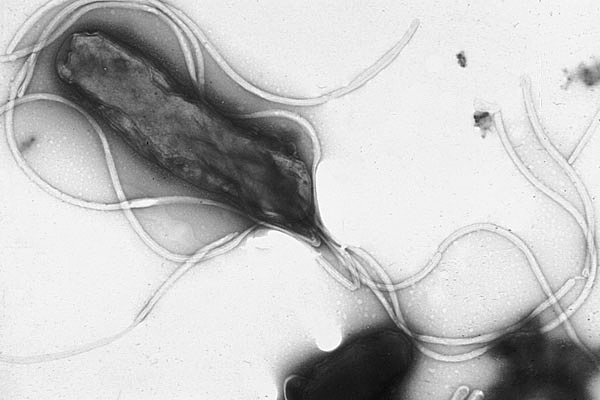
Helicobacter is a good example in our changing understanding of the role of microbes and the human body environment.  Some may recall that this particular bacteria was introduced to the public in a rather striking experiment where it was suspected of causing stomach ulcers and gastritis.  Dr. Barry Marshall drank a petri dish containing cultured Helicobacter Pylori and within days developed gastritis.  This demonstrated a firm connection between bacteria and gastritis/stomach ulcers as well as the role of using antibiotics to treat this condition.

Helicobacter is presumed to be present in about 50% of the world's population upper gastrointestinal tract, while fully 80% of individuals harboring this organism are asymptomatic.
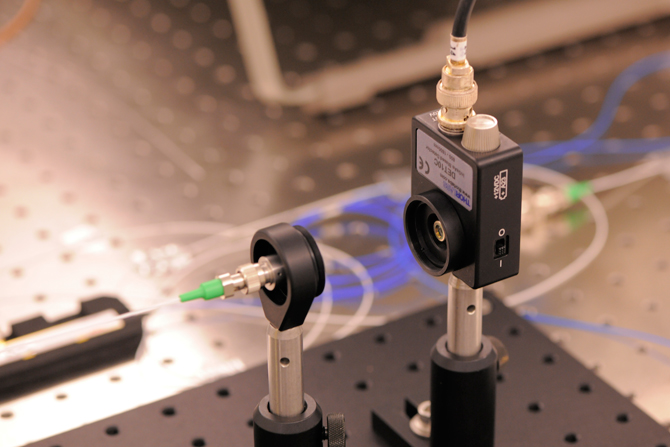
If one beam travels a fixed length and another travels an extra distance or in some other slightly different way, the two light beams overlap and interfere when they meet up, creating an interference pattern that scientists inspect to obtain highly precise measurements.
It's football season so along with cheers and yelling you will hear a more dangerous sound; the sharp crack of helmet-to-helmet collisions. Hard collisions can lead to player concussions but the physics of how the impact of a helmet hit transfers to the brain is not yet well understood. 

A research team has created a simplified experimental model of the brain and skull inside a helmet during a helmet-to-helmet collision. The model illustrates how the fast vibrational motion of the hit translates into a sloshing motion of the brain inside the skull.


