Well, kind of. David Wineland and Serge Haroche have not endangered any living beings. That is to say: probably not in their physics experiments. 

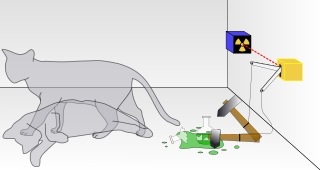
Yet, although they stayed at a safe distance from bringing life form into quantum superposition, both physicists have thoroughly explored the schizophrenic world of the quantum, and opened the door to the direct observation and manipulation of quantum superpositions. By cleverly exploiting the fundamental interaction between light and matter, the two quantum optics experts have managed to pull off a range of experiments in which Schrödinger's cat states lead to bizarre results.

Bumbling coverage on phthalates underscores how activist journalism endangers ‘public science’

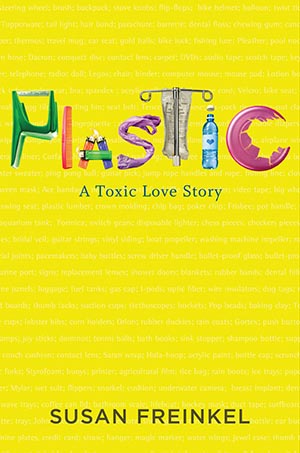
Last year, campaigning journalist Susan Freinkel noted that she wrote her anti-chemical book, Plastics: A Toxic Love Story, because she was shocked about how much modern society relied on plastics. In her mind, “synthetic materials” equated with poor health, pollution and western gluttony. 

There may be good news for the blood donation business; the shelf life of blood has perhaps gotten longer.

In a finding that runs counter to commonly held beliefs about fresh blood being better, a randomized clinical trial shows that acutely ill premature babies who received fresher blood did not fare better than those who received the current standard of care. There was no difference between the two approaches with respect to major organ injury, mortality and infection.
Five percent of men are affected by infertility and some new insights into sperms' swimming skills could shed light on why.

In a new study, researchers have shown how a protein called RABL2 affects the length of sperm tails, crippling their motility (or swimming ability), and decreases sperm production. In laboratory tests, the team found that a mutation in RABL2 resulted in sperm tails that were 17 per cent shorter than normal. Dysfunctioning RABL2 also negatively affected sperm production, resulting in a 50 per cent decrease. 
A neuroprotectant drug has been shown to protect the human brain against the damaging effects of stroke. The clinical trial was a randomized, double blind, multi-center trial that was conducted in Canada and the USA. The study evaluated the effectiveness of NA-1 (Tat-NR2B9c) when it was administered after the onset of small strokes that are incurred by patients who undergo neurointerventional procedures to repair brain aneurysms. This type of small ischemic stroke occurs in over 90% of aneurysm patients after such a procedure, but usually does not cause overt neurological disability. 
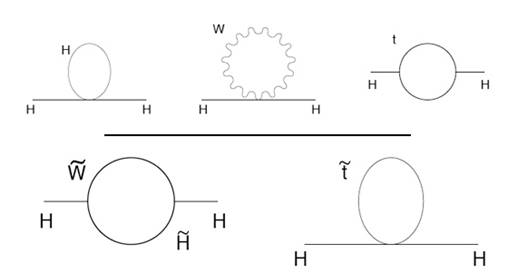
Five years ago I was fascinated by an analogy used by my friend Michelangelo Mangano to explain the problem of naturalness, a crucial issue in fundamental physics, and maybe the biggest single indicium we have that new physics beyond the standard model of particle physics should exist, and be not too far away from our current experimental reach.
To celebrate International Cephalopod Awareness Days, I decided to comb through all the cephalopod news since last October (and there's been quite a bit of it) to bring you the top ten essential, not-to-be missed stories of cephalopod science and culture. The theme of 2012 seems to have been the discovery of unexpected and slightly embarrassing habits . . .
The Nobel Prize in Physiology or Medicine was awarded jointly to John B. Gurdon and Shinya Yamanaka for – you guessed it- stem cell research. Or more specifically, “for the discovery that mature cells can be reprogrammed to become pluripotent". The announcement was unsurprising, as it was widely speculated that Yamanaka’s work on induced pluripotent stem cells (iPSCs) and Gurdon’s early cloning experiments would be likely candidates for the prize. The dynamic duo had already shared the Albert Lasker Basic Medical Research Award three years ago. 
A recent study published in Environmental Sciences Europe has attracted attention because it documents a net increase in pesticide use on genetically engineered crops in the US.  The author, Chuck Benbrook, is certainly qualified to consider pesticide issues, and I have had positive interactions with him over the years; however as an organic advocate he has a very different perspective on pesticides than I do.

“Considerable work exists to describe the functions of yeah.” explain authors Chad D. Nilep and colleague Tamara Grivičić from the Department of Linguistics at the University of Colorado. And there has also been some academic research investigating the so-called ‘Creaky Voice’. But the team’s study is one of the very first to investigate the two together (i.e. Yeah + Creaky Voice).