

In November 2011, NASA launched its biggest, most ambitious mission to Mars. The $2.5 billion Mars Science Lab spacecraft will arrive in orbit around the Red Planet this August, releasing a lander that will use rockets to control a slow descent into the atmosphere. Equipped with a “sky crane,” the lander will gently lower the one-ton Curosity rover on the surface of Mars.

An extremely hot, massive young galaxy cluster named ACT-CL J0102-4915 is the largest ever seen in the distant Universe, and has been has been nicknamed El Gordo — the "big" or "fat one" in Spanish. It consists of two separate galaxy sub-clusters colliding at several million miles per hour, and is so far away that its light has traveled for seven billion years to reach Earth.
A new study has used an interesting metric to highlight their concern about a disconnect between government funding of biomedical research and young investigators; Nobel Prizes. 

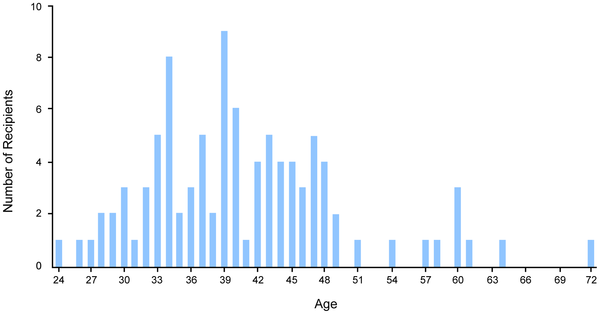
As has been noted here numerous times, and by me at various talks, the average age of biomedical researchers getting their first grant from the National Institutes of Health (NIH) in 2008 was 42, a substantial change from even the decade previous. Over the past 30 years, the article notes, the average age of Nobel winners when they performed their research was 41. That's a concern, says Kirstin Matthews, a fellow in science and technology policy at the Baker Institute and first author of the paper in PLoS One.

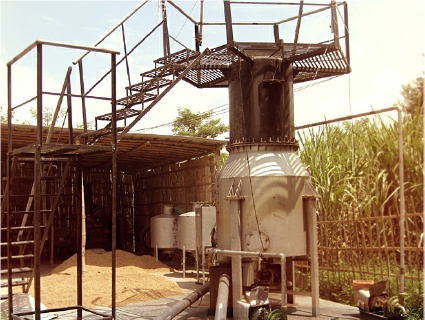
In Bihar, one of the poorest states in India, 85 percent of people are not connected to the electricity grid so households use kerosene lamps when they can afford it and businesses use expensive and dirty diesel generators.

Some view this 'energy poverty' as a development problem, others view it as an environmental problem. The founders of Bihar-based Husk Power Systems view it as an opportunity to build a social enterprise.

Their motto is tamaso ma jyotir gamaya - ‘from darkness to light’


Many First Nations sites were inhabited continually for centuries. The discarded shells and scraps of bone from their food formed enormous mounds called middens. Left over time, these unwanted dinner scraps can transform through a quiet process of preservationTime and pressure leach the calcium carbonate, CaCO3, from the surrounding marine shells and help “embalm” bone and antler artifacts that would otherwise decay. Calcium carbonate is a chemical compound that shares the typical properties of other carbonates. 
Solar photovoltaic (PV) mass-market polycrystalline panels are typically about 15% efficiency. Pretty terrible, right?  Maybe, maybe not.  

Cars - both gasoline and electric vehicles, despite what the electric car hype machine claims - are only slightly more efficient at 15-25%, as is eating, and biology had all of existence to perfect that process. Ethanol and other biofuels, which were the darling of anti-science environmentalists in the Anything-But-Oil camp before electric cars because they are the ultimate solar-powered device, are a dismal <2% efficiency.
One of the more unusual cephalopods of my acquaintance (and I do not say this lightly) is the ram's horn squid, Spirula spirula. The species is named for its beautifully coiled internal shell, which is all most people (including me) have ever seen of it.

by Fritz Geller-Grimm
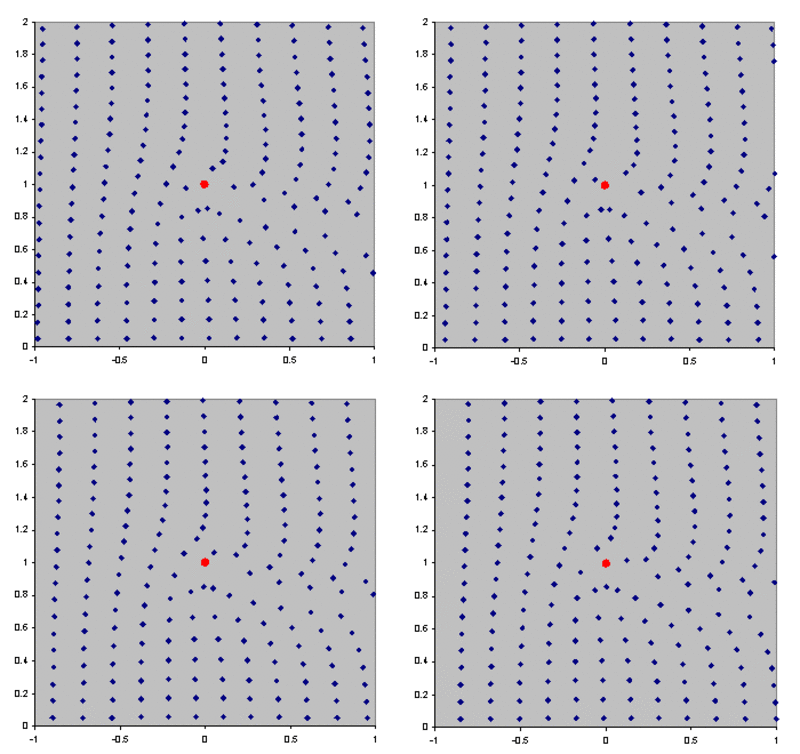
The universe expands. The galaxies, as they depart ever further from one another, are classically and even in Einstein’s special theory of relativity, described as dust particles: The universe as a cloud of dust expanding through space. However, in Einstein’s general theory of relativity, this same expansion is described as the universe itself expanding. There is no locally observable difference between these descriptions whatsoever – at least as far as we know. Classical expansion through space and Einstein’s general relativity describing expansion of space both fit together seamlessly.

How do airplanes fly? The next time you find yourself in an airplane, look around at your fellow passengers. How many of them would be able to explain to you what force keeps the hundreds of tons  of metal up in the air? How about yourself? Would you be able to explain this applied physics feat to the person sitting next to you?

Wings are simple and straightforward devices, yet misconceptions abound on how they work, and many people carry wrong perceptions on their lift-creating mechanism. The 'equal transit time' fallacy being the most prominent misconception in this area. 
In the autism community, there are plenty of heated opinions, which lead to even more heated attacks against those who believe differently. Some of the fiercest attacks come from those who believe in debunked treatments like facilitated communication. No other treatment offers such fantastic results. Autistic individuals who've been unable to talk, write, communicate are suddenly able to speak eloquently with the help of a facilitator. 
For a desperate parent, it must be a dream come true--one's child communicating finally, the words flowing. All those hopes and dreams suddenly realized, parents are not likely to be skeptical of this sudden flowering of skills.

