





Casual games with squid in them are the new hotness. No, I'm totally serious. There was Halloween Squid, Squibble, Squids, and now, Squid Drop:


What a delightful excuse to talk about squid science! Now, where can I possibly find science in this app?

A-ha! Crabs*!
A blog is by nature a place where things move on fast. Articles disappear beyond the horizon in the matter of a week or two, and only rarely get resuscitated by a later article linking them back from oblivion.

At Science 2.0 things are no better than in any other blog sites, with the aggravating feature that there is no "archive" button, nor a "random post" feature. Since I believe that many of my articles are not very connected to the specific time at which they have been written, I have in mind to reorganize the material somehow, when I have the time. However, this looks like a grievious task, since the number of posts I have written here is about 500.
This December the National Transportation Safety Board of the U.S. recommended a nationwide ban on cell phone use while driving. According to NTSB member Robert Sumwalt, "This (distracted driving) is becoming the new DUI. It's becoming epidemic.” For some, the NTSB recommendation is a sign of the forces of light winning the day, and for others, proof of the impending apocalypse. Regardless of your emotional reaction to the issue, the subject cuts right to the heart of questions about the attention capacity of the human brain.

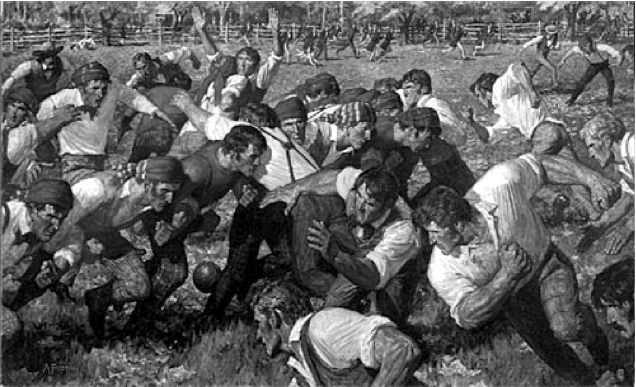
The inaugural season of intercollegiate football took place in 1869. It consisted of two games: Rutgers played Princeton, and then a week later, they played again. Each team won once, so the “national championship” (awarded retroactively) was split. And despite the schools’ bitter rivalry, the Rutgers newspaper reported an “amicable feed together” after the contests. Since then, the business of selecting a national champion in college football has grown considerably more complex.

The previous year has forced us to confront difficult science questions: Was processing patents Einstein’s real strength? Are there any other planets out there like Earth? Why is the universe composed of matter instead of antimatter? 2011 had a bumper crop of fascinating science and technology stories, so many that it’s impossible to call ten stories "the top” but the audience expects it.  So, courtesy of Ysabel Yates at Txchnologist, here are ten notable events from a long list, in no particular order and slightly edited.


A study in Cancer Discovery says mutations in the ATM gene may increase the hereditary risk for pancreatic cancer.

Pancreatic cancer is one of the most morbid cancers, with less than 5 percent of those diagnosed with the disease surviving to five years. Approximately 10 percent of patients come from families with multiple cases of pancreatic cancer.

Using next-generation sequencing, including whole genome and whole exome analyses, they identified ATM gene mutations in two kindreds with familial pancreatic cancer. When those initial findings were examined in a large series for patients, ATM mutations were present in four of 166 subjects with pancreatic cancer but were absent in 190 spousal control subsets. 

An international clinical trial shows that treating ovarian cancer with the drug bevacizumab ("Avastin") delays the disease and may also improve survival. 

The findings in the New England Journal of Medicine report that the drug halted the cancer's return for two months overall but for women with the highest risk disease, the delay was five to six months and the findings also indicate a strong trend to improved overall survival, which is being analyzed until 2013. 

The seven-year study began in 2004 and enrolled 1,528 women with ovarian cancer at 263 centres, including 20 in Canada. Avastin was added to chemotherapy treatment and given intravenously every three weeks for 12 months.

In March 2011, a surgical team at Brigham and Women's Hospital (BWH) performed the first full face transplantation (FFT) in the United States and went on to complete a total of three FFTs this year.

Writing in the New England Journal of Medicine, researchers evaluate FFT in the US and describe details of patient preparation, design and execution of the operation as well as unique immunosuppression protocol allowing for lowest long-term maintenance drug regimen. They also share details of the early functional outcomes and demonstrate FFT as a viable option in the treatment of severe facial deformities and injuries. 

Prejudice is just bigotry that arises from flawed ideology, right?  Not so, say the authors of a new paper.

They contend prejudice stems from a deeper psychological need and it is associated with a particular way of thinking. People who aren't comfortable with ambiguity and want to make quick and firm decisions are also prone to making generalizations about others. People who are prejudiced feel a much stronger need to make quick and firm judgments and decisions in order to reduce ambiguity.

And, they argue, it's virtually impossible to change this basic way that people think.

