Impressive. If you had been seeking for top quarks in 4-inverse-picobarns datasets since 1992 as I have, and then rejoiced at the 7-event signal from which CDF extracted in 1994 mass and cross section of the long-sought sixth quark, you would now also be looking for adjectives upon having a look at the figures in the new CMS paper, which uses over one inverse femtobarn of proton-proton collisions to measure the tiny asymmetric kinematics of top quark pairs produced at the LHC.
The Wiedemann-Franz Law, named after German physicists Gustav Wiedemann and Rudolf Franz, is a ratio of the thermal to electrical conductivities of metals. In 1853, the two studied the thermal conductivity, a measure of a system's ability to transfer heat, of a number of elemental metals and found that the ratio of the thermal to electrical conductivities was approximately the same for different metals at the same temperature.
The Redemption of Gus GrissomThe 50th anniversary of Alan Shepard's flight,
the first American in space, was something of a big deal in pop culture. The 50th anniversary of John Glenn orbiting the Earth, arriving this winter, will likely be a much bigger deal because Sen. Glenn has a lot of name recognition.But between them in aerospace history, chosen to be among the "Mercury 7" test pilots who were picked when NASA was just six months old and who risked their lives flying into the great unknown, is a guy who doesn't get enough respect.
Most previous neural networks consisted out of a physically connected network of neural cells. But can a soup of interacting molecules also show brain-like behavior? Apparently, it can.
The
news finally broke last week, months after the first anxious reports of browning and dying trees near lawns and golf courses across America. Unlike their wild cousins in the Rockies and British Columbia, these conifers aren’t dying of pest outbreaks – they’re suffering from pesticides.
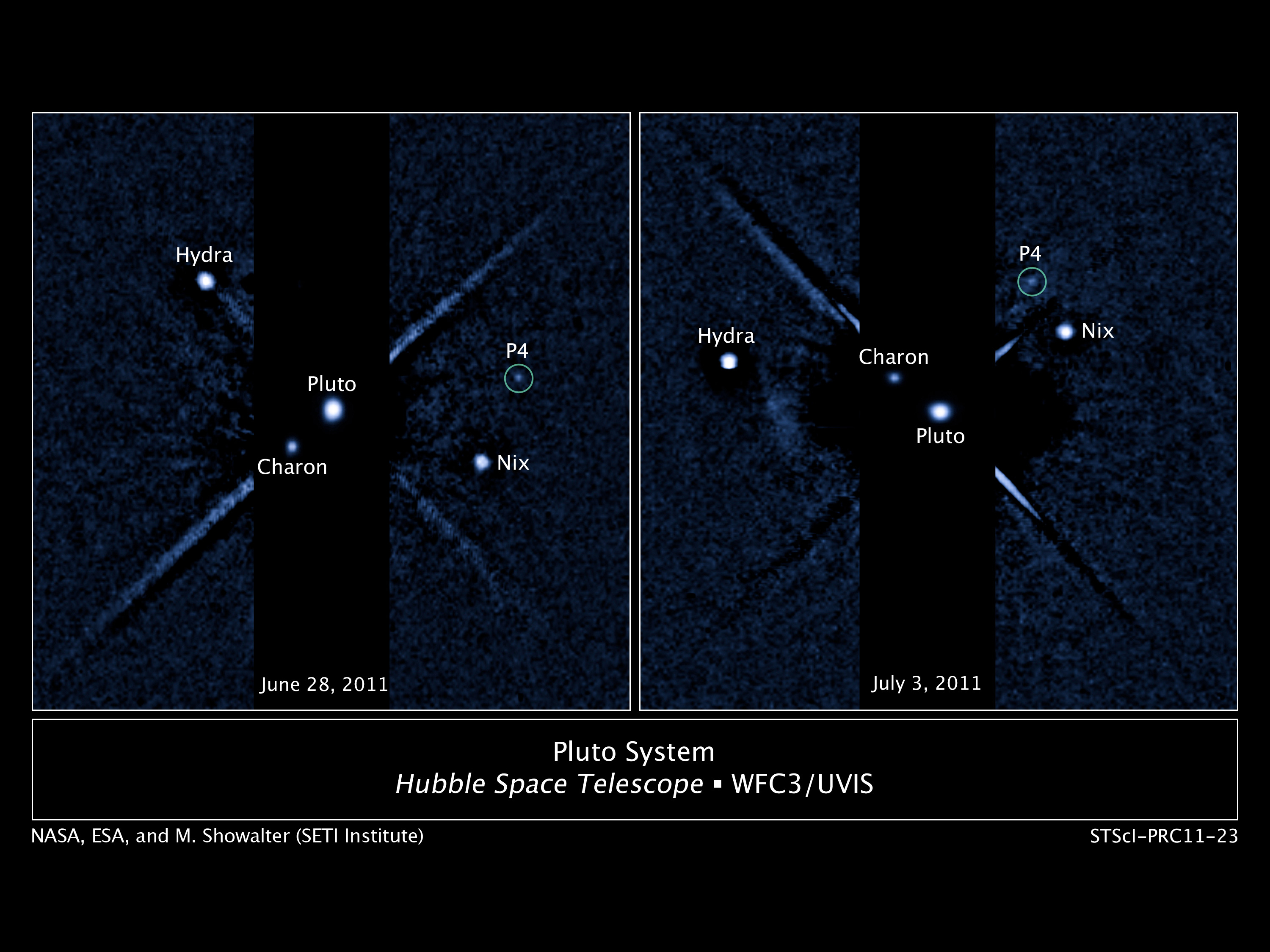
Though 2 percent of astronomers declared Pluto was no longer a planet, for not being a planet, it sure has a lot of moons. Four so far.
The Hubble Space Telescope discovered this fourth moon, cleverly designated P4, and astronomers say this newest, smallest one has an estimated diameter of 8 to 21 miles. By comparison, Charon, Pluto's largest moon, is 648 miles (1,043 km) across, and the other moons, Nix and Hydra, are in the range of 20 to 70 miles in diameter (32 to 113 km).
Distance: 3 billion miles.
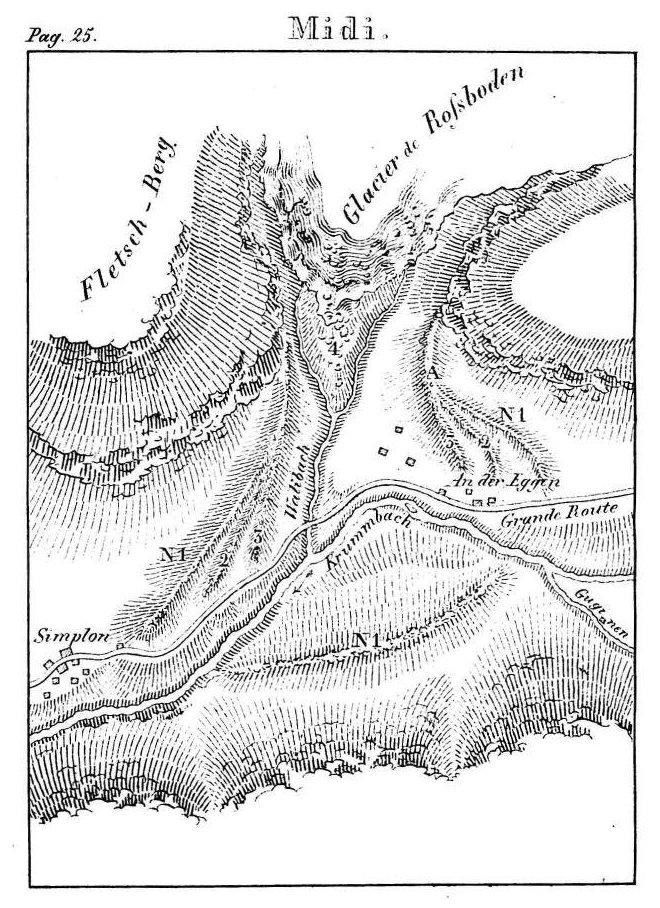
Ignaz Venetz - Climate Change Pioneer - #2
Ignaz Venetz was, in 1821, awarded a prize of 300 francs for his memoire by the Schweizerische Naturforschende Gesellschaft - the Swiss Natural Science Society. It is my firm opinion that, accordingly, the date of publication should be cited as 1821: the date of the award of the prize, and not 1833 which was the date of its re-publication in a bound archive of science papers.
‘Tut! I have the best armour in the world. Would it were day!(W. Shakespeare, Henry V, 1599)
In Medieval Europe, soldiers wore steel plate armor for protection during warfare. Heavier armor would provide greater protection, but would also make it harder for soldiers to move around during the fight. In 1415, Henry V’s lightly-armored men-at-arms defeated the French knights in the battle of Agincourt; would the French have had a better chance in lighter armor? To what extent did Medieval armor limit soldiers’ performance?
This afternoon (2.30 PM Chicago time) Pat Lukens, an old-timer of the CDF experiment, will give a "wine and cheese" seminar at Fermilab on the new observation of a heavy baryon, of the family of baryons containing bottom quarks, which was still at large.
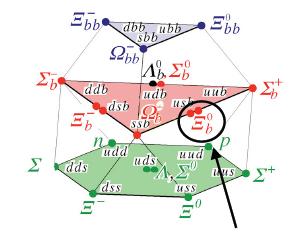
The new particle, called "Xi_b^0", fits a hole in the group representation graph of ground-state baryons with J=1/2. You can see it in the graph on the right. Of all states in the middle level (ones containing one bottom quark) only the Xi_b^0 was still missing. By the way: none of the baryons of the top level have yet been observed.
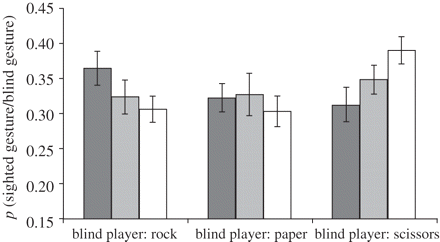
Rock-paper-scissors (henceforth, it shall be known as RPS) is a game, or method to determine who has to do something nobody really wants to do. The rules are pretty well-known. The players simultaneously form a rock, paper or scissors gesture with their hands, and rock beats scissors beats paper beats rock. The same gesture results in a draw. Since one person’s win means the other one’s loss, it can be considered a zero-sum game. Players can only achieve optimal outcomes if they do not imitate each other.