It used to be that broader understanding of zoology meant intuitively that new species would be harder to find and so it followed that there would be fewer of them when found - that is the nature of rarity.
Now, because newer species are so rare, it is fashionable to label them nearly extinct even though they have just been discovered and so may not have been prolific any time in recent memory, or at all. It can be a little numbing to the general audience. - when everything is rare, nothing is (see
special snowflake).
I think there is something deeply wrong with our view of science. The word itself, Science (with a capital "S"), sits alongside other monoliths such as Religion, Art, Music, Literature, Politics and so forth that require constant defining just to ensure we're talking about the same thing. The problem with science is that we are taught a myth... and then complain when the myth is incommensurate with reality.
On paper, collaborations seem like a good idea because the costs for one agency or country are lower. In reality, says a new analysis by the National Research Council, federal agencies should not partner in conducting space and earth science missions unless there is a truly compelling reason to do so and clear criteria are met in advance.
If you were a young person watching "The Empire Strikes Back" and saw Darth Vader clearly being more powerful than everyone else yet not being all that evil - and with Yoda telling Luke how much easier the 'dark side of the force' was, you may have wondered why more people didn't choose it. Behaving badly required less effort and had no obvious repercussions; Han Solo was going to get the girl anyway and she turns out to be your sister.
Every magnetic material is divided into magnetic domains, called "Weiss domains" after physicist Pierre-Ernest Weiss, who predicted their existence theoretically more than a hundred years ago. In 1907, he recognized that the magnetic moments of atoms within a bounded domain are equally aligned.
On Thanksgiving Day, it will be all hugs and football for many people, but inside their mouths one of the biggest wars of the year will be taking place.
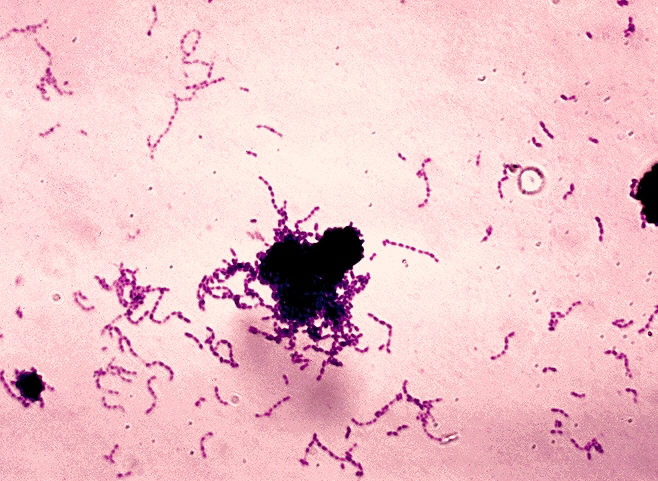
Streptococcus mutans and other harmful bacteria get their own holiday feast and S. mutans gets to launch one of its biggest assaults of the year on your tooth enamel. But you have soldiers on your side too, namely cranberries and even wine, say dental researchers at the University of Rochester Medical Center
A research team at the Yale School of Public Health has developed the first smartphone app for Lyme disease. Lyme disease is caused by a bacterium, which spreads to humans through the bite of infected blacklegged ticks.
Using Global Position System, the application provides information regarding the abundance of infected ticks at the location of the user and a list of precautions one should employ to help avoid tick-bites. If bitten by a tick, the list gives step-by-step instructions and a 40-second video on how to remove the tick.
At the Edge you can find a rather interesting
discussion between
Lee Smolin and
Leonard Susskind, involving all the stuff I try to demystify often.
They fought via email, then agreed to each write a final letter on the edge. And today you can read the final judgment right here at the source from somebody who is little prejudiced by his own hidden agenda, which is by the way one of the main charges that Susskind

It seems like many autism-related sites have ads on them for our kids, promising all sorts of results. How do we evaluate the claims of these products and prevent ourselves from (1) wasting precious financial resources, and (2) putting our precious children in harm's way? There are some key things that one can look for that indicate woo and pseudoscience.
We don't have to be experts in a field; we just have to know how to evaluate claims and evidence.
Look at this ad located at the
Autism File:

Astronomers using two decades of observations from many telescopes around the world have discovered an unusual star system which looks like, and may even once have behaved like, a game of snooker. Or billiards, depending on which side of the pond you are on.
They looked at a binary star system called NN Serpentis, which is 1670 light years away from Earth. NN Serpentis is actually a binary star system consisting of two stars, a red dwarf and a white dwarf, which orbit each other in an incredibly close, tight orbit. By lucky chance Earth sits in the same plane as this binary star system, so we can we can see the larger red dwarf eclipse the white dwarf every 3 hours and 7 minutes.