Microwaves are a low frequency light, at least compared to visible light, say, or ionizing radiation like gamma rays. Thus, microwaves are quite harmless. A microwave oven baths the food in an oscillating electro-magnetic field. Molecules with permanent electrical dipole moments wiggle in the field and thus heat up the food.
Our brain, wrinkles on our faces and even mountain chains have one thing in common - all those things, though very different, result from the same process, namely the compression of a 'rigid membrane'.
Take a thin sheet of a solid material and try to compress it in such a way that it remains flat. You won't succeed, since the sheet bends systematically along its entire length. This is known as buckling. Now stick the same sheet onto a soft, thick substrate and compress it again in the same way: this time, it forms an extremely regular pattern of small wrinkles characterized by a particular distance between them, called the period.
Most chefs don't know how many calories are in the dishes they prepare. 7 percent were not at all familiar and 49 percent were only somewhat familiar. Taste is what people pay for at $50 a sitting, not a nanny, yet restaurants could play an important role in helping to reduce the growing obesity epidemic by creating reduced-calorie meals, according to Penn State researchers.
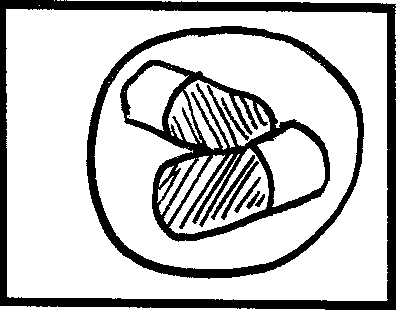
If only you could ditch that traumatic memory, that craving, that debilitating fear of ventriloquist dummies (autonomatonophobia)! But these tendencies are so deeply ingrained that try as you might, you can't dig them out. Maybe you can drug them out.
The process of recalling a memory is like a rolling snowball——a trigger provides the first ball, which then rolls through various parts of your brain picking up the additional elements it needs to become a full memory.
Many bacteria spend much of their existence within a matrix that they create, called biofilm. Biofilm consists of mucopolysaccharide (or slime-like, think “The Blob” from the 1950s) structures produced by microorganisms as a defense mechanism against their environment.
A good science fair project typically takes less time and is more interesting to do, than a bad one. Does this make sense? Do you want to spend extra time having less fun? As a sequel to last year's
"Secrets of a Science Fair Judge", I present to you my suggestions for making your science fair project go faster, be more fun, and still get you a higher grade.
Choose an Interesting Question
As beautiful as they get, or even more so. It is hard to express the beauty of the event that the CMS collaboration
published today. CMS, which stands for "compact muon solenoid", is one of the two main detectors operating at the CERN Large Hadron Collider (the other is ATLAS). The duo is seeking evidence for the Higgs boson, the only elementary particle predicted by the Standard Model that still awaits to be discovered.
 Giorgio Chiarelli is a particle physicist. His research activity has been based largely at the Fermi laboratory near Chicago, US, at the CDF experiment. In 1994-96 he actively participated in the discovery of the top quark and in the first measurements of that particle's properties. Later, after directing the construction of a part of the new CDF detector, he moved its research interests toward the search for the Higgs boson. Currently he is a INFN research director in Pisa, where he leads the CDF-Pisa group. In the most recent years he dealt with problems connected with the communication of science.
Climate science is suffering a crisis of confidence among the public but the data is there - what climate scientists need are effective climate change communication strategies and ways to engage the people on the street who influence policy decisions.
One solution to reducing the environmental footprint of buildings is to create 'living' materials using synthetic biology and cover them with it. Those materials could eventually produce water in desert environments or harvest sunlight to produce biofuels.
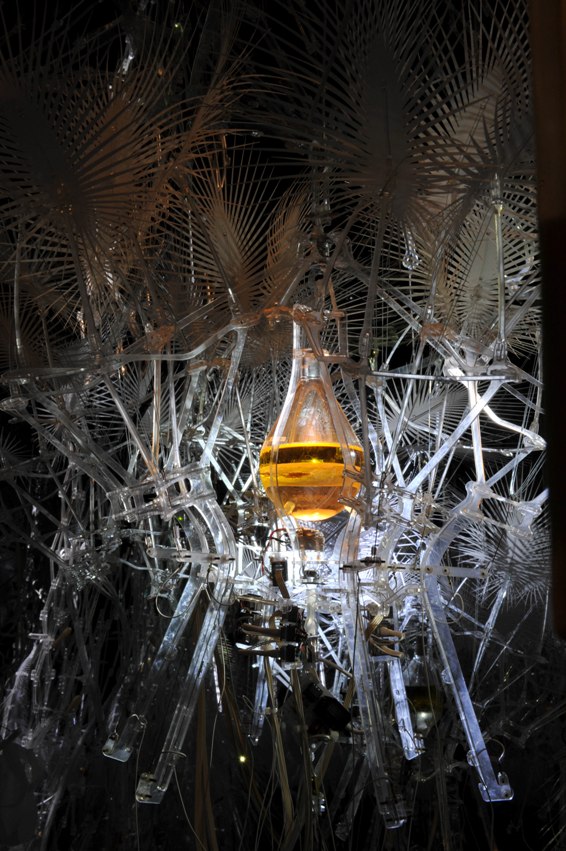
Researchers from the University of Greenwich, the University of Southern Denmark, University of Glasgow and University College London are working with an architectural firm and a building materials manufacturer to use protocells - bubbles of oil in an aqueous fluid sensitive to light or different chemicals – to fix carbon from the atmosphere or to create a coral-like skin, which could protect buildings.