Heavy alcohol consumption carries a lot of significant health risks, and researchers from the University of Texas say men who drink too much face a higher risk of pancreatic cancer.
In a study published in Cancer Causes and Control, researchers found that the more alcohol a man consumed, the higher his risk of pancreatic cancer compared with those who drank little or no alcohol.
Men who consumed alcohol increased their risk of pancreatic cancer by 1.5 to 6 times compared with those who didn't consume alcohol or who had less than one drink per month. The increased risk depended on the amount and frequency of alcohol consumption. Researchers found that the risk was greater no matter when in the past heavy drinking occurred.
Data from the ESA's Envisat radar satellite shows that the Gulf of Mexico Oil Spill has entered the Loop Current, a powerful conveyor belt that flows clockwise around the Gulf of Mexico towards Florida.
"With these images from space, we have visible proof that at least oil from the surface of the water has reached the current," said Dr Bertrand Chapron of Ifremer, the French Research Institute for Exploitation of the Sea.
Dr Chapron and Dr Fabrice Collard of France's CLS have been combining surface roughness and current flow information with Envisat Advanced Synthetic Aperture Radar (ASAR) data of the area to monitor the proximity of the oil to the current.

The global climate trend since Nov. 16, 1978 is +0.14 C per decade, according to scientists from the Earth System Science Center (ESSC) at The University of Alabama in Huntsville
April temperatures (preliminary)
Global composite temp.: +0.50 C (about 0.9 degrees Fahrenheit) above 20-year average for April.
Northern Hemisphere: +0.80 C (about 1.44 degrees Fahrenheit) above 20-year average for April.
Southern Hemisphere: +0.21 C (about 0.38 degrees Fahrenheit) above 20-year average for April.
Tropics: +0.63 C (about 1.34 degrees Fahrenheit) above 20-year average for April.
March temperatures (revised):
Global Composite: +0.66 C above 20-year average
Spices commonly used to season cooked ground beef may also reduce the risk of consuming compounds called heterocyclic amines (HCAs) that can cause cancer .
HCAs are the carcinogenic compounds that are produced when muscle foods, such as ground beef patties, are barbecued, grilled, boiled or fried. Consuming HCAs through meat increases risk factors for colorectal, stomach, lung, pancreatic, mammary and prostate cancers.
J. Scott Smith, a Kansas State University food chemistry professor, found that certain spices containing natural antioxidants would reduce HCA levels by 40 percent when applied to beef patties during cooking.
The widely held notion that warming global temperatures will lead to a future intensification of malaria and an expansion of its global range is at odds with the available evidence, according to a new study in Nature.
The research, conducted by the Malaria Atlas Project (MAP), suggests that current interventions could have a far more dramatic – and positive – effect on reducing the spread of malaria than any negative effects caused by climate change.
A steady stream of modeling studies have predicted that malaria will worsen and its range will spread as the world gets warmer.
In the last yen years, astronomers have discovered scads of strange exploding stars, one-offs that may point to new and unusual physics.
Supernova (SN) 2005E, discovered five years ago by the University of California, Berkeley's Katzman Automatic Imaging Telescope (KAIT), is one of eight known "calcium-rich supernovae" that seem to stand out from the rest.
This month a long time friend graduated with a PhD in science after 7 years of rather difficult studies beyond his master's degree. It was a big relief to him ending a period of weekend laboratories and late night study sessions. He passed the oral exams two months ago, and was left with only a few loose ends to tie up. Two pages of his dissertation had top margins that were a quarter inch too wide.
Remembering my own 23 years of college and some similar experiences along the way, I sent congratulations and included a copy of Albert Einstein's Ph.D. dissertation, with the hope that it would help to get the margins right.
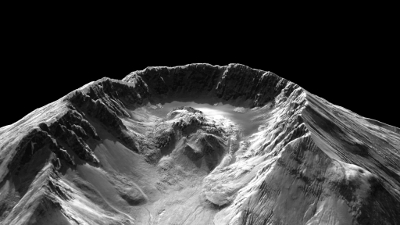
On this very date, 18th of May, 30 years ago, Mount St. Helens reawakened with a devastating eruption. If it weren't for the magnificent images taken by the USGS I would have had a hard time believing just how devastating it was. The unexpected lateral blast killed volcanologist David A Johnston on his observation post – now called the Johnston ridge – and simply ripped out the trees from the hill sides.
If you follow the blogosphere as a source of information on cutting-edge high-energy-physics results, you certainly by now know that the DZERO collaboration has produced a new exciting result. They find a 3.2 standard deviation effect in a study of charge asymmetry of muon pairs, which can be due to a unexpected, large source of CP violation -one which constitutes a very good shot at explaining the origin of the matter-antimatter asymmetry of the Universe!
By studying receptors in the brain, researchers at the Swedish medical university Karolinska Institute have managed to show that the dopamine system in healthy, highly creative people is similar in some respects to that seen in people with schizophrenia.
High creative skills have been shown to be somewhat more common in people who have mental illness in the family. Creativity is also linked to a slightly higher risk of schizophrenia and bipolar disorder. Certain psychological traits, such as the ability to make unusual pr bizarre associations are also shared by schizophrenics and healthy, highly creative people. And now the correlation between creativity and mental health has scientific backing.