Wild Wells
Caution: satire alert!
The current slight mishap in the Gulf of Mexico is just another oil spill.
So says BP and the media, and we all know we can trust them to be honest and ethical.
The Gulf disaster is not an oil spill - it's a wild well. I hate weasel words1.
A new wide-field image released today by ESO has captured a large group of galaxies belonging to the massive cluster known as Abell 315. As crowded as it may appear, this assembly of galaxies is only the proverbial "tip of the iceberg", as Abell 315 — like most galaxy clusters — is dominated by dark matter. The huge mass of this cluster deflects light from background galaxies, distorting their observed shapes slightly.
Neuroscientists from the University of Southampton investigating alcohol dependency and withdrawal in C. elegans worms say they exhibit alcohol-dependent behaviors similar to humans, despite their evolutionary distance, and very simple brain consisting of just 302 nerve cells.
The research, published in PLoS One, shows that withdrawal symptoms could be relieved by small doses of alcohol. However, easing the effects can increase dependency.
In humans, the symptoms are manifested in anxiety, agitation and, in extreme cases, seizures. The worms, as video footage shows, also became overactive in alcohol withdrawal and showed spontaneous and deep body bends – a behavior rarely seen in 'teetotal' worms.
The case for so-called organic farming has always been pretty weak, and a new study in Ecology Letters isn't helping the cause.
The study found that the environmental benefits generated organic farming don't compensate for the lower yields produced. Increases in biodiversity from organic farming were found to be much lower than previously thought – averaging just over 12 percent more than conventional farming. Organic farms in the study also produced less than half of the yield of their conventional counterparts.
As concern grows after the explosion of the Deepwater Horizon drilling rig in the Gulf of Mexico two weeks ago, scientists are monitoring the situation closely with ESA's Envisat radar data.
The spill still appears relatively confined around its point of origin and is still north of the Loop Current, a powerful conveyor belt that circulates clockwise around the Gulf toward Florida before being joining the powerful Gulf Stream.
Some researchers have expressed concerned that the Loop Current could soon catch the oil slick and drag it south towards coral reefs in the Florida Keys.
Researchers writing in Nature say they can have discovered how living cells use a limited number of genes to generate enormously complex organs such as the brain.
The team describes how a hidden code within DNA explains how a limited number of human genes can produce a vastly greater number of genetic messages. The discovery bridges a decade-old gap between our understanding of the genome and the activity of complex processes within cells, and could one day help predict or prevent diseases such as cancers and neurodegenerative disorders.
The researchers developed a new computer-assisted biological analysis method that finds 'codewords' hidden within the genome that constitute what is referred to as a 'splicing code'.
The Hurrians (also Khurrites; cuneiform Ḫu-ur-ri ) were a people of the Ancient Near East, who lived in northern Mesopotamia and areas to the immediate east and west, beginning approximately 2500 BC.
Prof. Anne Kilmer ( professor of Assyriology, University of California, and a curator at the Lowie Museum of Anthropology at Berkeley) transcribed one of the oldest known pieces of music notation in the world.
Clay tablets relating to music, containing the cuneiform signs of the "Hurrian" language, had been excavated in the early 1950s at the Syrian city of ancient Ugarit in what is now modern Ras Shamra.
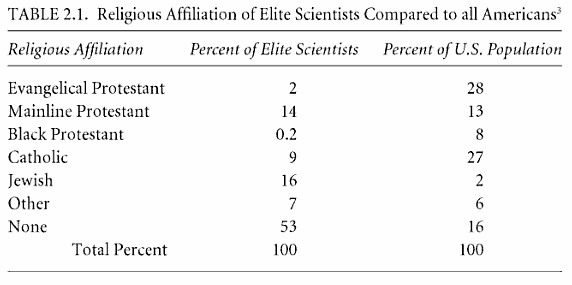
A new book, just about to be published, has already caused a stir in the blogosphere. “Science vs. Religion: What Scientists Really Think” by Elaine Ecklund, a sociologist from Rice University, claims that scientists are less atheistic than previously thought.
The dustjacket blurb explains:”In the course of her research, Ecklund surveyed nearly 1,700 scientists and interviewed 275 of them. She finds that most of what we believe about the faith lives of elite scientists is wrong. Nearly 50 percent of them are religious. Many others are what she calls “spiritual entrepreneurs,” seeking creative ways to work with the tensions between science and faith outside the constraints of traditional religion…..only a small minority are actively hostile to religion.”
A satellite recently made the news for careening out of order and threatening other satellites with its unplanned path and bad driving. I just want to point out, that is not my satellite. Not my fault. I wasn't there. I have an alibi!
Short recap: The ground station lost control of the geostationary (always over the same part of the Earth) communications satellite Galaxy 15, which has now started to drift from its position while still broadcasting. Folks are worried because it's still transmitting, so it might cause signal interference with other statellite broadcasts. They need to regain control and force a full shutdown.
Children who pick up smoking may not recognize the symptoms of nicotine dependence early on in the habit, say researchers writing in Pediatrics.
Their study found that sixth-graders who started smoking in the 4-year period 2002–2006 were unable to recognize that symptoms such as irritability and desire to smoke are harbingers of addiction.
Researchers surveyed 1246 adolescent smokers every three to four months, over the four-year period. Study participants were monitored for 10 symptoms of dependence with the Hooked on Nicotine Checklist. The association between number of symptoms and smoking frequency was examined using cross-lagged analyses.