Thanks to capitalism and a cultural heritage of individual freedom, Americans enjoy just about ever modern convenience imaginable and do almost anything they want. But, according to psychologists from Standford University and Swarthmore College, the amount of choice that results from such a decadent lifestyle may be unhealthy. The researchers say that too many choices cause Americans to ignore how the rest of the world feels about choice and may even make us selfish and depressed.
A new paper published in Zoologica Scripta argues that the distributions of the major primate groups are correlated with Mesozoic tectonic features and that their respective ranges are congruent with each evolving locally from a widespread ancestor on Pangea about 185 million years ago.
The new theory incorporates spatial patterns of primate diversity and distribution as historical evidence for primate evolution, while previous models of primate evolution had been limited to interpretations of the fossil record and molecular clocks, says author Michael Heads, a Research Associate of the Buffalo Museum of Science.
University of California, San Diego researchers say they have shown one way deadly brain tumors called gliomas evade drugs aimed at blocking the epidermal growth factor receptor (EGFR), a cell signaling protein that is crucial for tumor growth. They also say that a particular EGFR mutation is important not only to initiate the tumor, but for its continued growth as well. The findings appear this week in PNAS.
Not a whole lot of squid news this week, although the cephalopod mailing list continues to host a lively discussion, spurred by that
coconut octopus story, of concepts like "tool use" and "intelligence". Everyone's got a different perspective! One of my favorite questions: is an
archerfish that spits a jet of water to knock an insect off a branch a "tool user"? Is "using" a jet of water different from "using" a rock or a coconut shell?
2010 has just started with the best auspices to bring us exciting new science, and there comes a pledge to forecast what will happen in 2020. Oh, well - rest is not what I became a scientist for.
Making non-trivial predictions today for how will basic research be in subnuclear physics ten years down the line is highly non-trivial. For exactly the opposite reason that it is equally hard in several other fields of research.
THE QUESTION IS "What Will The Next Decade Bring In Science?" The answer is both obvious and dreamy at once. Well, 'motherhood' is a wonderful term for the expected and the unexpected. Take my piece on dimers as an illustration of this point. The elusive beryllium dimer was discussed for eight decades and in about 100 papers. Physicists and chemists alike disagreed over the evidence until 2009 when new experimental data brought better understanding to do new calculations. Next!
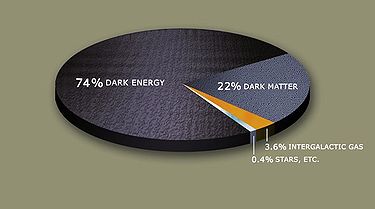
Our universe expands, and this expansion is accelerating. Current consensus is to attribute this acceleration to a mysterious form of energy: dark energy. This dark energy density is very tiny and therefore only notable at cosmic length scales. When expressed in natural units, the cosmic dark energy density has a value of 10-123. This tiny value presents a big mystery. Straightforward estimates for the dark energy density based on quantum field theoretical considerations result in values (again in natural units) close to unity.
Surgeons from UC Davis Medical Center say they have demonstrated that artificial muscles can restore the ability of patients with facial paralysis to blink, a development that could potentially prevent corneal ulcers and the blindness that usually follows. Detailed in the January-February issue of the Archives of Facial Plastic Surgery, the development could benefit the thousands of people each year who no longer are able to close their eyelids due to combat-related injuries, stroke, nerve injury or facial surgery.
In addition, the technique, which uses a combination of electrode leads and silicon polymers, could be used to develop synthetic muscles to control other parts of the body. The new
Low concentrations of oxygen and nutrients in the lower layers of the beaches of Alaska's Prince William Sound are slowing the aerobic biodegradation of oil remaining from the 1989
Exxon Valdez spill, according to a new study appearing in
Nature Geoscience.
In the first five years after the accident, the oil was disappearing at a rate of about 70 percent and calculations showed the oil would be gone within the next few years. However, about seven or eight years ago it was discovered that the oil had in fact slipped to a disappearance rate of around four percent a year and it is estimated that nearly 20,000 gallons of oil remains in the beaches.
Reporting in the Journal of Biological Chemistry, an international team of researchers has determined the structure of 14α-Demethylase (14DM), an enzyme essential to the survival of the protozoan parasites that cause sleeping sickness, Chagas disease and leishmaniasis. They say this new information provides the first up-close look at the busy enzyme and, perhaps more importantly, shows how one compound in particular prevents it from conducting business as usual.
The team chose to attack the parasite's enzyme known as 14DM because it has a counterpart in fungi, which cause athlete's foot and ringworm, and such fungal infections are commonly treated with drugs that prevent 14DM from making ergosterol, a sterol required for membrane synthesis.