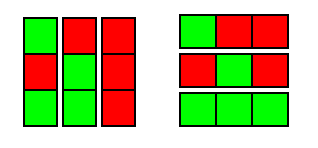
In a column posted a few days ago (November 1) I mentioned that my friend John Evans, a Cambridge (England) mathematician, has developed a general formula for estimating biocomplexity. It is quite simple, using only two variables: the number of units in a system, and the number of connections (interactions) each unit has with other units in the system. Today, in fact, biologists publish ‘interactomes” with furry ball figures that illustrate the number of proteins in a given cell and the number of interactions each protein has with other proteins. The concept of complex interactomes has become embedded in systems biology.
Will the
$ 1,000,000 Randi Challenge Prize soon be
awarded? The prize, administered by the James Randi Educational Foundation (JREF), is offered to anyone who can prove
in scientifically controlled tests some form of paranormal power. So far, Randi's prize has not been claimed, but rumour has it that under supervision of the JREF an elaborate telepathy test is being conducted with shocking results.
A JREF staff member, who wishes to remain anonymous, commented on the ongoing tests with the words “I have never witnessed anything like this, this is deeply disturbing”.
Let me describe two very different academic careers.
I recently read, in one of the posts, the following statement.
"Evolution is not fair, economics is not fair."
http://www.scientificblogging.com/news_articles/chemical_engineer_solves_capitalism_problem
I'm sure we've all heard the platitude that "life is not fair", which set me to thinking about what these statements even mean.
MIT researchers and designers are developing the Affective Intelligent Driving Agent (AIDA) - a new in-car personal robot that aims to change the way we interact with our car. The project is a collaboration between the Personal Robots Group at the MIT Media Lab, MIT’s SENSEable City Lab and the Volkswagen Group of America’s Electronics Research Lab.
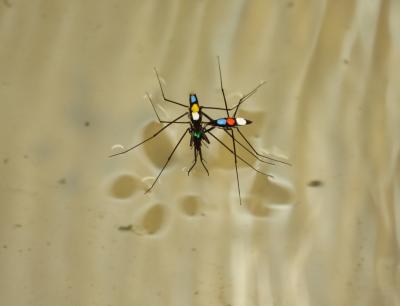
Female water striders don't like the bad boys and they don't even have to reach the age of 30 before they wise up about choices in males.
Water striders are those insects commonly seen skittering hurriedly across the surface of streams but when it comes to romance, male water striders who played it cool mated with more females than did groups of aggressive males, according to a study led by Omar Tonsi Eldakar of the University of Arizona's Arizona Research Laboratories.
The Ecuadorian government has devised a novel, albeit idealistic, plan to prevent gas and oil development in the Yasuní National Park in hopes of protecting biodiversity and combating climate change. The proposal, known as the Yasuní-ITT Initiative, would leave untouched nearly
one billion barrels of oil that lie beneath the national Park in Ecuador.
When you use popular search engines like Google or Yahoo to find something on the internet, the information you input is collected and built into a profile that helps those companies market products you may find interesting. Your favorite search engines justify this practice by claiming that it allows them to learn about your interests and offer more efficient responses as a result.
That's well and good if you don't care about privacy. But if you do, a team of researchers has developed a new protocol based on cryptographic tools to distort the user profile generated by internet search engines, in such a way that they cannot save the searches undertaken by internet users and thus preserve their privacy.
People living in volcanic areas may face a higher risk for thyroid cancer, says a new study published online in the Journal of the National Cancer Institute.
While the increasing incidence of thyroid cancer has been attributed to more sensitive screening, recent evidence suggests that this may not be the only cause. Various environmental factors, such as those associated with volcanoes, have not been excluded as risk factors.
The authors point out that a volcanic environment—which can produce toxic compounds that are suspended particulate matter and gases and elements that may pollute the water—could increase the incidence of thyroid cancer; however, the mechanism by which it affects risk is unknown.
Biologists say they have found a population of tropical butterflies that may be on its way to a split into two distinct species. The cause of this particular break-up? A shift in wing color and mate preference.
In a paper published this week in the journal Science, the researchers describe the relationship between diverging color patterns in Heliconius butterflies and the long-term divergence of populations into new and distinct species.