When Charles Darwin published On the Origin of Species by Means of Natural Selection, or The Preservation of Favoured Races in the Struggle for Life 150 years ago next month, he avoided conjecture about the origin of life and "To my mind it accords better with what we know of the laws impressed on matter by the Creator" shows that he had limits on the cultural firestorm he wanted to create in the name of science.
Virtually every study in the last two years has
blamed neighborhoods for obesity rather than the people who eat too much - but living near a variety of restaurants, convenience stores, supermarkets and even fast food outlets actually lowers your risk for obesity, according to a new study from the University of Utah.
Surprisingly, people who live more than a half mile away from any food outlets are the ones who tend to be fatter. The study suggests that placing restrictions on fast food outlets may not be effective, but that initiatives to increase healthy neighborhood food options may reduce individuals' obesity risks, especially if focused on low-income neighborhoods.
On Memorial Day, May 26, 2008, the "Roadrunner" supercomputer exceeded a sustained speed of 1 petaflop/s, or 1 million billion calculations per second. "Petaflop/s" is computer jargon—peta signifying the number 1 followed by 15 zeros (sometimes called a quadrillion) and flop/s meaning "floating point operation per second." Shortly after that it was named the world's fastest supercomputer by the TOP500 organization at the June 2008 International Supercomputing Conference in Dresden Germany.
There has been much discussion lately on this blog and elsewhere about the relationships among skepticism, atheism, and politics.
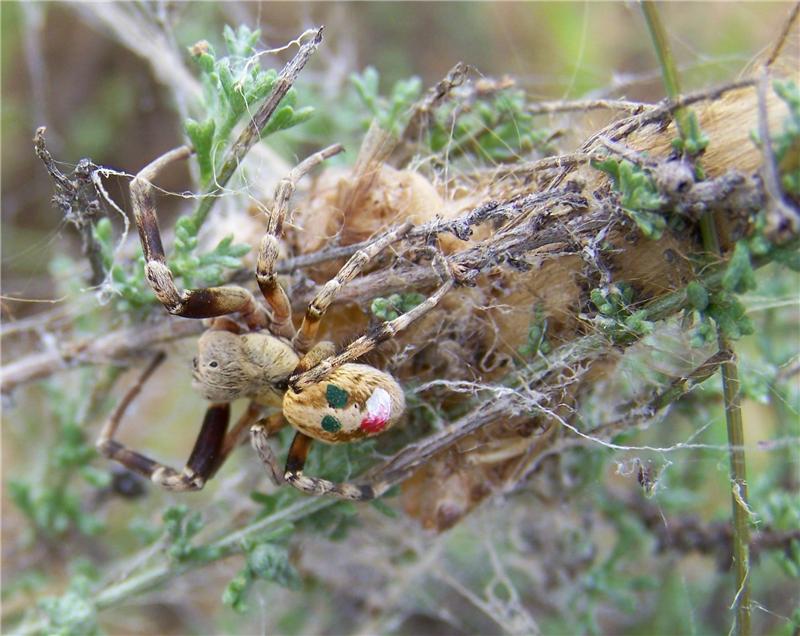
Nepotism has a bad connotation in the workplace or French politics but being surrounded by relatives does lead to better group dynamics and more cooperation in some animals, and certainly spiders, according to a new study published in BMC Evolutionary Biology.
In a new study, the researchers found that Stegodyphus tentoriicola spiders are far more efficient at foraging for food and cooperate better when they’re related to each other and, as with humans and other animals, relatedness may favor the evolution of less selfish behavior, more collaboration and better group dynamics.
Art is many things, but not often enough is it scientific. Fear not, art/science lovers, for Sir Isaac's Loft in the Franklin Institute is here to save the day!
I began describing the Loft in my
previous article, including impossible human tricks to try at work or at the bar and amaze your friends! But there's so much more...read on.
IllusionsThe eyes of the "inside out dragon" followed me no matter where I walked, which would have been creepy, but he was a cute little blue dragon. Since we aren't used to seeing things inverted, our brains turn the dragon right side out, and it looks "normal."
Caltech researchers have created a nanoscale crystal device that allows them to confine both light and sound vibrations in the same tiny space.
The interactions between sound and light in this optomechanical crysta can result in mechanical vibrations with frequencies as high as tens of gigahertz, or 10 billion cycles per second. Being able to achieve such frequencies gives these devices the ability to send large amounts of information, and opens up a wide array of potential applications—everything from lightwave communication systems to biosensors capable of detecting (or weighing) a single macromolecule.
Later this evening I’ll be giving a talk to a group of astronomers on what its like to see like an alien. The beauty of this is that I can speculate until the cows come home without fear of any counterexamples being brought to my attention. And even if an alien were to be among the audience members and were to loudly object that he sees differently than I claim, I can always just say that the jury is out until we get more data, and then advise him not to let the door slam into his proboscis on the way out.
Although it may seem wild-eyed to discuss the eyes of aliens, if we understand why our vision is as it is, then we may be able to intelligently guess whether aliens will have vision like ours.
Body builders will tell you that protein is key to bigger, stronger muscles. For the truly elite, that may be the case but for the all but 50 of you who are not elite muscle builders, a recent study by University of Texas Medical Branch at Galveston metabolism researchers provides evidence that a more normal eating pattern is going to get you the same results as wolfing down protein shakes; something your commission-based, fitness-center trainer does not want you to read.
The study's results, obtained by measuring muscle synthesis rates in volunteers who consumed different amounts of lean beef, show that only about the first 30 grams (just over one ounce) of dietary protein consumed in a meal actually produce muscle.
"Speciation is one of the most fascinating, unsolved problems in biology," says Harmit Malik, Ph.D., an associate member of the Hutchinson Center's Basic Sciences Division. The first appearance of new beings on Earth - the mystery of mysteries - is a great puzzle for scientists and philosophers alike.