Archaeologists have used stone tools to answer many questions about human ancestors in both the distant and near past and now they are analyzing the origin of obsidian flakes to better understand how people settled and interacted in the inhospitable Kuril Islands.
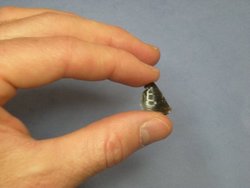
Using X-ray fluorescence spectrometers, archaeologists from the University of Washington and the Smithsonian Institution have found the origin of 131 flakes of obsidian, a volcanic glass. These small flakes were discarded after stone tools were made from obsidian and were found at 18 sites on eight islands in the Kurils. The flakes were found with other artifacts that were dated over a time period spanning about 1,750 years, from 2500 to 750 years before the present.
Yesterday, the Brazilian national team overcame a 2 goal deficit to defeat the USA squad 3-2 in the final of the Confederations Cup. The unheralded USA team was a surprise but teams always are until they achieve big wins over a period of time. Then it becomes predictable and expected, like Brazil.
But what makes a great footballer? Being in excellent physical condition undoubtedly helps but few people actually believe that intense physical training alone can turn an average player into Cristiano Ronaldo - who is Portuguese. Instead, there is something else that must be added. Scientists from the University of Queensland have decided to study what this "something else" might be.
Q. Who said this?
"I have only two passions - space exploration and hip-hop."
A. Buzz Aldrin, space exploration pioneer, on Apollo 11, second person to walk on the moon, 79-year-old white dude.
I thought this was a joke when I first saw the
posting on Wired, but it's real - Buzz recorded a rap song, "The Rocket Experience," with help from Snoop Dogg, Quincy Jones, Soulja Boy and Talib Kweli (who I didn't know but according to Wikipedia is "one of the best-known and critically, if not commercially, successful rappers in alternative hip-hop).
In an article published in the June 25th edition of the journal Neuron, researchers at the Hotchkiss Brain Institute, University of Calgary, have found that synaptic plasticity, long implicated as a device for ‘change’ in the brain, may also be essential for stability.
Homeostasis, the body’s own mechanism of regulating and maintaining internal balance in the body, is necessary for survival. Precisely how the brain pulls off this tricky balancing act has not been well appreciated.
In a few days italian post-docs working in high-energy physics will be asked to gather for a nasty exam, held by the INFN -the italian institute for nuclear physics- to qualify valiant researchers for future hiring in the institute.
The exam generated a wave of outrage among the very pool of people at which it is aimed: the scores of "precari" (temporary workers) who are spending the best years of their life to try and make a career in particle physics. Let me explain why that is so.
Newton’s apple fell from the tree and after thumping the scientist on the head, fell benignly to the ground. If the same apple fell toward Einstein (and happened to have a little added atomic oomph), it could, according to special relativity, become infinitely massive, flattening not only the unfortunate Einstein as he sat bodhisattva-like beneath the tree, but also the Earth itself.
This doesn’t mean Newton was wrong—only, that his theories apply more accurately to things traveling at speeds that don’t approach the speed of light (from slow-moving atomic particles to city transit busses). The crucial postulate of Einstein’s theory is the idea that the speed of light is measured to be exactly the same no matter the motion of the observer.
Modern glaciers, such as those making up the Greenland and Antarctic ice sheets, are capable of undergoing periods of rapid change, according to new findings by paleoclimatologists at the University at Buffalo. Their Nature Geoscience describes fieldwork to show that a prehistoric glacier in the Canadian Arctic rapidly retreated in just a few hundred years.
The proof of such rapid retreat of ice sheets provides one of few confirmations that this phenomenon occurs. Should the same conditions recur today, they would result in sharply rising global sea levels, which would threaten coastal populations.
Worried about your child’s exposure to
phthalates, the chemical compounds used as plasticizers in a wide variety of personal care products, children’s toys, and medical devices? Phthalate exposure can begin in the womb and has been associated with negative changes in endocrine function.
A new study in
The Journal of Pediatrics examines the possibility that in utero phthalate exposure contributes to low birth weight in infants. Low birth weight is the leading cause of death in children under 5 years of age and increases the risk of cardiovascular and metabolic disease in adulthood.
In a unique study of four previously convicted adult male pedophiles (Mage = 33.8, SD 9.7 years), utilizing structural magnetic resonance imaging (MRI) and imaging genomics (neuroimaging combined with genetic analyses), the authors propose that small variations in genotypes are responsible for paraphilic phenotypic expression (Tost, Vollmert, Brassen, Schmitt, Dressing, Braus, 2004).
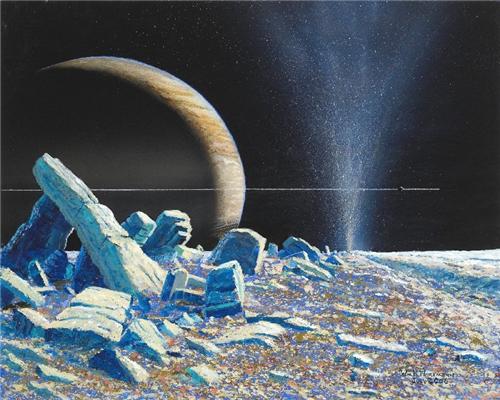
An enormous plume of water spurts in giant jets from the south pole of Saturn's moon Enceladus and a report published in Nature provides evidence that this magnificent plume is fed by a salty ocean.
The Cassini spacecraft made a surprising discovery about Saturn's sixth largest moon, Enceladus, on its exploration of the giant ringed planet in 2005. Enceladus ejects water vapor, gas and tiny grains of ice into space hundreds of kilometres above the moon's surface.