A natural, biological pacemaker; that's what a heart is, right? Sure, but our hearts can wear out and while artificial heart pacemakers have saved and extended the lives of thousands of people, but they have their shortcomings – such as a fixed pulse rate and a limited life.
Could a permanent replacement biological solution be in our future? Richard Robinson and colleagues at New York's Columbia and Stony Brook Universities certainly think so, and their work published in the latest issue of The Journal of Physiology outlines how we can bring it a step closer to reality.
Because global warming - whoops, climate change - became a political football rather than a scientific one, there are a lot of people attacking methodology and motive. 1990 does seem like a pretty arbitrary date for CO2 emissions until you realize that's right after the merger of Germany and all they, a key advocate of proponent, had to do to meet their target was close some World War 2 era Soviet factors in East Germany to meet their target. And France just had to open up some more nuclear power plants (no CO2, but do American environmentalists think that is better?).
Where does space begin? Scientists at the University of Calgary have created a new instrument that is able to track the transition between the relatively gentle winds of Earth's atmosphere and the more violent flows of charged particles in space – flows that can reach speeds well over 1000 km/hr. And they have accomplished this in unprecedented detail.
Data received from the U of C-designed instrument sent to space on a NASA launch from Alaska about two years ago was able to help pinpoint the so-called edge of space: the boundary between the Earth's atmosphere and outer space.
With that data, U of C scientists confirmed that space begins 118 km above Earth.
Researchers from the Hotchkiss Brain Institute (HBI) in the Faculty of Medicine at University of Calgary have uncovered the first evidence that neurons talk to ‘glial’ cells in the digestive tract: a discovery that could help find a way to regulate and restore balance in the gut for the one in 10 Canadians suffering from irritable bowel syndrome (IBS) and the more than 200,000 Canadians suffering from inflammatory bowel disease (IBD).
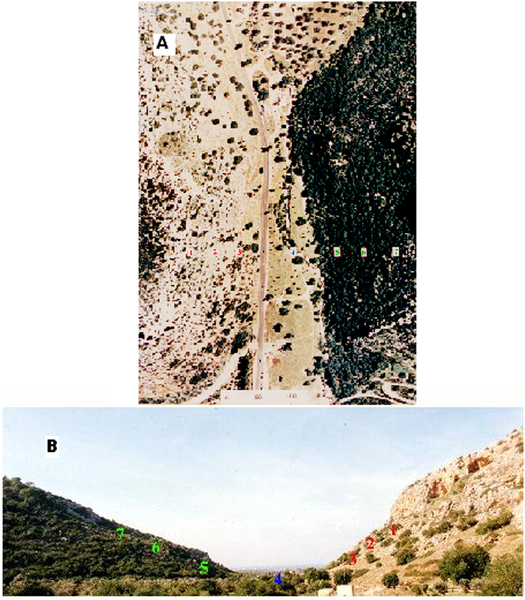
Scorpions possess resistance to high temperatures and the ability to conserve water for long periods of time, and as a result thrive in hot and arid parts of the world. But is this global distribution also seen at a more local level? Doctoral student Shmuel Raz and colleagues at the University of Haifa, Israel show that this is indeed the case, even when European-like and African-like habitats were separated by no more than 100 meters.
Shmuel Raz and colleagues studied the communities of scorpions in a valley near Mount Carmel in Israel which has been dubbed "Evolution Canyon." Evolution Canyon" has steep slopes and runs approximately east-west, which means that the south-facing slope receive up to eight times as much solar radiation as the north-facing slope .
Soy aglycons of isoflavone (SAI), a group of soybean constituent chemicals, have been shown to promote health in a rat model of the menopause. The research in Nutrition&Metabolism shows how dietary supplementation with SAI lowers cholesterol, increases the anti-oxidative properties of the liver and prevents degeneration of the vaginal lining.
Science has come one step closer to developing practical methods of gene therapy. Viable gene therapy means treatment for currently untreatable diseases including the vast amount of genetic disorders affecting millions world-wide.
According to a new study published by the Mayo Clinic, patients with Parkinson disease (PD) have another problem to deal with. Researchers have found that one in six patients taking therapeutic doses of
certain prescription drugs for management of PD have developed troubling behavioral symptoms. The most problematic symptoms include compulsive gambling and hypersexuality.
By combining the results of a number of powerful techniques for studying material structure at the nanoscale, a team of researchers from the National Institute of Standards and Technology (NIST), working with colleagues in other federal labs and abroad, believe they have settled a long-standing debate over the source of the unique electronic properties of a material with potentially great importance for wireless communications.
The new study* of silver niobate not only opens the door to engineering improved electronic components for smaller, higher performance wireless devices, but also serves as an example of understanding how subtle nanoscale features of a material can give rise to major changes in its physical properties.