Cattle and sheep grazed on natural grasslands help maintain biodiversity and produce tastier, healthier meat, according to a study funded by the Economic and Social Research Council (ESRC). The research, part of the Rural Economy and Land Use (RELU) program, concluded that pasture-based farming is good for the environment, the consumer and the producer but needs stronger support from British policy makers.
Detailed analysis of the nutritional qualities of the plant species present on the natural grasslands showed that they provided grazing animals with a richer more diverse diet than the improved pastures used for more intensive farming. And this richer diet translated into tastier meat.
XMM-Newton has caught the fading glow of a tiny celestial object, revealing its rotation rate for the first time. The new information confirms this particular object as one of an extremely rare class of stellar zombie – each one the dead heart of a star that refuses to die.
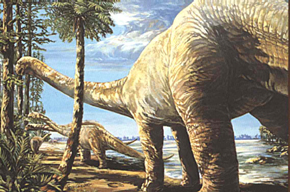
The official State Dinosaur of Texas is up for a new name, based on Southern Methodist University research that proved the titleholder has been misidentified. State Rep. Charles Geren of Fort Worth filed a resolution Jan. 7 to change the name of the state dinosaur from Pleurocoelus to Paluxysaurus jonesi to correctly name the massive sauropod whose tracks and bones litter the central Texas Jones Ranch. Peter Rose is the scientist behind the name change: His master's level study of dinosaur bones at SMU eventually led him to dispute the long-accepted notion that the large, sauropod bones found in and around the Paluxy River near Glen Rose, Texas, were the same as Pleurocoelus bones first found in Maryland in the late 1800s.
A lot of time and money is spent thinking about special needs children, says Florida State University professor Steven I. Pfeiffer, while there is an assumption that no educational resources need to be provided for 'gifted' kids to help them thrive in school.
"There is a view occasionally expressed by those outside of the gifted field that we don't need programs devoted specifically to gifted students," Pfeiffer, member of the Department of Educational Psychology and Learning Systems, said. "'Oh, they're smart, they'll do fine on their own' is what we often hear. And because of this anti-elitist attitude, it's often difficult to get funding for programs and services that help us to develop some of our brightest, most advanced kids -- America's most valuable resource."
If you've been watching in awe as ethanol, the renewable fuel adored by environmentalists and endorsed by politicians including Al Gore, has raised prices on food and done nothing to combat emissions, you may be skeptical about new claims of green gasoline.
Not so fast. Biomass may still be the answer, say University of Oklahoma researchers, and they won't require changes to current fuel infrastructure systems. Lance Lobban, director of the School of Chemical, Biological and Materials Engineering, says "green" fuels can still be an important part of our energy future.
Never underestimate the ability of companies to let you believe you're doing a good thing if they can make a buck. It was once said classical music was good for kids - in a bizarre, isolated 'correlation is causation' way - so a company decided that a TV show with classical music in the background would make infants smarter and the "Baby Einstein" juggernaut was born. Was there any evidence for it? No, but there is evidence against it, and a child expert is warning parents to limit the amount of television children watch before the age of two, after an extensive review of 78 studies published over the last 25 years and published in the January issue of Acta Paediatrica. It can do more harm than good to their ongoing development.
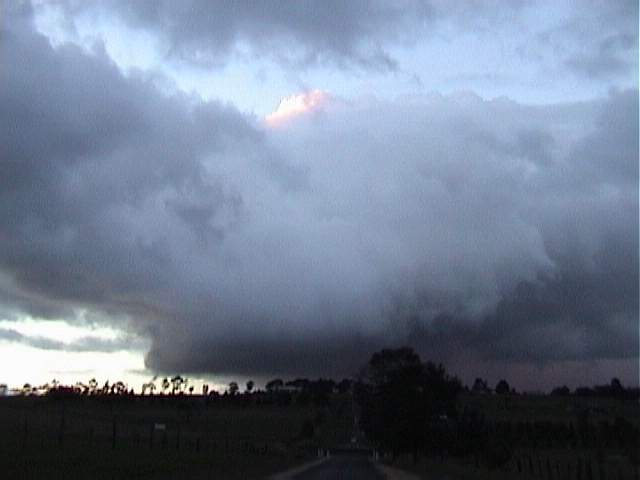
Never 'heard' of thundersnow? It's a rare sort of thunderstorm but the precipitation is snow rather than rain and because the snow dampens the sound so while you might thunder from a typical storm miles away the boom of thundersnow can only be heard for a few hundred yards.
Patrick Market, associate professor of atmospheric science at the University of Missouri, is chasing storms in the dead of winter in order to release weather balloons that will produce data about the little-known phenomenon of thundersnow and he says it can teach us a lot about predicting weather.
Researchers at Rensselaer Polytechnic Institute say their new polarization-matched type of light emitting diode (LED) has significantly improved lighting performance and energy efficiency.
Sometimes we talk about a water shortage but it's really more of an energy shortage. Less than 2% of the water on Earth can be consumed but with cheaper energy the water availability, even in remote areas, is unlimited.
But if cheap energy isn't on its way any time soon, energy efficient water purification is a good interim step. Engineered osmosis could be a key to addressing the global need for affordable clean water, according to two Yale researchers.
A 2000-year-old painted statue is being restored to her original glory by scientists from Warwick Manufacturing Group (WMG), an academic department of the University of Warwick, along with the University of Southampton and the Herculaneum Conservation Project.