









Is there a connection between what children believe and how they act, and how strong is the link? Researchers from four universities who studied these questions were surprised by the results.

"For me the biggest surprise was how the link between beliefs and behaviors changed from kindergarten to later in childhood and adolescence," said Jennifer Lansford, one of the researchers from Duke University's Center for Child and Family Policy. "Often we assume that if someone believes something, they will act in a way consistent with those beliefs, but that wasn't necessarily the case for the kindergarteners in our sample."

You know things are bad when an insurance company tries to fix the health care system.

WellPoint Inc. is funding a competition in collaboration with X Prize Foundation to devise solutions that improve health care cost and quality. Although the actual award amount and competition guidelines won’t be ready until early 2009, the rumored jackpot is about $10 million.

According to the X Prize site , the two partners will solicit advice from various stakeholders, hold the competition, and test the finalists’ plans in WellPoint’s markets.

The means by which proteins provide a 'border control' service, allowing cells to take up chemicals and substances from their surroundings, whilst keeping others out, is revealed in unprecedented molecular detail for the first time in Science Express.

The scientists behind the new study have visualised the structure of a protein called Microbacterium hydantoin permease, or 'Mhp1', which lives in the oily membrane that surrounds bacteria cells. It belongs to a group of proteins known as 'transporters' which help cells take up certain substances from the environment around them. This is the first time scientists have been able to show how a transporter protein opens and closes to allow molecules across the membrane and into the cell, by accurate analysis of its molecular structure in different states.

Nothing drives biologists crazier than people who think the colloquial meaning of 'junk' means junk DNA is valueless. For about 15 years, scientists have known that certain junk DNA, repetitive DNA segments previously thought to have no function, could evolve into exons, which are the building blocks for protein-coding genes in higher organisms like animals and plants.

A new University of Iowa study has found evidence that a significant number of exons created from junk DNA seem to play a role in gene regulation. The findings increase our understanding of how humans differ from other animals, including non-human primates.

It's no news that women were historically excluded from the "boys club" of science but women scientists date as far back as Ancient Greece, and perhaps further. In more recent years, they have become essential to the scientific community.

Several of the women listed here are sisters or wives of scientific men. During their times, women were forced onto the backburner but, given equal rights and freedoms, might have overshadowed their masculine counterparts. Some even disguised themselves as men and most, if not all, faced tremendous adversity. They have been chosen for this list because their contributions to science cannot be ignored, nor forgotten. 

The last column here placed the financial crisis within a historical context. The financial meltdown is part of the disruptive transition from the Information Age to the Shift Age. We are moving through a period of turmoil when the old order is being replaced by a new order. The nation state economic model is being replaced by a new global model. We are at a time when the old ways no longer seem to work and yet the new realignments are not yet clear.


In the United States there have been three great waves that have arced over our society during the last 30 years. The incredible run up in residential real estate values since the late 1970s was the first arc. Except for a short period in the early 1980s and then again in the 1990s, the value of residential real estate seemed to go ever upward. This of course created a great sense of wealth for those that benefited. In the early part of this decade millions of households took advantage of historically low interest rates to take out billions of dollars of equity to use for purchases. This 30 year cycle obviously came to a crashing halt two years ago.

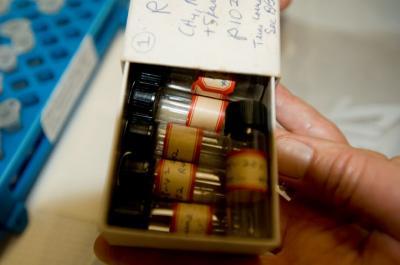
Lightning and gases from volcanic eruptions could have given rise to the first life on Earth, according to a new analysis of samples from a classic origin-of-life experiment by NASA and university researchers. The NASA-funded result is the subject of a paper in Science appearing October 16.

"Historically, you don't get many experiments that might be more famous than these; they re-defined our thoughts on the origin of life and showed unequivocally that the fundamental building blocks of life could be derived from natural processes," said lead author Adam Johnson, a graduate student with the NASA Astrobiology Institute team at Indiana University, Bloomington, Ind.

From 1953 to 1954, Professor Stanley Miller, then at the University of Chicago, performed a series of experiments with a system of closed flasks containing water and a gas of simple molecules. At the time, the molecules used in the experiment (hydrogen, methane, and ammonia) were thought to be common in Earth's ancient atmosphere.

Using brain imaging and chocolate milkshakes, scientists have found that women with weakened "reward circuitry" in their brains are at increased risk of weight gain over time and potential obesity. The risk increases even more for women who also have a gene associated with compromised dopamine signaling in the brain.

The results, drawn from two studies using functional magnetic resonance imaging (fMRI) at the University of Oregon's Lewis Center for Neuroimaging, appear in the Oct. 17 issue of the journal Science. The first-of-its-kind approach unveiled blunted activation in the brain's dorsal stratium when subjects were given milkshakes, which may reflect less-than-normal dopamine output.

Sunlight contains the entire spectrum of colors that can be seen with the naked eye -- all the colors of the rainbow. What our eyes interpret as color are really different energy levels, or frequencies of light. Today's solar cell materials can only capture a small range of frequencies, so they can only capture a small fraction of the energy contained in sunlight.

Researchers have created a new material that overcomes two of the major obstacles to solar power: it absorbs all the energy contained in sunlight, and generates electrons in a way that makes them easier to capture.

Ohio State University chemists and their colleagues combined electrically conductive plastic with metals including molybdenum and titanium to create the hybrid material.

For decades, scientists and resource managers have known that wildfires affect forest soils - in a direct sense because it kills vegetation and disrupts soil structure and then in an indirect sense because that then causes erosion. But, the lack of detailed knowledge of forest soils before they are burned by wildfire has hampered efforts to understand fire's effects on soil fertility and forest ecology.

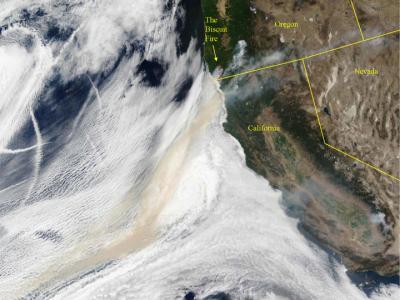
A new study led by the Pacific Northwest (PNW) Research Station addresses this critical information gap and represents the first direct evidence of the toll wildfire can take on forest soil layers. It draws on data from the 2002 Biscuit Fire, which scorched some 500,000 acres in southwest Oregon, including half of a pre-existing study's experimental plots, which had been studied extensively before the fire. The result was a serendipitous and unprecedented opportunity to directly examine how wildfire changes soil by sampling soils before and after a wildfire. The study appears in the November issue of the Canadian Journal of Forest Research.


