





Hershey's Center for Health and Nutrition announced the publication of a study that shows resveratrol, the compound often associated with the health benefits of red wine, is also found in cocoa and dark chocolate products. In the September 24 edition of the Journal of Agricultural and Food Chemistry, Hershey scientists conducting a report that cocoa powder, baking chocolate and dark chocolate all have significant levels of resveratrol, a naturally occurring antioxidant.

"This study shows that the levels of resveratrol found in cocoa and chocolate products is second to red wine among known sources of resveratrol and forms yet another important link between the antioxidants found in cocoa and dark chocolate to other foods," says David Stuart, PhD, Director of Natural Product Science at The Hershey Company who partnered with Planta Analytica to conduct this study.

Cellular damage due to stress is an important factor in aging processes. It is therefore strange that starving, which is stressful, decelerates aging processes and extends the lifespan of organisms.

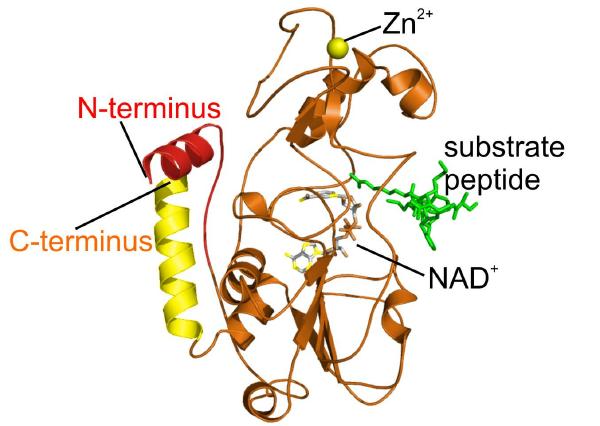
Proteins from the sirtuin family contribute to this mechanism but the exact function of the seven members of the sirtuin family in mammals has not yet been clarified. Results obtained in studies performed by protein research scientists in Bochum and Dortmund under the auspices of Assistant Professor Dr. Clemens Steegborn (Institute for Physiological Chemistry at RUB) have supplied first insights into this phenomenon.

The scientists identified initial functions of the two human sirtuins Sirt3 and Sirt5 that reside in mitochondria, the energy supplying “cellular power stations.”

Astronomers using the James Clerk Maxwell Telescope (JCMT) in Hawaii are making new discoveries about the origins of the planets, stars and galaxies with the start of a new survey to map the Universe.

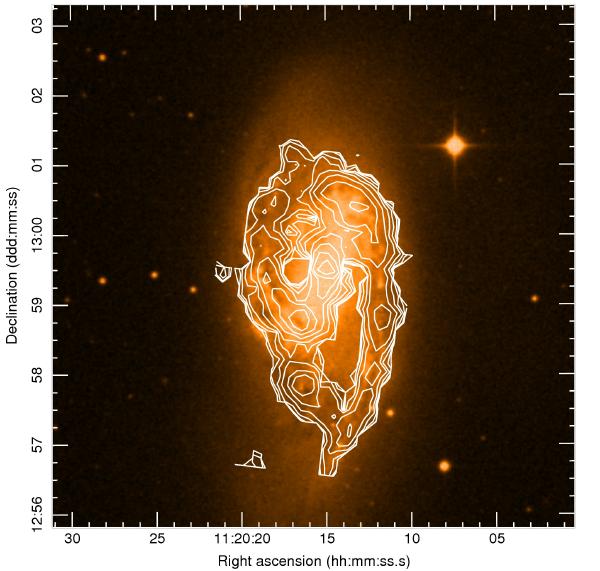
The JCMT Legacy Survey, made up of 7 projects, makes use of two sophisticated new instruments - SCUBA-2 and HARP – which will allow the astronomers to detect and probe clouds of cold dust associated with the mysterious earliest phases of the formation of galaxies, stars and planets.

SCUBA-2 is a powerful camera capable of mapping regions of the sky by detecting the heat emitted by this extremely cold dust. It has recently been delivered to the JCMT and is under commission. When completed it will have the ability to pinpoint and image many hundreds of distant, dust enshrouded galaxies in a single night.

At a major Artificial Intelligence competition at the University of Reading on 12 October, machines have come close to imitating human communication.

As part of the 18th Loebner Prize, all of the artificial conversational entities (ACEs) competing to pass the Turing Test have managed to fool at least one of their human interrogators that they were in fact communicating with a human rather than a machine. One of the ACEs, the eventual winner of the 2008 Loebner Prize, got even closer to the 30% Turing Test threshold set by 20th-century British mathematician, Alan Turing in 1950, by fooling 25% of human interrogators.

Top machines from around the world were entered into the competition and following extensive scrutiny these were whittled down to the five best for the 12 October finale. During the Turing Test at the University of Reading, the ACEs competed in a series of five minute long, unrestricted conversations with human interrogators, attempting to pass themselves off as human. The interrogators did not know whether they were conversing with a human or a machine during the test.

The President of SINTEF Fisheries and Aquaculture, Karl Andreas Almås, crouches over his laptop, opens one of his presentations and finds an illustration. It shows one red curve and one blue one. He then indicates the point where they meet each other, then frowns and says the message he cannot repeat often enough: There is a huge gap between world demand for fish and what we can harvest from the world’s natural stocks.

The figures are clear: If we don’t do something about the over fishing, the stocks of wild fish will be dealt a death blow. At the same time, the world’s population continues to grow – and with it the global demand for food.

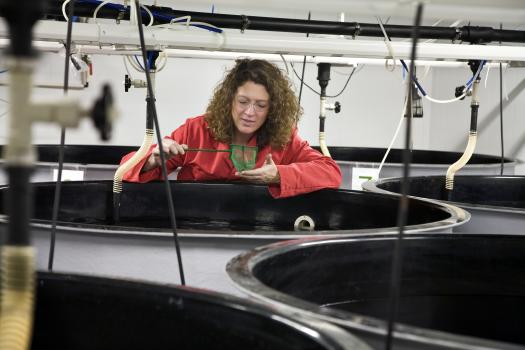
“On a global basis today, we have an average annual consumption of 15-16 kilos of fish per person,” says Almås. “If we are going to continue consuming at this rate, we need to double the production of farmed fish within the next 20 years. Doing this in a sustainable manner will be a major challenge.”

Patients have on average a 70 percent lower chance of dying at the nation's top-rated hospitals compared with the lowest-rated hospitals across 17 procedures and conditions analyzed in the eleventh annual HealthGrades Hospital Quality in America Study, issued today by HealthGrades, the leading independent healthcare ratings organization.

While overall death rates declined from 2005 to 2007, the nation's best-performing hospitals were able to reduce their death rates at a much faster rate than poorly performing hospitals, resulting in large state, regional and hospital-to-hospital variations in the quality of patient care, the study found.

In just 3 years of community activism that rivals Sarah Palin's political climb, Teens for Safe Cosmetics (TFSC) from Marin County, California has waged a national campaign to educate and inspire elimination and disuse of chemical toxins and environmental pollutants for healthier living. The passionate crusade recently earned two representatives from TFSC a meeting with Nobel Laureate, Archbishop Desmond Tutu at the Peace Jam Global Call to Action Conference in Los Angeles. Campaign members, Kate Smith and Emily Rose, were among 3,000 youths from around the world assembled to hear wisdom offered by six Nobel Peace Prize winners and to present their project for making of a better world.
In today’s world, advances in science and medicine happen almost daily. Few of those discoveries prove to be a revolution in current scientific thought. This is one of those breakthroughs.

Recently, the Nobel Committee announced that it would award the Nobel Prize for Medicine/Physiology to German professor Harald zur Hausen, who discovered the Human Papillomavirus (HPV) was the cause of cervical cancer. According to the Committee, his discovery “went against current dogma,” when in the 70s and 80s he strove to prove that the papillomaviruses were the cause of cervical cancers. “He thus laid the foundations for better prevention and treatment of this form of cancer, which has become the third most common form to affect women,” says Professor Matthias Kleiner, President of the German Research Foundation.

“I am, of course, completely surprised and it is a great pleasure for me,” expressed zur Hausen in an interview with Adam Smith from nobelprize.org. He credits his dedication and personal conviction to his discovery, working in a direction thought to be completely wrong by many of his contemporaries. “I was an unwelcome and lonely voice,” notes zur Hausen.

The more alcohol an individual drinks, the smaller his or her total brain volume, according to a report in the October issue of Archives of Neurology.

Brain volume decreases with age at an estimated rate of 1.9 percent per decade, accompanied by an increase in white matter lesions, according to background information in the article. Lower brain volumes and larger white matter lesions also occur with the progression of dementia and problems with thinking, learning and memory.

Caffeine consumption does not appear to be associated with overall breast cancer risk, according to a report in the October 13 issue of Archives of Internal Medicine, one of the JAMA/Archives journals. However, there is a possibility of increased risk for women with benign breast disease or for tumors that are hormone-receptor negative or larger than 2 centimeters.

Caffeine is probably the most commonly consumed drug worldwide, present in coffee, tea, chocolate and some medications, according to background information in the article. It was hypothesized that caffeine may increase the risk of breast cancer after a study showed that women with non-cancerous breast disease experienced relief from their symptoms after removing caffeine from their diet.


