






A report by scientists from The Netherlands published in The FASEB Journal identifies a compound in human saliva that greatly speeds wound healing. This research may offer hope to people suffering from chronic wounds related to diabetes and other disorders, as well as traumatic injuries and burns.

In addition, because the compounds can be mass produced, they have the potential to become as common as antibiotic creams and rubbing alcohol.

Specifically, scientists found that histatin, a small protein in saliva previously only believed to kill bacteria was responsible for the healing.

The results of a new study suggest that past climate changes and sea level fluctuations may have promoted the formation of new species in the Amazon region of South America.

The Amazon basin is home to the richest diversity of life on earth - some place had to be it - yet the reasons why are not well understood. A team of American and Brazilian researchers studied three species of leafcutter ants from Central and South America to determine how geography and climate affect the formation of new species.

Climate changes during the last ice age affected where Amazonian species, such as leafcutter ants, were able to live, restricting some to isolated "refugia" that could cause them to evolve into new species.

Mark Mulac was once an avid lover of iced tea, downing up to six glasses a day. Unfortunately, he was forced to go cold turkey. Iced tea helped to bring on an excruciating bout of kidney stones that led to surgery at Loyola University Hospital in Maywood, Ill.

Iced tea contains high concentrations of oxalate, one of the key chemicals that lead to the formation of kidney stones, a common disorder of the urinary tract that affects about 10 percent of the population in the United States.

Kidney stones are crystals that form in the kidneys or ureters, the small tubes that drain the urine from the kidney to the bladder. Men are four times more likely to develop kidney stones than women, and their risk rises dramatically once they reach their 40s.

Modern engine oil is a complex, highly engineered lubricating mixture, up to 20 percent of which may be special additives to enhance properties such as viscosity and stability and to reduce sludge formation and engine wear.

For years antiwear additives for high-performance oils have been phosphorous compounds, particularly zinc dialkyldithiophosphate (ZDDP), that work by forming a polyphosphate film on engine parts that reduces wear. Unfortunately phosphorus is a chemical poison for automobile catalytic converters, reducing their effectiveness and life span, so industry chemists have been searching for ways to replace or reduce the use of ZDDP. It’s not a simple problem because the additive has several useful functions in addition to wear resistance.

This DelFly Micro, made by Delft University of Technology, is a 'Micro Air Vehicle' (MAV), an exceptionally small remote-controlled aircraft with camera and image recognition software. The Micro, weighing just 3 grams and measuring 10 centimeters (wingtip to wingtip) has a minuscule battery weighing just 1 gram, can fly for approximately three minutes and has a maximum speed of 5 meters per second.

This kind of ultra-small, remote-controlled, camera-equipped aircraft is of great interest because they could eventually be used for observation flights in difficult-to-reach or dangerous areas.

The ten male soccer spectators who were struck by lightning in the Boston area on Sunday had taken refuge under a tree when a storm hit and were a great example of a rare phenomenon.

Nicholas Wade has an outstanding piece in today's Times Science section about the "hope" for Resverotrol and other sirtuin-activating compounds that may activate the lifespan extending pathway controlled by caloric restriction, although, like several stories on the subject lately, it left me wondering about a few things. Comment and answers appreciated, they are: 1. The reason for these stories--a Cell Metabolism article that appeared July 3 was actually quite negative about resverotrol's lifespan-extending effects. The Cell piece was about an experiment on normal, rather than high fat fed mice, raising the questions that resverotrol's previous success with high fat mice actually had more to do with energy partitioning than with the stress resistance touted by Sinclair and Guerente.
Southern Illinois University School of Medicine

Adding just the right dash of nanoparticles to standard mixes of lubricants and refrigerants could yield the equivalent of an energy-saving chill pill for factories, hospitals, ships, and others with large cooling systems, suggest the latest results from National Institute of Standards and Technology (NIST) research that is pursuing promising formulations.

NIST experiments with varying concentrations of nanoparticle additives indicate a major opportunity to improve the energy efficiency of large industrial, commercial, and institutional cooling systems known as chillers. These systems account for about 13 percent of the power consumed by the nation’s buildings, and about 9 percent of the overall demand for electric power, according to the Department of Energy.

On June 19, 2008 the American Dental Association updated its website indicating that fluoride is a concern to all kidney patients, not just those on dialysis. Along with false assurances of safety, fluoride chemicals are added to some public and bottled water in the unscientific belief it reduces cavities. Fluoride-induced bone damage could occur in kidney patients who consume even "optimally" fluoridated water because malfunctioning kidneys do not properly sift fluoride from the blood and out of the body.

A new fossil discovery, the first of its kind from the whole of the Antarctic continent, provides scientists with new evidence to support the theory that the polar region was once much warmer.

The discovery by an international team of scientists was published in Proceedings of the Royal Society B and involved researchers from the University of Leicester, North Dakota State University, the British Geological Survey, Queen Mary University of London, and Boston University.

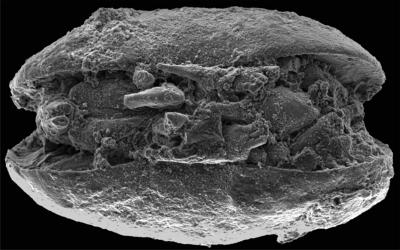
The team made a new fossil discovery in the Dry Valleys of the East Antarctic region. The fossils (ostracods) come from an ancient lake - 14 million years old - and are exceptionally well preserved, with all of their soft anatomy in 3-dimensions.


