






We're a long way from machine cognition but scientist are making improvements, mostly in recognition. Researchers have managed to teach a computer’s vision system to recognise up to 100 objects.

But there is another radically different approach available that European researchers have applied to the study of robotics and AI. The MACS project does not attempt to get robots to perceive what something is, but how it can be used.

This is an application of the cognitive theory of ‘affordances’, developed by the American psychologist James J. Gibson between 1950 and 1979. He rejected behaviourism and proposed a theory of ‘affordances’, a term signifying the range of possible interactions between an individual and a particular object or environment. The theory focuses on what a thing or environment enables a user to do.

Using a multidisciplinary mix of geometry, biological research and techniques developed to solve problems on supercomputers, scientists at the University of California, San Diego have shown for the first time how a genome is organized in three-dimensional space.

Researchers led by Cornelis Murre, a professor of biology at UC San Diego, and Steve Cutchin, senior scientist for visualization services at the San Diego Supercomputer Center (SDSC), used the gene encoding the immunoglobulin heavy chain locus — responsible for generating diverse kinds of antibodies — to demonstrate the structure of the genome.

The observations, the researchers say, permit an insight into the structure of the human genome, which until now has remained elusive.

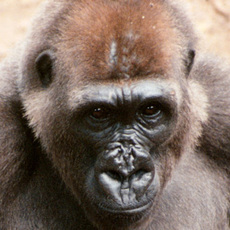
The government of Cameroon has created the Kagwene Gorilla Sanctuary, the world’s first sanctuary exclusively for the Cross River gorilla, the world’s rarest kind of great ape.

“The creation of this sanctuary is the fruit of many years of work in helping to protect the world’s rarest gorilla subspecies,” said Dr. Roger Fotso, Director of the Wildlife Conservation Society’s Cameroon Program, which worked in tandem with the Cameroon Ministry of Forestry and Wildlife in laying the groundwork for the sanctuary.

Classified as Critically Endangered by IUCN’s Red List, the Cross River gorilla is the rarest of the four subspecies of gorilla. The entire population numbers under 300 individuals across its entire range, which consists of 11 scattered sites in Cameroon and Nigeria.

Looking on the bright side can lead to irresponsible financial behavior, says Elizabeth Cowley from the University of Sydney. In a series of studies, Cowley examined repeated gambling in the face of loss. She finds that people often engage in too much positive thinking, selectively focusing on one win among hundreds of losses when they think back on the overall experience.

“When we want to justify engaging in an activity which could potentially be irresponsible – like gambling – we may need to distort our memory of the past to rationalize the decision,” Cowley explains. “People who have frequently spent more money than planned on gambling edit their memories of the past in order to justify gambling again.”

A genetic variation protects some people with heart failure, enabling them to live longer than expected, according to a research team led by investigators at the University of Maryland School of Medicine in Baltimore and the Washington University School of Medicine in St. Louis.

The researchers found that the genetic variation acts just like beta-blockers, a class of drugs used to treat chronic heart failure.

In the study, the researchers found that black heart failure patients with the genetic variation had a natural protection against death and the need for a heart transplant that is the same as the protection provided by beta-blocker therapy.

A close binary system of two candidate black holes in the quasar OJ 287 has shown Einstein some physics love. A central black hole, with a mass equal to 18 billion times that of the Sun, is orbited by a smaller one, and the interaction of the system with its surroundings produces brightness changes that allow astronomers to study the evolution of the orbit.

This evolution is dominated by one of the most intriguing predictions of Einstein's General Theory of Relativity: the emission of gravitational waves.

Astronomers believe that very massive black holes lurk at the centers of most galaxies but, as in the case of our own Galaxy, they often remain silent and are difficult to detect. In other cases where the black holes are surrounded by disks of material that fall onto them (accretion disks), the infalling material is heated and emits huge quantities of radiation: the active nucleus of a galaxy can appear, then, as a quasar.

A 240 million year-old Ichthyosauria specimen went on display at Tromsø University Museum in northern Norway. The Botneheia ichthyosaur, presumably a new species, was the largest predator of its day.

A team from the University of Tromsø, the Norwegian Polar Institute, and the University of Tübingen discovered the exceptionally large specimen at Svalbard, Norway. The preparation and exhibition of the fossil was sponsored by the Norwegian oil company StatoilHydro.

What species is it?

The fossil from the Botneheia Formation at Sauriedalen, Svalbard belongs to the Ichthyosauria (meaning ”fish-lizards”), a large group of marine reptiles that roamed the oceans for most of the Mesozoic. It is among the more “primitive” and early ichthyosaurs of the Triassic that the new find from Svalbard finds its place.
As no large ichthyosaurs have so far been described from the Middle Triassic of Svalbard, there is a high probability that one is dealing with a genus and species new to science.

A Yale University senior named Aliza Shvarts ignited the blogosphere with outrage yesterday, April 17, when the Yale student newspaper announced that Shvarts had artificially inseminated herself "as often as possible" over the past nine months and then periodically induced "miscarriages," all toward the goal of developing a "performance art" project in the School of Art at Yale. But there may be students on my campus who perform a similar type of "art" every week without much fuss.

It may all come down to the meaning of words.

There's a rule of science we normally overlook. That rule? Challenge your assumptions. See what you can derive from a new point of view. Buck the normal. Today, it is normal to hate consumerism. It's normal to loathe what consumerism has done to us...and what it has done to the planet. So as good scientists, let's go anti-conventional. Let's sing an ode in praise of consumerism. Let's see if reversing the normal point of view will produce any surprises.

In praise of consumerism? I know what you're thinking; this is a great subject for the brain-dead or folks who utterly lack a moral compass, like Donald Trump and Paris Hilton. But it’s certainly not a good subject for you and me.

The cost of providing a safety net for at-risk youth is $5,000 per year; the cost of housing a San Quentin inmate is $60,000 per year. Which would you prefer? -- -- -- -- -- -- -- -- What's your reaction when you see a young person begging for money, living in a park or under a freeway? Do you think, "Why don't you just get a job? In and Out Burgers pays $11.00 an hour. I'm not buying your beer." I admit to my own uneasiness and temptation to judge, and I also wonder what has happened to this young person that made them drop out? Who crushed their spirit? In 2003, M. Wald and T. Martinez conducted the Stanford University study "Connected by 25: Improving the Life Chances of the Country's Most Vulnerable 14-24 year olds." In that mouthful of study, they concluded that, "In our society, almost all youth require support until they have connected successfully with the labor force, which generally does not occur until the mid-twenties." Stanford also found that high school dropouts, those in the juvenile justice system and incarcerated youth are unlikely to reach age 25 without becoming homeless.

