




Amino acids are organic molecules that are the backbone of the proteins that build many of the structures and drive many of the chemical reactions inside living cells. The production of proteins is believed to constitute one of the first steps in the emergence of life. Amino acids are truly the 'building blocks' of life on Earth but the presence of these compounds in meteorites has led some researchers to look to space as a source.

Scientists at the Carnegie Institution have discovered concentrations of amino acids in two meteorites that are more than ten times higher than levels previously measured in other similar meteorites. This result suggests that the early solar system was far richer in the organic building blocks of life than scientists had thought, and that fallout from space may have spiked Earth’s primordial broth.

According to a new study in single-celled organisms, cheating could be genetic. And it could be the same in humans, giving new meaning to the term 'slime mold.'

An international team found that some amoebae have the ability to use cheating tactics to give them a better chance of survival. The research suggests that cheating may be widespread among social creatures - but so are survival instincts. Around other cheaters, or when cheating would place all in peril, the cheating did not occur.

Scientists at the National Institute of Environmental Health Sciences (NIEHS) recently conducted a study showing that long-term exposure to a component of artificial butter flavoring called diacetyl can be harmful to the nose and airways of mice. The study was conducted because diacetyl has been implicated in causing obliterative bronchiolitis (OB), a rare but debilitating lung disease, in humans.

OB has been detected in workers who inhaled significant concentrations of the flavoring in microwave popcorn packaging plants. When laboratory mice inhaled diacetyl vapors for three months, they developed lymphocytic bronchiolitis - a potential precursor of OB. None of the mice, however, were diagnosed with OB.

5 million trillion trillion.

That's a lot of zeroes but it's how many single-celled microbes there are on Earth. And they affect almost every ecological process.

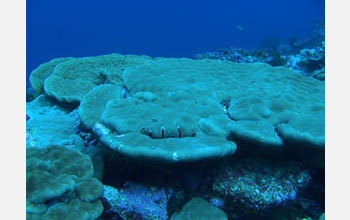
Though microbes are everywhere and essentially rule the planet, scientists have never been able to conduct comprehensive studies of microbes and their interactions with one another in their natural habitats. A new study provides the first inventories of microbial capabilities in nine very different types of ecosystems, ranging from coral reefs to deep mines.


Coral from Kingman atol (Northern Line Islands).

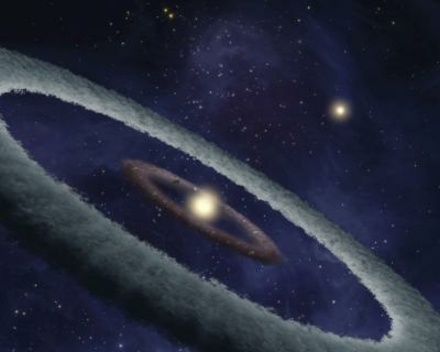
In a find that sheds light on how Earth-like planets may form, astronomers this week reported finding the first evidence of small, sandy particles orbiting a newborn solar system at about the same distance as the Earth orbits the sun.

"Precisely how and when planets form is an open question," said study co-author Christopher Johns-Krull, assistant professor of physics and astronomy at Rice University. "We believe the disk-shaped clouds of dust around newly formed stars condense, forming microscopic grains of sand that eventually go on to become pebbles, boulders and whole planets."

In previous studies, astronomers have used infrared heat signals to identify microscopic dust particles around distant stars, but the method isn't precise enough to tell astronomers just how big they become, and whether the particles orbit near the star, like the Earth does the sun, or much further away at a distance more akin to Jupiter or Saturn.

Individual genes do not cause depression, but they are thought to increase the probability of an individual having a depression in the face of other accumulating risk factors, such as other genes and environmental stressors.

One gene that has been shown to increase the risk for depression in the context of multiple stressful life events is the gene for the serotonin transporter protein. This gene is responsible for making the protein that is targeted by all current drug treatments for depression.

Researchers have identified 25 genes regulating lifespan in two organisms separated by about 1.5 billion years in evolutionary change. At least 15 of those genes have very similar versions in humans, suggesting that scientists may be able to target those genes to help slow down the aging process and treat age-related conditions.

The two organisms used in this study, the single-celled budding yeast and the roundworm C. elegans, are commonly used models for aging research. Finding genes that are conserved between the two organisms is significant, researchers say, because the two species are so far apart on the evolutionary scale -- even farther apart than the tiny worms and humans. That, combined with the presence of similar human genes, is an indication that these genes could regulate human longevity as well.

Grammar is a complex human ability yet by the age of three most children can make grammatically correct sentences. Kids with a specific language impairment(SLI), however, continue to make grammatical errors, sometimes even into adulthood. As teenagers they might make errors that other children rarely make after age five; for example, when asking a question they might say “Who Joe see someone?” rather than “Who did Joe see?”.

SLI affects about seven percent of children and is a major cause of children not reaching their educational potential but it's never been clear if these children struggle to process language or just grammar.

Researchers at University College London may have some answers. They have discovered that a system in the brain for processing grammar is impaired in some children with SLI but that these children compensate with a different brain area.

There are ten key questions we have to answer this century, says a new report by the National Research Council. The questions represent where earth science stands, how it arrived at this point, and where it may be headed.

"With all the advancements over the last 20 years, we can now get a better picture of Earth by looking at it from micro- to macro-perspectives, such as discerning individual atoms in minerals or watching continents drift and mountains grow," said Donald J. DePaolo, professor of geochemistry at the University of California at Berkeley and chair of the committee that wrote the report. "To keep the field moving forward, we have to look to the past and ask deeper fundamental questions, about the origins of the Earth and life, the structure and dynamics of planets, and the connections between life and climate, for example."

Wild sex is a staple of nature films, but there is one sex scene David Attenborough has never narrated: the mating ritual of yeast. That's right: yeast. Sex isn't just limited to lions, birds of paradise, and aphids; single-celled fungi do it too. Although most people don't like to hear the words 'fungus' and 'sex' used in the same sentence, yeast mating is a remarkable phenomenon and worth a closer look.

You can see this amazing scene, played out billions of times every day in wine vats and under oak trees, captured on film. As is the case with most wild mating rituals, filming yeast sex requires great patience - yeast are slow to commit and even when they do, they don't rush things. The beginning of foreplay itself takes several hours, as you can see below:


