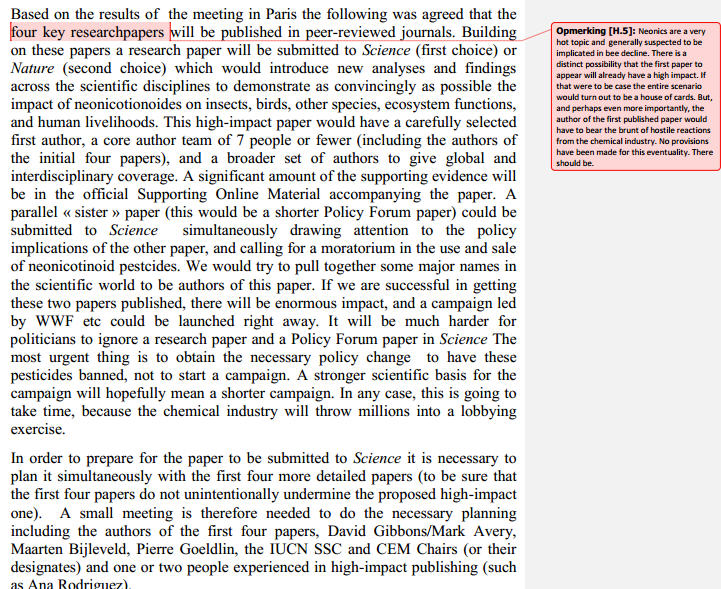











Imagine a scenario where a group of people get together to frame the debate about science and even set out to conspiratorially place papers in highly-respected journals, selecting the ideal names to have on the paper and which publications would be most likely to publish it.

It must be those evil corporate chemical shills again, right?

Not this time, it was the International Workshop On Neonicotinoids in 2010 and it explains a lot about how the anti-science contingent has managed to maintain so much mindshare in media: they know how to work the system and created a 4-year plan to do just that.
Just for yucks, let’s go back a few years and see how well people did in forecasting drug prices in the future.

Within the past decade, we began to hear the term “patent cliff”—the consequence of most blockbuster drugs losing patent protection during a short period of time. Perennial critics of the pharmaceutical industry were experiencing paroxysms of joy as the holy grail of health care savings—generic drug companies—became able to sell cheap copies of formerly multi-billion dollar products. 

If you have talked to ranchers or people who live near wolves about being able to shoot them without landing in prison with a mandatory Federal jail sentence, the response is clear: Wolves have to be controlled. If you talk to urban activists or people who hike on state game lands a few weekends a year, wolves are cute and anyone who shoots one should go to jail.

Yet that is not the real issue, according to the authors of a new paper that used surveys as their evidence. They believe the reason for the rancor is fear of wolves or the urge to care for canis lupis. It's simply social identity theory at work. People who live near wolves have never heard of that but they already know where the article in PLOS ONE is going.

The sons of fathers with criminal records tend to have less intelligence than sons of fathers with no criminal history, according to data from over 1 million Swedish men compiled as part of the Swedish mandatory conscription program.

 Population analyses have found that children of parents who engage in "antisocial" behaviors, such as rule-breaking, aggressive, or violent behavior, are at greater risk for various negative outcomes, including criminality, psychiatric disorders, substance use, and low academic achievement. Other papers have found that individuals who engage in antisocial behaviors tend to have poorer cognitive abilities than those without antisocial tendencies. 


Artistic rendering of the Square Kilometre Array at night. SKA Organisation

By Yves Wiaux, Heriot Watt University and Jason McEwen, University College London


What do you presume about me? auremar/Shutterstock

By James Williams, University of Sussex

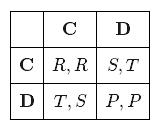
In the classical game theory match-up known as the Prisoner’s Dilemma, two prisoners kept isolated from each other are offered a deal: they can confess to a crime and if their accomplice remains silent the charges will be dropped in exchange for testimony against the other. If they both confess, they can both get early parole. If both remain silent, they get convicted of a lesser charge.

Muslim communities are not be as victimized by violent crime nor are they as dissatisfied with the police as most sociology papers claim.

An examination of statistics in the Crime Survey of England and Wales between 2006 and 2010, generated by nearly 5,000 Muslims, reveals few differences between Muslims and non-Muslims in relation to a range of violent personal crime including assaults, wounding and threats - the types of crime that scholarly literature, media reports and anecdotal evidence all suggest have disproportionately affected Muslim communities. 

Instead, statistical analysis reveals few statistically significant differences between Muslim, Hindu, Jewish and Sikh respondents in respect of many personal crime types included within the Crime Survey.


After decades of cracking, the cracks are appearing in cryptography. infobunny, CC BY

By Bill Buchanan, Edinburgh Napier University

We have always been been intrigued by keeping secrets and uncovering the secrets of others, whether that’s childhood secret messages, or secrets and codebreaking of national importance.

Cardiac arrest, commonly known as a heart attack, is an often-fatal condition in which the heart stops beating. Epinephrine - adrenaline - is a hormone that stimulates the heart and promotes the flow of blood and current international guidelines recommend administering 1 milligram of epinephrine every 3-5 minutes during resuscitation. 
Each year, more than 420,000 cardiac arrests occur in the United States. Cardiopulmonary resuscitation and defibrillation are the primary treatments. 

And it works well, at least in the short term, but administering epinephrine may increase the overall likelihood of death or debilitating brain damage according to a study in the Journal of the American College of Cardiology.

