







Vegetable juice ice-melt?  Ice-free pavement? "Smart snowplows"?  

Cold-climate researchers at Washington State University are clearing the road with 'green' alternatives to salt.

Reports that honey bees are dying in unusually high numbers has concerned many scientists, farmers and beekeepers, and  gripped the public. There have been thousands of stories ricocheting across the web, citing one study or another as the definitive explanation for a mystery that most mainstream experts say is complex and not easily reducible to the kind of simplistic narrative that appeals to advocacy groups.

This is part one of a two-part series that will examine this phenomenon: how complex science is reduced to ideology, how scientists and journalists often facilitate that--and its problematic impact on public policy, the environment and in this case the wondrous honey bee.


Well, maybe it's not quite this electrifying, but the  electrochemical cell prototype is pretty cool. Florian F.  (Flowtography)/Flickr, CC BY-NC-ND

By Tessa Evans, The Conversation

In the 1960s, there was talk of a dystopian future where the masses starved because the ghost of Malthus came home to roost and the world could no longer feed its people.

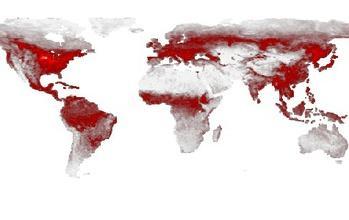
Instead, Norm Borlaug and science ushered in a "Green Revolution" and countries that embrace science, like America, have reduced environmental strain while producing more food than ever dreamed possible. One other interesting effect the boost in agriculture has had: changing the amplitude of atmospheric carbon dioxide by about 15 percent during the last five decades. 

A new atmospheric model called VEGAS estimates that on average, the amplitude of the seasonal oscillation of carbon dioxide in the atmosphere is increasing at the rate of 0.3 percent every year. 

Bringing the concept of peer review to another dimension, I am offering you to read a review article I just wrote. You are invited to contribute to its review by suggesting improvements, corrections, changes or amendments to the text. I sort of need some scrutiny of this paper since it is not a report of CMS results -and thus I have not been forced by submit it for internal review to my collaboration.

When all your appliances are internet-enabled, whose hands are holding the remote control? Hands image/ Shutterstock

By Temitope Oluwafemi, University of Washington

The Earth has a magnetic field that functions as an in-built force-field against galactic cosmic rays, particles from space which prompt a chain-reaction of events in thunderclouds that trigger lightning bolts. 

The only thing more powerful than our magnetic field is that of the Sun, and it may be playing a part in the generation of lightning strikes on Earth by temporarily 'bending' the Earth's magnetic field and allowing more energetic particles to enter the upper atmosphere. Over a five year period, the UK experienced around 50% more lightning strikes and researchers found that correlates to when the Earth's magnetic field was skewed by the Sun's own magnetic field.

Each year, the biosphere balances its atmospheric budget: The carbon dioxide absorbed by plants in the spring and summer as they convert solar energy into food is released back to the atmosphere in autumn and winter. Levels of the greenhouse gas fall and rise with growth and harvesting.


An Ochre starfish, in healthier times. Amanda Bates, Author provided

By Amanda Bates, University of Southampton

We live in a time when our climate is warming more rapidly than ever before. Rising temperature and associated changes in weather are driving shifts in the distributions of species on Earth.

Some are thriving in these new climate conditions and have even moved into new regions that were historically inhospitable.

One concern for us humans is how harmful species – diseases or pests – are responding to a changing climate.

Iowa corn farmers have a lot of clout during the political cycle in America. Former US Vice-President Al Gore even sided with environmentalists and embraced ethanol - which all of science said was a bad idea - and later acknowledged it was just to appeal to Iowa. They help pick presidents and now it turns out that their 2.2 billion bushels of corn are helping to save the planet too.

