





By Sue Thomas, Bournemouth University

Looking over the landscape I could see an old tree standing frozen and seemingly dead, its branches coated with icy rime. Around it, mossy grass and small rocks lay beneath a coating of snow and in the distance glistening waterfalls tumbled down the sides of whitened mountains.

It looked like the wilds of Ireland in wintertime, but the view existed only in my phone. My task, using a handheld biosensor called PIP, was to bring summer to this deeply cold outdoor scene by the powers of mental relaxation.

The Moderate Resolution Imaging Spectroradiometer (MODIS) instrument that flies aboard NASA's Aqua satellite captured a visible picture of Tropical Storm Adjali on Nov. 19th at 9:05 UTC (1:05 A.M. Pacific) curving to the southwest on its trek through the Southern Indian Ocean.

The MODIS image showed that the storm began curving to the southwest, and despite slight weakening, thunderstorms circled around the low-level center.

In bean sprouts, a collection of amino acids called a protein complex allows them to grow longer in the darkness than in the light. In humans, there is a similar protein complex called CSN, and its subunit CSN6 is now believed to be a cancer-causing gene that impacts activity of another gene (Myc) tied to tumor growth.

The Lacey Act, introduced in 1900 by Republican Congressman John F. Lacey of Iowa, was originally designed to stop illegal game across state borders but was then expanded, notably by President Ronald Reagan, to include illegal logging and breaking the laws of foreign governments.

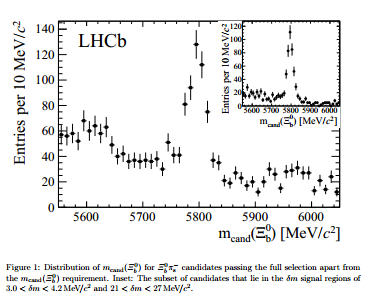
The LHCb experiment collaborators at the Large Hadron Collider have announced discovery of two new particles in the baryon family.

The particles, known as the Xi_b'- and Xi_b*-, were predicted to exist by the quark model but had never been seen before. A related particle, the Xi_b*0, was found by the CMS experiment at CERN in 2012. 

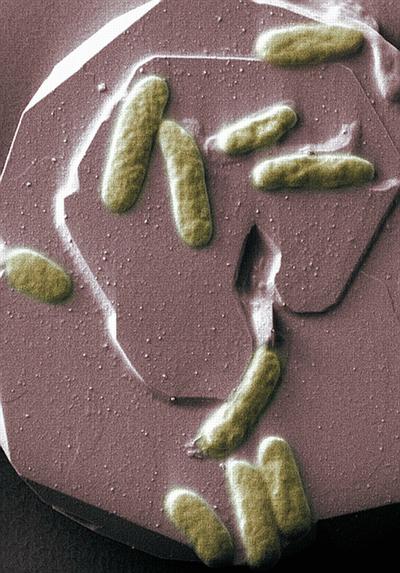
Bacteria are everywhere and so efforts to make cleaner energy using them are ongoing.

A report today shows how electrons hop across otherwise electrically insulated areas of bacterial proteins, and that the rate of electrical transfer is dependent on the orientation and proximity of these electrically conductive 'stepping stones'. It is hoped that this natural process can be used to create viable 'bio batteries' which could produce energy for portable technology such as mobile phones, tablets and laptops - powered by human or animal waste. So using your tablet on the toilet would then make even more sense.


Oh, no, wait – it's the 21st century! Carl Guderian

By Camilla Nelson, University of Notre Dame Australia

It’s official: men are better writers than women.

The news came as something of a shock to a hardened feminist such as myself, but a quick survey of prescribed and suggested texts set for senior English in most Australian states demonstrates this is a fact routinely taught to teenagers in school.

Historical acid deposits have greatly reduced calcium levels in Canadian lakes and that is dramatically impacting populations of calcium-rich plankton such as Daphnia - water fleas that dominate these ecosystems. 

It is commonly believed that one key issue in brain again is that it becomes less flexible - plastic - and that learning may therefore become more difficult.

A new study contradicts that and shows that plasticity did occur in seniors who learned a task well, it just occurred in a different part of the brain than in younger people.

When many older subjects learned a new visual task, the researchers found, they unexpectedly showed a significantly associated change in the white matter of the brain. White matter is the the brain's "wiring," or axons, sheathed in a material called myelin that can make transmission of signals more efficient. Younger learners, meanwhile, showed plasticity in the cortex, where neuroscientists expected to see it.

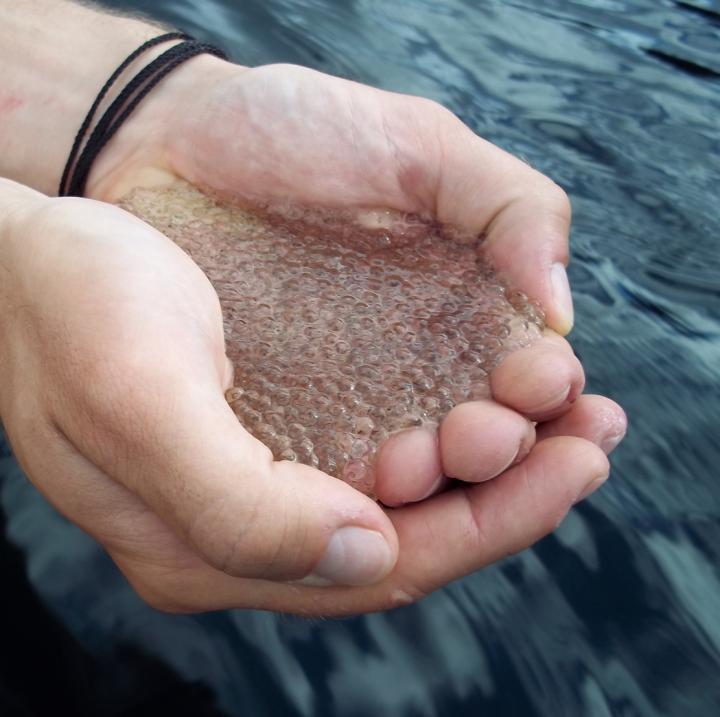
Scientists have found that seed dormancy, a property that prevents germination when conditions are not right, was present in the first seeds 360 million years ago.

Seed dormancy is a phenomenon that has intrigued naturalists for decades, since it conditions the dynamics of natural vegetation and agricultural cycles. There are several types of dormancy, and some of them are modulated by environmental conditions in more subtle ways than others.

In an article published in the New Phytologist journal, the scientists studied the evolution of dormancy in seeds using more than 14.000 species.

